
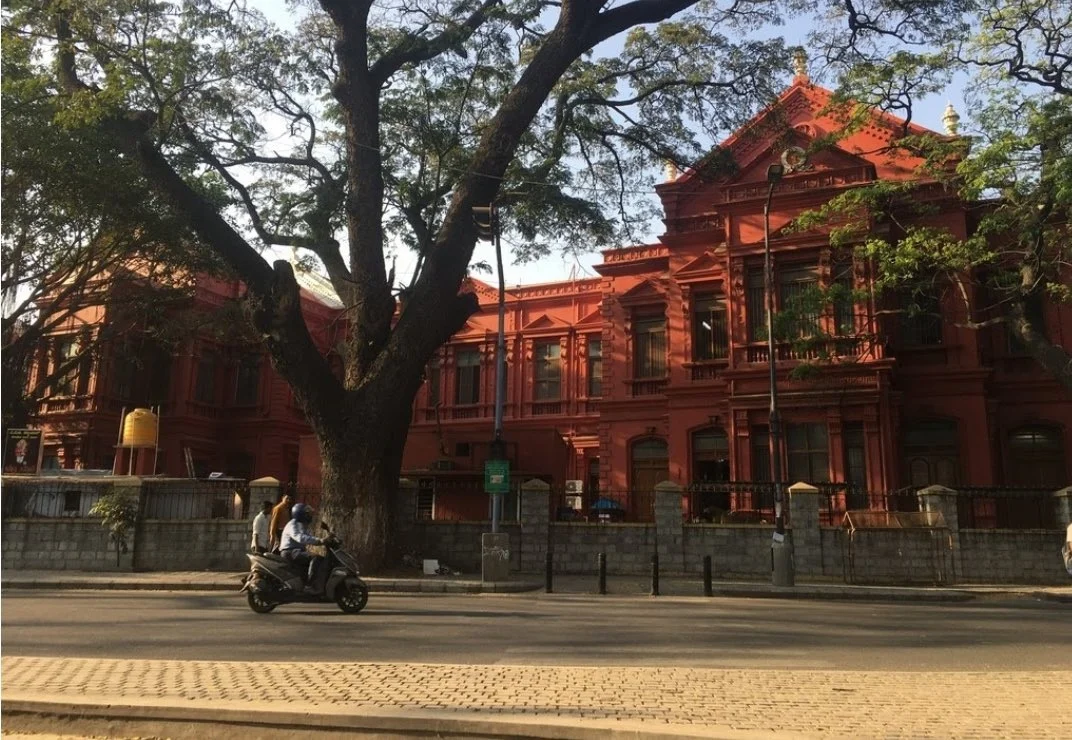
Mayo Hall (Bengaluru)
Mayo Hall — A Colonial Gem in Bengaluru
Nestled in the heart of Bengaluru, Mayo Hall is a striking reminder of the city’s colonial past. Built in the late 19th century to commemorate Lord Mayo (Richard Bourke), the 4th Viceroy of India, it has stood the test of time as both a government building and a heritage site. While the city around it has modernized rapidly, Mayo Hall continues to captivate visitors with its architectural elegance and historical significance.
Key Facts:
Location: Ashok Nagar, Bengaluru, Karnataka, India
Built As: Memorial to Lord Mayo
Inaugurated: 6 June 1883
Architectural Style: Colonial with Greco‑Roman influences (Tuscan columns, stone arches, pedimented windows)
Structure: Two-storey heritage building
Current Use: Government offices and the Kempegowda Museum
Views: Overlooks Parade Grounds, Ulsoor Lake, and Race Course area
Condition: Heritage preservation ongoing amidst urban development

Architectural Highlights
Mayo Hall is an excellent example of colonial architecture with Greco-Roman elements. Its façade is adorned with Tuscan columns and pedimented windows, giving it a classical, stately appearance. Stone arches and decorative consoles add depth and texture, while the interiors, once featuring ornate chandeliers and wooden flooring, speak of civic pride and refinement. The building’s architectural style reflects both functional colonial design and an aspiration for grandeur.
Historical and Cultural Significance
Throughout its history, Mayo Hall has served multiple roles. Originally, the ground floor housed municipal offices and courts, while the upper floor was used for public meetings, exhibitions, and important civic functions. Today, it hosts the Kempegowda Museum, which celebrates the founder of Bangalore with historic maps, artistic depictions, and interactive exhibits. This combination of civic, cultural, and educational functions makes Mayo Hall an integral part of Bengaluru’s social and historical fabric.

Challenges and Conservation
Like many colonial-era structures, Mayo Hall faces challenges from urban development. Modern buildings have encroached on its original open spaces, and traffic noise has changed the surrounding ambience. Preservationists emphasize the importance of protective measures to maintain the hall’s architectural integrity and historical significance for future generations.
A Note on Mayo Hall, Prayagraj
Interestingly, another Mayo Hall exists in Prayagraj (formerly Allahabad). Built in 1879, it features Victorian architecture with a prominent 180-foot tower. Although distinct from the Bengaluru hall, both buildings share a common purpose: commemorating Lord Mayo and reflecting British colonial architectural ambitions in India.
Mayo Hall is more than a historic building; it is a living testament to Bengaluru’s layered past. From its colonial origins to its current role as a cultural and civic hub, it invites residents and visitors alike to explore the city’s history through architecture. Preserving such landmarks ensures that the stories and aesthetics of the past remain visible amidst the ever-evolving modern city.




Related Article:
Vantara: Inside global wildlife rescue, care and conservation centre
AI in Architecture: Redefining Creativity and Efficiency
Hostile Architecture in India: Urban beauty at the cost of humanity
Experts share simple Vastu principles to fill your home with positive energy and peace
The modern evolution of office interior design: Creating workspaces that inspire productivity
Kinetic Facades: The Future of Sustainable Architecture
Industrial Style: How to Achieve it in Your Home?
Malabar Hill Walkway: A new elevated nature trail in the heart of Mumbai
The Koramangala Club (TKC) – A timeless social landmark in Bengaluru