

Malabar Hill Walkway
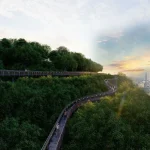
Mumbai’s newest urban attraction — the Malabar Hill Walkway — has reimagined how residents and visitors experience nature in one of the city’s most exclusive and serene neighbourhoods. Officially opened to the public in early 2025, this innovative elevated nature trail blends ecology, architecture, and panoramic views to create a one-of-a-kind urban promenade above the city’s tropical forest canopy.
An Architectural and Environmental Vision
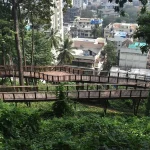
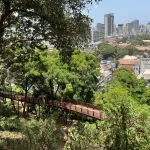
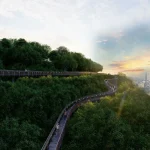
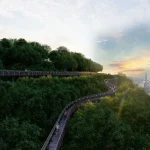
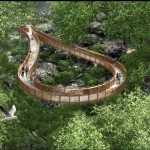
The Malabar Hill Walkway represents Mumbai’s first elevated nature trail, conceived to unlock the hidden forest of Malabar Hill — an area historically inaccessible to the public for decades. What makes this project unique is its design philosophy: creating a minimal-impact structure that enhances visitor experience while preserving the existing ecosystem.
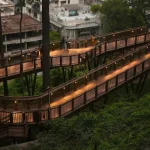
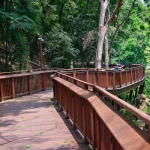
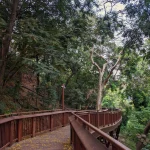
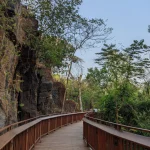
- Built primarily with a timber deck and supported on discreet steel columns, the walkway’s structure allows natural water flow and wildlife movement to continue uninterrupted.
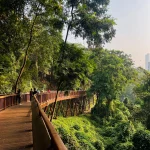
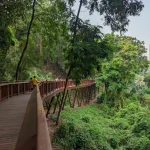
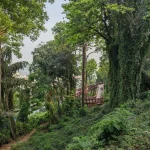
- The path rises above the forest floor instead of cutting through it, ensuring vegetation remains undisturbed and the habitat stays intact.
- Local architectural voices have pointed to its eco-sensitive approach, where no trees were felled during construction — a crucial choice in an environmentally sensitive zone.
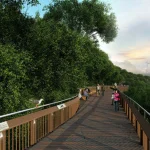
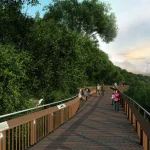
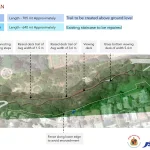
The walkway covers a stretch of approximately 485 metres in length and 2.4 metres wide, creating a shady, elevated path that blends seamlessly into the landscape.

Design Highlights and Visitor Experience
Elevated Wooden Pathway
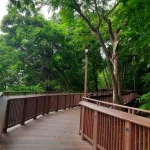
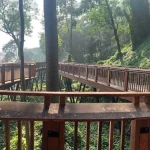
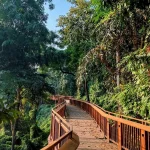
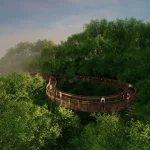
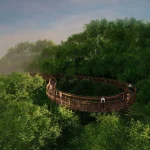
The core of the trail is an elevated wooden deck with vertical railings, providing a tactile connection to nature. Walking above the treetops, visitors feel immersed in the forest canopy — a calming contrast to Mumbai’s frenetic urban pace.
Sea-Viewing Deck
One of the standout features is the Sea Viewing Deck, strategically positioned to offer breathtaking views of the Arabian Sea and the iconic Girgaon Chowpatty beachfront. Gazing out over this panorama while surrounded by greenery makes for a memorable sensory experience.

Bird-Watching and Wildlife
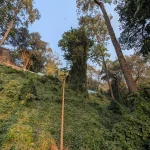
The walkway passes through an area hosting over 100 species of trees, including Gulmohar, Almond, Jamun, Banyan, and others. Bird lovers can spot kingfishers, parakeets, bulbuls, and more, while reptiles such as lizards and pythons occasionally make appearances in their natural habitat.
Glass-Bottom Observation Deck
In addition to its scenic viewpoints, the trail includes a glass-bottom deck that lets visitors look directly down into the forest below — an exhilarating perspective that deepens the feeling of floating above the canopy.
Access, Hours & Booking
The walkway begins and ends on Siri Road, just behind Kamala Nehru Park in South Mumbai — a location easily accessible via city transport networks.

Visiting hours and details:
- Open Daily: Early morning to evening (approximately 5 AM – 8/9 PM).
- Entry Fee: ₹25 for Indian citizens, ₹100 for foreign visitors.
- Online Booking: Visitors can reserve one-hour time slots in advance, helping manage crowd flow and ensure a pleasant experience.
- Crowd Controls: To avoid overcrowding, only limited entries are allowed per slot, often resulting in fully booked slots on weekends and holidays.
- No Food Policy: To keep the trail clean and discourage wildlife disturbances (especially from monkeys), food items are prohibited — only water is allowed.
In its first month alone, the walkway drew over 1 lakh visitors, generating notable revenue for the civic administration — underscoring its popularity across age groups and communities.

Environmental and Urban Context
Located in the prestigious residential enclave of Malabar Hill, this elevated trail adds a public green space to a neighbourhood known more for its elite housing than urban nature trails. The project stands in contrast to other city developments that have prompted debate around landslide risks and hillside construction pressures in the precinct.
By revisiting an erstwhile forgotten 12.5-acre forest patch and opening it for public engagement, the walkway not only showcases ecological conservation but also celebrates Mumbai’s urban biodiversity.
Why It Matters for Urban Design and Architecture
The Malabar Hill Walkway is more than a tourist attraction — it represents a shift in urban design thinking for dense cities:
- It demonstrates how elevated pathways can integrate public access with natural preservation.
- It showcases timber and steel construction as a sustainable choice for environmentally sensitive zones.
- It offers an urban retreat that strengthens human connection with biodiversity — crucial in megacities.
- It serves as a model for potential future projects in urban centres looking to balance ecosystem protection with recreational spaces.

In an era where cities are increasingly challenged by climate change, decreasing green spaces, and rising urban stress, projects like the Malabar Hill Walkway remind us that thoughtful architecture can restore the human-nature bond.
The Malabar Hill Walkway has quickly become one of Mumbai’s most talked-about public spaces, attracting tens of thousands of visitors and inspiring conversations about sustainable urban design and ecological preservation. Its elevated path, sea views, wildlife encounters, and carefully curated experience showcase what happens when architecture serves both people and the planet.
For architects, city planners, and nature lovers alike, this elevated forest trail is a testament to the power of design that respects context — an oasis above the city, where every step reveals a new perspective.




Related Article:
Vantara: Inside global wildlife rescue, care and conservation centre
AI in Architecture: Redefining Creativity and Efficiency
Hostile Architecture in India: Urban beauty at the cost of humanity
Experts share simple Vastu principles to fill your home with positive energy and peace
The modern evolution of office interior design: Creating workspaces that inspire productivity
Kinetic Facades: The Future of Sustainable Architecture
Industrial Style: How to Achieve it in Your Home?