Vantara Global Wildlife Rescue and Conservation Centre
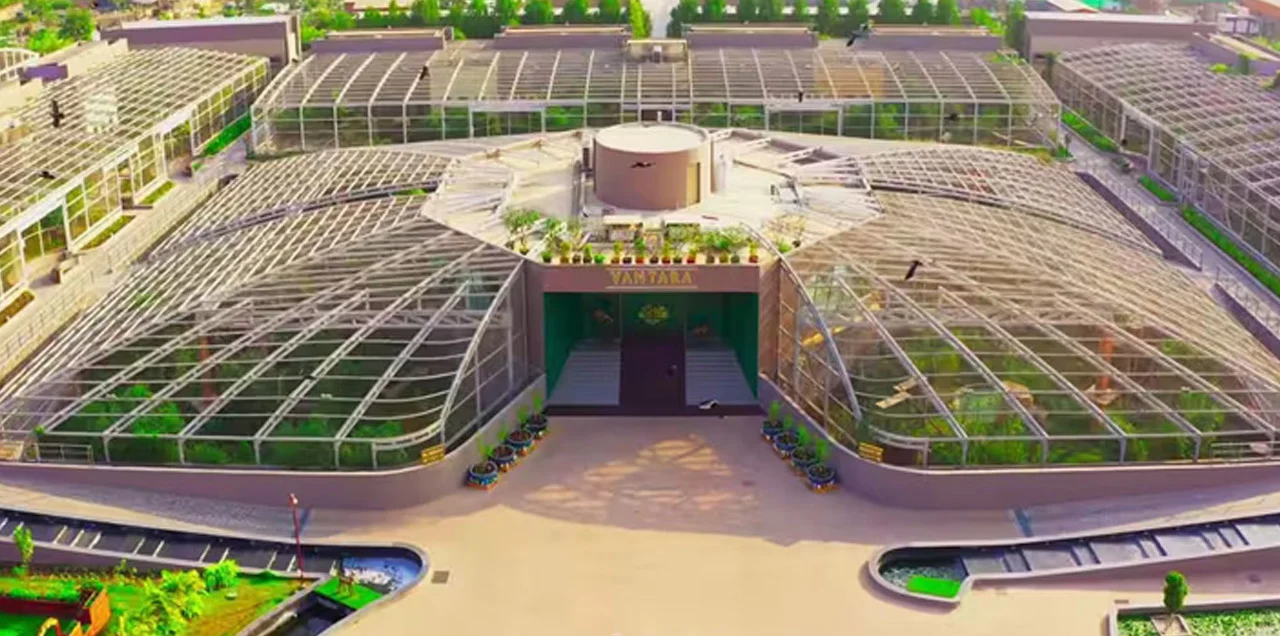
In recent years, large-scale conservation infrastructure has emerged as a complex intersection of ecology, ethics, architecture, and governance. Among the most debated and ambitious initiatives in this space is Vantara—an animal rescue, care, and rehabilitation project established by the Reliance Foundation, the philanthropic arm of Reliance Industries. Located in Motikhavdi village, Jamnagar district, Gujarat, Vantara occupies a vast green belt and represents one of the largest privately funded wildlife care facilities in the world.
Officially launched on 26 February 2024 and inaugurated by Prime Minister Narendra Modi on 4 March 2025, Vantara has rapidly drawn global attention—not only for its unprecedented scale, but also for the questions it raises about modern conservation models, privatized animal welfare, and the role of infrastructure in shaping ecological futures.
Meaning, Location, and Scale
The name Vantara, derived from Sanskrit, translates to Star of the Forest. The facility is spread across approximately 3,500–4,000 acres within a protected green belt near Jamnagar, an area otherwise known for heavy industrial presence, including one of the world’s largest oil refineries.
As of 2025, Vantara reportedly houses over 150,000 animals across more than 2,000 species, including elephants, big cats, reptiles, birds, herbivores, and exotic species. Animals at the facility have been rescued from human–animal conflict zones, circuses, inadequate captive conditions, logging operations, and international transfers, spanning all Indian states and 32 countries.
The scale of the campus places Vantara among the largest wildlife rescue and rehabilitation initiatives globally, both in land area and in animal population.

Origins and Institutional Background
According to public statements, Anant Ambani has traced the origins of the initiative to a childhood experience involving the rescue of an injured elephant during a family trip near Ranthambore. Over time, informal rescue efforts evolved into a structured program under the Reliance Foundation, formally founded in 2019.
The philosophical grounding of Vantara is often linked by the foundation to the idea of jeev seva—service to living beings—drawing inspiration from the teachings of Swami Vivekananda. The first animal received by the facility was an elephant named Gauri in 2009, marking the early stages of what would later become a large-scale institutional project.
Facilities, Planning, and Built Infrastructure
At the heart of Vantara lies the Greens Zoological Rescue and Rehabilitation Centre (GZRRC), which covers approximately 650 acres and functions as the primary conservation and animal care zone. The remainder of the campus includes veterinary hospitals, research facilities, staff housing, administrative buildings, logistics infrastructure, and internal transport systems.
Veterinary and Medical Infrastructure
Vantara houses what is described as the world’s largest multi-specialty wildlife veterinary hospital, with a built-up area of nearly 100,000 square feet. Across the campus, there are:
- 22 specialized animal hospitals
- 17 veterinary clinics
- MRI, CT scan, ultrasound, X-ray, ICU and neonatal care units
- Surgical suites and quarantine facilities
A particularly prominent component is the Centre for Elephants, featuring a 998-acre elephant care zone equipped with hydrotherapy pools, medical imaging systems, nutrition programs, and species-specific rehabilitation spaces.
Nutrition, Research, and Staffing
Supporting the scale of animal care is a 100,000 sq. ft. nutrition centre, where approximately 72,800 kilograms of food are prepared daily. Vantara also maintains a large genetic and biodiversity bank, intended to support conservation breeding and long-term species preservation.
The initiative employs over 3,500 professionals, including wildlife veterinarians, biologists, researchers, animal caregivers, and support staff, making it one of the most labor-intensive conservation facilities globally.
Operational Model and Regulatory Framework
Vantara operates under the oversight of the Central Zoo Authority (CZA) and relevant state forest departments, and is not open to the general public. The absence of public access has been central to both its positioning as a rescue-first facility and to criticisms labeling it a “vanity project.”
Animals are housed in species-specific enclosures designed to replicate natural ecosystems, with separate zones for big cats, herbivores, reptiles, birds, and exotic species. The project emphasizes rehabilitation over exhibition, with no formal zoo tourism component.
In 2025, Vantara received the Prani Mitra National Award (Corporate Category) from the Animal Welfare Board of India, recognizing its contributions to animal welfare.
International Transfers and Conservation Claims
One of the most debated aspects of Vantara has been its international acquisition of animals. In May 2024, approximately 1,825 animals, including jaguars, tapirs, crocodiles, and primates, were airlifted from Venezuela. The transfers were stated to be approved by forest authorities and monitored by a court-appointed committee.
By 2025, reports indicated that nearly 39,000 animals had been imported from 32 countries, placing Vantara at the center of global discussions around wildlife logistics, habitat suitability, and conservation ethics—particularly concerning species relocated far from their native ecosystems.

Controversies and Legal Scrutiny
Vantara has faced sustained public, legal, and activist scrutiny. Allegations have included:
- Unethical or opaque animal sourcing
- Potential links to global wildlife trade
- Unsuitability of Jamnagar’s hot, arid climate for certain species
- Use of animals during private pre-wedding events
- Attempts to suppress critical media coverage
In response to mounting petitions, the Supreme Court of India constituted a Special Investigation Team (SIT) in August 2025, headed by former judge Justice Jasti Chelameswar. The SIT examined import permits, financial records, CITES compliance, and on-ground facilities.
In September 2025, the Supreme Court accepted the SIT’s sealed report, which cleared Vantara of legal and ethical violations, and formally closed all pending petitions. However, separate findings by the CITES Secretariat later flagged discrepancies in certain imports, resulting in calls for tighter enforcement and a temporary halt on some categories of wildlife imports into India—keeping the global debate alive.
Architecture, Power, and the Future of Conservation
From an architectural and planning perspective, Vantara represents a new typology: the mega-scale, privately funded conservation campus. It raises critical questions for designers, planners, and environmentalists alike:
- Can large, controlled ecosystems substitute for fragmented natural habitats?
- What ethical responsibilities accompany privately owned conservation infrastructure?
- How should transparency, public accountability, and ecological authenticity be designed into such spaces?
Vantara’s vast scale, medical sophistication, and institutional ambition mark a departure from traditional wildlife sanctuaries, positioning it somewhere between a rescue facility, a research campus, and a conservation-industrial complex.
Vantara is neither a conventional zoo nor a traditional wildlife sanctuary. It is a highly centralized, technologically advanced, and deeply contested experiment in modern conservation. Supporters view it as a lifeline for thousands of rescued animals and a leap forward in wildlife medicine. Critics see it as a symbol of privatized conservation power, raising unresolved ethical and ecological concerns.
For architects, urbanists, and environmental thinkers, Vantara offers a powerful case study—one that forces a re-examination of how space, scale, capital, and care intersect in the Anthropocene. Whether it becomes a model for future conservation or a cautionary tale will depend not only on legal verdicts, but on long-term ecological outcomes and public accountability.



Related these articles:
Elon Musk’s Houses: Tour the Stunning Homes Owned by the Tesla Billionaire
Mark Zuckerberg’s Houses: An Inside Look at the Luxurious Homes of Facebook’s Founder
Gautam Adani House: Inside the luxurious residence of India’s business tycoon in Ahmedabad
Jeff Bezos House: Inside the Mansions and Estates of the Amazon Founder
Bill Gates’s House: An inside look at all the homes owned by the Microsoft co-founder
Mukesh Ambani House: Antilia, the world’s most expensive private residence in Mumbai
Jio World Centre, Mumbai: A Marvel of Modern Architecture and Innovation