Umaid Bhawan Palace Jodhpur
Umaid Bhawan Palace: A royal heritage style boutique hotel
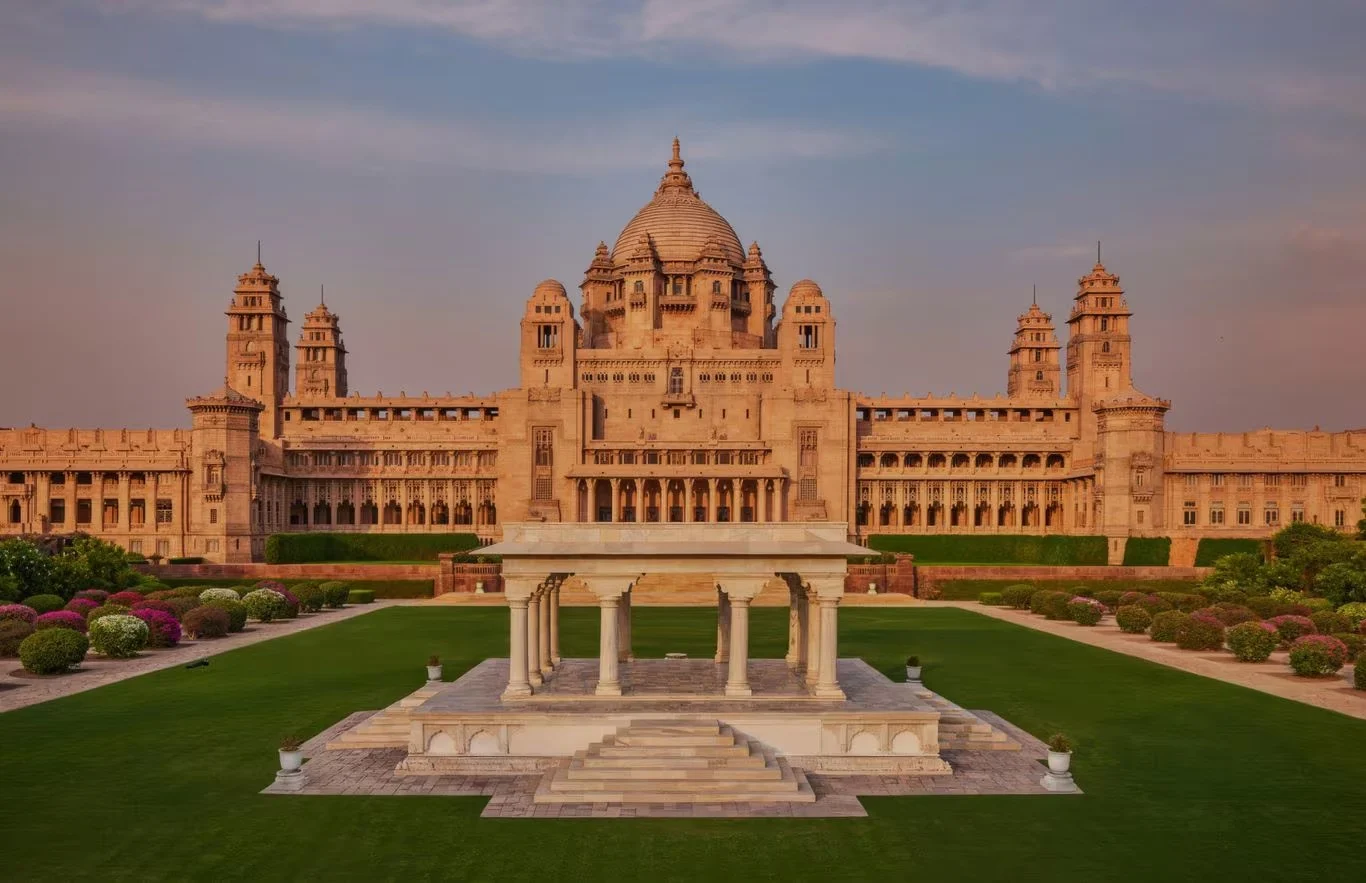
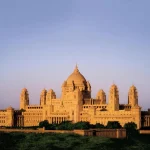
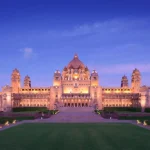
Rising majestically above the blue city of Jodhpur, Umaid Bhawan Palace stands as one of India’s most remarkable architectural achievements of the 20th century. More than just a royal residence or luxury hotel, the palace is a powerful symbol of foresight, resilience, and architectural synthesis—where tradition, modernity, and socio-economic purpose converge.
A Palace Born Out of Compassion
Unlike most royal palaces commissioned to display opulence, Umaid Bhawan Palace was conceived as a response to hardship. In the late 1920s, the region of Marwar faced a severe famine. Maharaja Umaid Singh, the ruler of Jodhpur, initiated the palace’s construction in 1929 primarily as an employment-generating project to provide livelihoods to thousands of local residents.
The result was a grand structure that took 15 years to complete, finally finished in 1943. This humanitarian intent gives the palace a deeper cultural and historical relevance, making it a rare example of architecture serving both grandeur and social responsibility.

Architectural Style: Indo-Deco at Its Finest
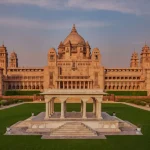
Designed by British architect Henry Vaughan Lanchester, Umaid Bhawan Palace is often described as one of the finest examples of Indo-Deco architecture—a unique blend of Indian classical elements and Western Art Deco sensibilities.
The palace harmoniously combines:
- Rajput architectural traditions, such as chhatris, jharokhas, and courtyards
- Art Deco influences, visible in clean lines, geometric forms, and streamlined massing
- Classical European planning principles, lending symmetry and monumentality
This fusion makes Umaid Bhawan Palace architecturally distinct from earlier Mughal or Rajput palaces, positioning it as a transitional landmark between imperial tradition and modern design.
Materiality and Craftsmanship
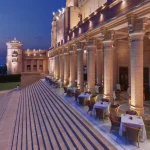
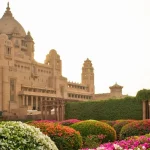
One of the most striking features of the palace is its golden-yellow Chittar sandstone, quarried locally. This choice not only ensured durability but allowed the structure to blend seamlessly with the arid landscape of Rajasthan.
Notably:
- The palace was built without the use of mortar, relying on interlocking stone techniques
- Over 3,000 artisans and craftsmen worked on the structure
- Marble from Makrana and Burma teak were used extensively for interiors
The craftsmanship reflects both local skill and meticulous engineering, resulting in a building that has aged gracefully despite its massive scale.

Planning and Spatial Grandeur
Spread across approximately 26 acres, Umaid Bhawan Palace is among the largest private residences in the world. The palace includes:
- 347 rooms
- Multiple courtyards and terraces
- Banquet halls, libraries, and private chambers
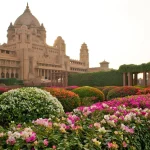
- Landscaped Mughal-style gardens
The central dome—one of the tallest of its kind in India—draws inspiration from Renaissance architecture and dominates the skyline of Jodhpur. Its commanding presence reinforces the palace’s role as a visual and cultural anchor for the city.
Adaptive Reuse: Palace, Museum, and Hotel
In a rare and successful example of adaptive reuse, Umaid Bhawan Palace today functions as a three-part complex:
1. Royal Residence – Still home to the former royal family of Jodhpur
2. Museum – Showcasing artifacts, vintage clocks, photographs, and royal memorabilia
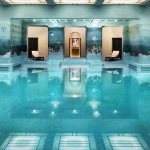
3. Luxury Hotel – Operated by the Taj Group, offering a contemporary hospitality experience
This layered use ensures the palace remains economically viable while preserving its heritage—an important lesson for conservation-driven architecture in India and beyond.

Interior Design: Elegance Rooted in Restraint
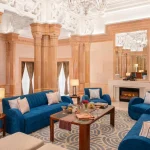
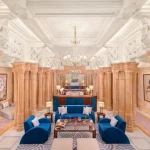
While the exterior communicates scale and authority, the interiors reflect a quieter sophistication. Art Deco furniture, polished marble floors, and muted color palettes create a refined atmosphere rather than overwhelming ornamentation.
Large windows, high ceilings, and strategic orientation allow natural light and ventilation—demonstrating climate-conscious design long before sustainability became a mainstream discourse.
Cultural and Architectural Legacy
Umaid Bhawan Palace represents a pivotal moment in Indian architectural history. Built during the colonial period yet rooted in local identity, it challenges the notion that modernity must come at the cost of tradition.
For architects and designers, the palace offers enduring lessons:
- Architecture can address social needs without sacrificing aesthetics
- Hybrid styles can create timeless design when executed with sensitivity
- Adaptive reuse can preserve heritage while ensuring relevance
Umaid Bhawan Palace is not merely a royal landmark—it is an architectural narrative of empathy, innovation, and cultural continuity. Standing tall over Jodhpur, it reminds us that great architecture is not defined solely by scale or luxury, but by purpose, context, and human impact.
For anyone passionate about architectural history, heritage conservation, or design evolution in India, Umaid Bhawan Palace remains an enduring source of inspiration.



Related Article:
Elon Musk’s Houses: Tour the Stunning Homes Owned by the Tesla Billionaire
Mark Zuckerberg’s Houses: An Inside Look at the Luxurious Homes of Facebook’s Founder
Gautam Adani House: Inside the luxurious residence of India’s business tycoon in Ahmedabad
Mukesh Ambani House: Antilia, the world’s most expensive private residence in Mumbai
Jeff Bezos House: Inside the Mansions and Estates of the Amazon Founder
Bill Gates’s House: An inside look at all the homes owned by the Microsoft co-founder
Michael Jordan’s homes: A design-led journey through his signature residences
Umaid Bhawan Palace: A monument where royalty meets modernism