
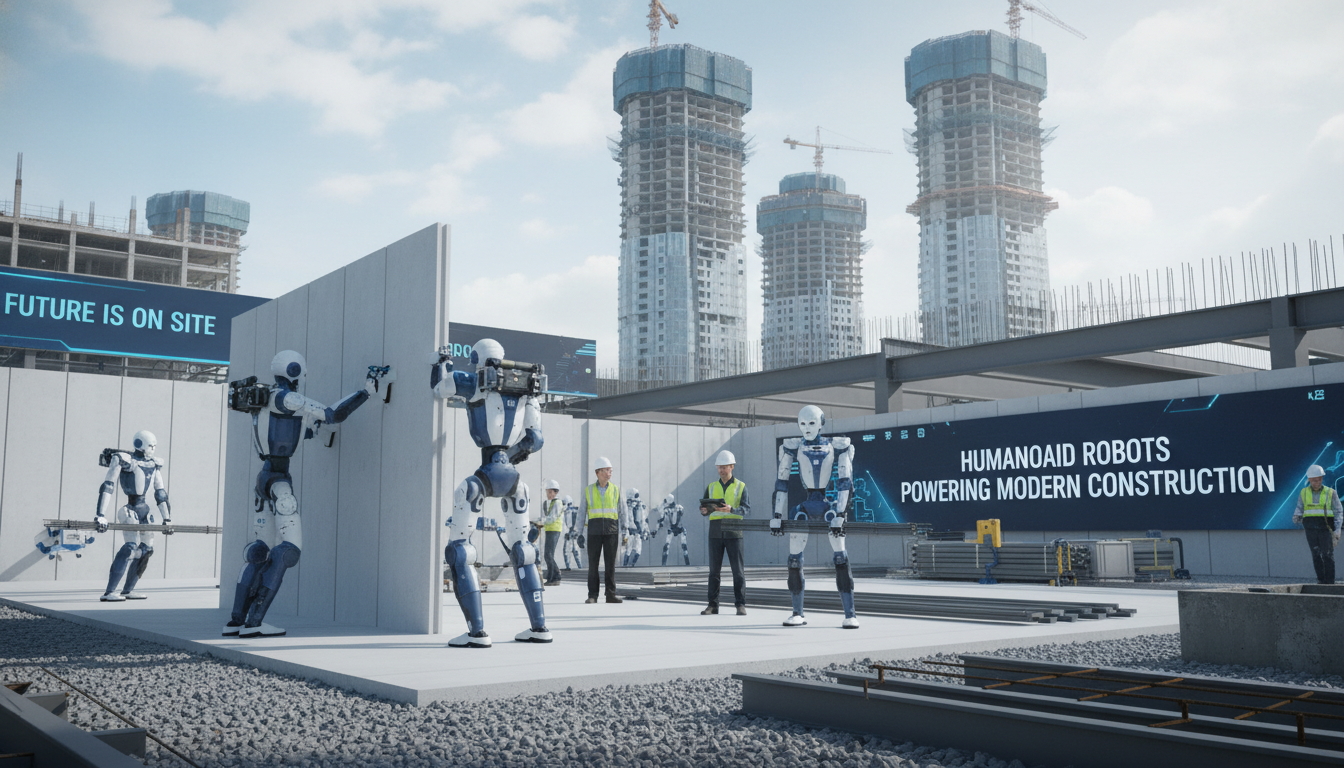
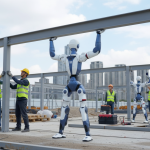
Humanoid robot assisting on a construction site
The Rise of Humanoid Robots in Construction
Construction has always been a symbol of human capability — physical strength, technical skill, and problem-solving under pressure. From towering skyscrapers to complex infrastructure projects, every structure reflects coordinated human effort. Today, however, a new presence is beginning to emerge on job sites: humanoid robots. No longer confined to research labs or science fiction, these human-shaped machines are gradually entering conversations about the future of construction.
Designed for a Human World
Unlike traditional construction machinery that performs a single specialized task, humanoid robots are designed to function within environments built specifically for people. Construction sites revolve around human movement — stairs, ladders, scaffolding, corridors, and hand tools all follow human proportions and ergonomics. A robot with arms, legs, and dexterous hands can theoretically navigate these spaces without requiring major changes to site infrastructure. Instead of redesigning job sites around machines, engineers are developing machines that adapt to the human-built environment.

Solving Labor and Safety Challenges
The global construction industry faces a growing shortage of skilled labor. At the same time, it remains one of the most physically demanding and high-risk professions. Heavy lifting, repetitive strain, exposure to extreme weather, and structurally unstable environments all present daily challenges. Humanoid robots are being developed to assist with precisely these conditions — transporting materials, handling repetitive tasks, conducting inspections in hazardous zones, and supporting demolition or high-elevation work. Rather than replacing workers, these systems are intended to enhance safety and reduce physical strain, allowing human professionals to focus on oversight, craftsmanship, and decision-making.
Integrating Robotics with Digital Construction
The real potential of humanoid robots lies in their integration with advanced digital tools. Equipped with sensors, computer vision, and AI-driven processing systems, modern humanoids can interpret surroundings, maintain balance on uneven surfaces, and execute movements with increasing precision. When connected to Building Information Modeling (BIM) systems, these robots could eventually follow digital project data directly on-site. This level of coordination between physical robotics and digital planning may reduce construction errors, limit material waste, and improve overall efficiency.

Human-Robot Collaboration on Site
The future of construction is not about automation replacing people; it is about collaboration. Imagine a humanoid robot assisting a construction crew by holding structural components in place, delivering tools across a large site, or supporting repetitive installation processes. Skilled workers would remain at the center of planning and execution, while robots handle labor-intensive or high-risk activities. This cooperative model has the potential to increase productivity while preserving the essential human expertise that defines the industry.
Implications for Architects and Designers
As robotics technology advances, architects and designers may begin considering how building designs can better accommodate automated assistance. Modular construction systems, standardized components, and optimized access pathways could make robotic integration more efficient. Over time, designing for both human and robotic collaboration may become a strategic consideration in large-scale or high-tech projects.

Challenges Before Widespread Adoption
Despite rapid technological progress, several barriers remain. Construction sites are unpredictable, constantly changing environments filled with dust, debris, and uneven terrain. Humanoid robots must become more durable, energy-efficient, and cost-effective before they can be widely deployed. However, advancements in battery technology, artificial intelligence, and mechanical engineering are accelerating, bringing practical implementation closer to reality.
A New Era of Building
Construction has always evolved alongside innovation — from reinforced concrete to prefabrication and digital modeling. Humanoid robots represent the next possible shift in that evolution. They are not simply machines performing automated routines; they are adaptive systems designed to operate in the same spaces as human builders.
The construction site of the future may still rely on human vision, creativity, and leadership. But standing beside skilled professionals could be a new kind of partner — one engineered to enhance safety, efficiency, and precision. The future of building is not just smarter technology. It may very well be technology that walks among us.

Related Article:
Vantara: Inside global wildlife rescue, care and conservation centre
AI in Architecture: Redefining Creativity and Efficiency
Hostile Architecture in India: Urban beauty at the cost of humanity
Experts share simple Vastu principles to fill your home with positive energy and peace
The modern evolution of office interior design: Creating workspaces that inspire productivity
Kinetic Facades: The Future of Sustainable Architecture
Industrial Style: How to Achieve it in Your Home?