White Traffic Lights
For over a century, traffic lights have followed a simple and universal language—red, yellow, and green. But as cities prepare for a future shaped by autonomous vehicles, engineers are questioning whether this three-color system is still enough.
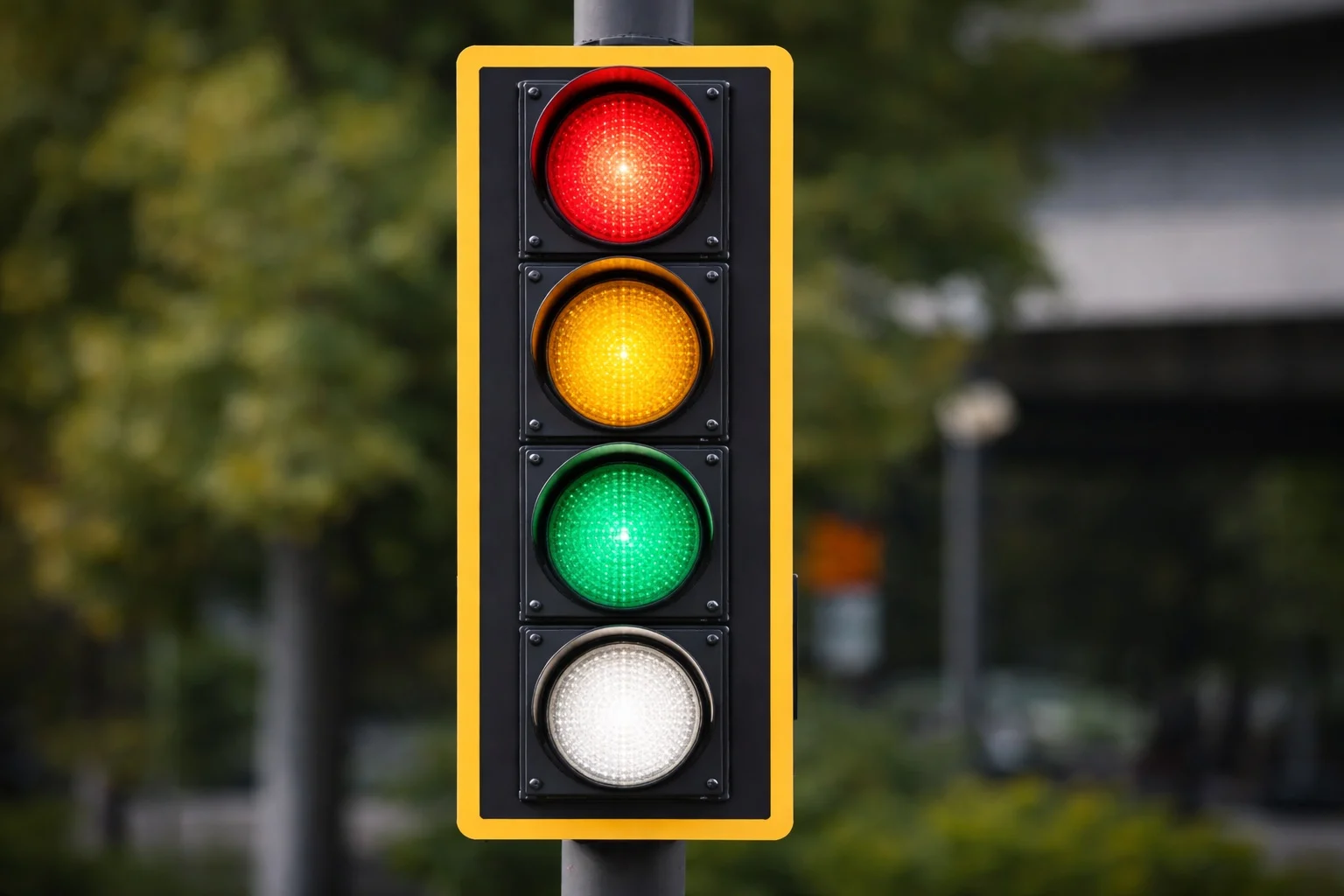
A new concept—the white traffic light—is emerging as a radical yet practical solution. Proposed by researchers at North Carolina State University, this fourth signal could fundamentally change how vehicles move through intersections, especially when self-driving cars become more common.
The Idea Behind the White Traffic Light
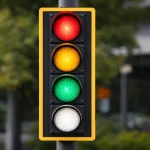
The white traffic light is not meant to replace existing signals but to enhance them. It introduces a fourth phase—often called the “white phase”—that activates when a sufficient number of autonomous vehicles (AVs) are present at an intersection.
Instead of relying solely on fixed traffic cycles, this system allows smart vehicles to coordinate movement among themselves using real-time data and communication networks. ()
In simple terms:
- Red still means stop
- Green still means go
- Yellow still means prepare
- White means: follow the car ahead

How It Works
When enough self-driving cars approach an intersection, the white light turns on. At this point, autonomous vehicles effectively “take over” the coordination of traffic flow by communicating with each other and the traffic system. ()
Human drivers don’t need to interpret complex new rules. Instead, they follow a simple behavior:
- If the car in front moves → you move
- If it stops → you stop
This reduces confusion and ensures that even non-autonomous vehicles can safely navigate the intersection.
When the number of autonomous vehicles drops below a certain threshold, the system automatically switches back to the traditional red-yellow-green cycle.
Why Engineers Want a Fourth Color
The push for a white traffic light comes from one key challenge: traditional signals are not designed for intelligent, connected vehicles.
Autonomous cars can:
- Communicate with each other
- Predict traffic patterns in real time
- Optimize movement through intersections
By allowing these vehicles to coordinate flow, the system becomes more efficient than fixed signal timing. This approach is known as a mobile control paradigm, where control is partially shifted from infrastructure to vehicles themselves.

Benefits: Smoother, Smarter Traffic
Early simulations and studies suggest several advantages:
1. Reduced Congestion
Traffic flows more continuously because vehicles don’t need to stop and start as often. ()
2. Faster Travel Times
Studies estimate travel time improvements of around 10% or more under certain conditions. ()
3. Lower Fuel Consumption
Fewer stops mean less acceleration and braking, which improves fuel efficiency. ()
4. Scalable for Future Cities
As autonomous vehicles increase, the system becomes more effective rather than less.
Challenges and Limitations
Despite its promise, the white traffic light is not ready for immediate global adoption.
- Infrastructure upgrades: Existing traffic systems would need modification
- Adoption threshold: Requires a significant percentage of autonomous vehicles (around 30–40%) to work effectively
- Driver education: People must understand and trust the new signal
- Policy and regulation: Governments must standardize and approve the system
There are also concerns about confusion, especially during the transition phase when both human-driven and autonomous vehicles share the road.
A Glimpse Into the Future
The white traffic light represents more than just a new color—it signals a shift in how cities think about mobility. Instead of rigid systems controlling traffic, the future may rely on distributed intelligence, where vehicles and infrastructure collaborate in real time.
While still experimental, the concept highlights a broader trend: roads are becoming smarter, and vehicles are becoming active participants in managing them.
The white traffic light challenges a century-old standard with a simple yet powerful idea—let intelligent vehicles help control traffic. By blending human intuition with machine precision, it offers a glimpse into a future where intersections are faster, safer, and more efficient.
Whether or not the color white becomes the global standard, one thing is clear: the language of traffic is evolving—and this time, cars themselves are part of the conversation.
Related Article:
Vantara: Inside global wildlife rescue, care and conservation centre
AI in Architecture: Redefining Creativity and Efficiency
Hostile Architecture in India: Urban beauty at the cost of humanity
Experts share simple Vastu principles to fill your home with positive energy and peace
The modern evolution of office interior design: Creating workspaces that inspire productivity
Kinetic Facades: The Future of Sustainable Architecture
Industrial Style: How to Achieve it in Your Home?
Beyond automation: How Humanoid Robots are reshaping the construction industry