

The New Terminal One at JFK
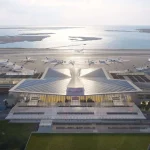
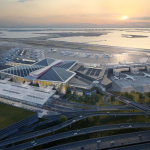
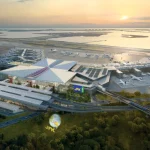
The New Terminal One at John F. Kennedy International Airport (JFK) represents a transformational leap in airport design and infrastructure as part of the broader $19 billion redevelopment of the iconic airport. This ambitious project is not just another expansion — it’s a reimagination of the international travel experience for one of the busiest aviation hubs in the United States.
Rising where the old Terminal 1, the former Terminal 2, and the remains of Terminal 3 once stood, the new facility will span 2.4–2.6 million square feet and will ultimately house 23 gates designed primarily for wide-body international aircraft. Its phased development is carefully structured so that the first arrivals and departures halls, along with 14 new gates, are slated to open in 2026, with full completion of the terminal expected by 2030.
Key Facts:
- Project Name: JFK’s New Terminal One (NTO)
- Location: John F. Kennedy International Airport (JFK), Queens, New York City, USA
- Owner / Client: Port Authority of New York and New Jersey (PANYNJ)
- Developer & Operator: The New Terminal One Consortium
- Consortium Partners: Ferrovial (lead investor), JLC Infrastructure, Ullico, Carlyle
- Project Type: Ground-up international airport terminal replacing the former Terminal 1, Terminal 2, and the site of demolished Terminal 3
- Total Development Cost: Approximately $9.5 billion (privately financed)
- Part of: JFK’s broader $19 billion airport-wide redevelopment program
- Total Built Area: Approximately 2.4–2.6 million square feet (largest terminal at JFK)
- Total Gates (Full Build-Out): 23 gates (22 wide-body + 1 narrow-body)
- Initial Phase Opening: 2026 (including arrivals/departures halls and 14 gates)
- Full Completion Target: 2030
- Estimated Passenger Capacity: Approximately 14 million passengers annually (initial phase, expandable)
- Lead Architect: Gensler
- Design-Build Lead / Construction Manager: AECOM Tishman
- Structural Engineer: Thornton Tomasetti
- Specialty Roof / ETFE Systems: Birdair
- Engineering & Aviation Systems Support: Arora Engineers
- Additional Design & MWBE Partners: Includes RCGA Architects and other minority- and women-owned firms
- Architectural Concept: Expansive naturally lit terminal with floor-to-ceiling glazing, high-volume ceilings, open check-in halls, and a hospitality-driven passenger experience integrating New York-inspired art and public spaces
- Retail & Dining Space: Approximately 300,000 square feet dedicated to dining, shopping, lounges, and passenger amenities
- Retail & Concessions Developer: Unibail-Rodamco-Westfield Airports
- Facility Management Partner: JLL
- Security Infrastructure: Approximately 24 advanced screening lanes
- Baggage Handling System: State-of-the-art automated baggage screening and processing system
- Airside Systems: Advanced apron and gate management systems (including ADB SAFEGATE technologies)
- Sustainability Target: Designed to achieve LEED Silver (targeted)
- Energy Infrastructure: Large rooftop solar array integrated into a microgrid system (solar + battery storage + fuel cells)
- Operational Sustainability: Support for electric ground support equipment (eGSE) and energy-efficient building systems
- Construction Start: 2022
- Workforce: Union labor with strong MWBE participation commitments
- Estimated Job Creation: 10,000+ construction and operational jobs
- Timeline:
- 2019–2021: Planning and financial structuring
- 2022: Groundbreaking and construction launch
- 2026: Phase 1 operational opening
- 2030: Full project completion

What sets this project apart isn’t just its scale, but its vision for passenger experience and place-making. The design emphasizes light-filled, spacious interiors, where floor-to-ceiling glass allows natural daylight to flood the public areas, reducing the need for underground processing and creating a more intuitive and uplifting passage through the terminal. Architects and planners are weaving a sense of New York’s vibrant culture into the spaces through public art installations, indoor green spaces, and locally inspired retail and dining concepts, giving travelers a tangible sense of arrival into the region’s identity.
Retail and food services are being rethought at a scale rarely seen in North American terminals. With over 300,000 square feet devoted to world-class dining, shopping, lounges, and experiential spaces, the terminal will offer passengers a blend of internationally recognized brands and uniquely New York offerings — all set against a backdrop of state-of-the-art amenities and service technologies.
Sustainability is a central pillar of the terminal’s design. A massive rooftop solar array, the largest in New York City and at any U.S. airport terminal, forms part of an advanced 12 MW microgrid that will combine solar power, fuel cells, and battery storage to support resilient, low-carbon operations. The integration of electric ground support equipment and optimized building systems reflects a long-term commitment to environmental stewardship.

The New Terminal One also has a significant economic and community impact. Developed and financed by a consortium including global infrastructure investors and operators such as Ferrovial, JLC Infrastructure, Ullico, and Carlyle, the project has already generated tens of thousands of jobs, including construction positions and long-term operational roles. There is a strong emphasis on local inclusion and diversity, with participation goals for minority-owned, women-owned, and service-disabled veteran-owned businesses woven into its implementation.
Beyond its physical and economic contributions, the new terminal is designed to enhance operational excellence. Partnerships with aviation services providers aim to ensure seamless ground handling and an elevated passenger journey, from check-in and security to baggage processing and aircraft servicing. The overall goal is nothing less than to position JFK as one of the top-tier airport gateways in the world, competing with the best international terminals for comfort, efficiency, and traveler satisfaction.
When it opens in full, New Terminal One will stand not only as the largest terminal at JFK but also as a symbol of 21st-century airport design — a place where thoughtful architecture, cutting-edge technology, sustainability, and cultural expression converge to redefine how we experience air travel.
Read more articles:
Lokapriya Gopinath Bardoloi International Airport: Reimagining the gateway to Northeast India
Soaring Aerial Walkway Welcomes International Passengers to Seattle-Tacoma Airport’s Newest Facility
Varanasi International Cricket Stadium: Where Spirituality Meets Sports
Yashobhoomi: Where State-of-the-Art Features Meet Unparalleled Facilities in Dwarka
Electric air taxi terminal proposal for Batman Park in Melbourne by Contreras Earl Architecture
Maa Vindhyavasini Mandir and Its Corridor: A Divine Fusion of Heritage, Devotion & Modern Vision
A Monument of Devotion: World’s tallest statue 77-ft Bronze Idol of Lord Shree Ram Rises in Goa