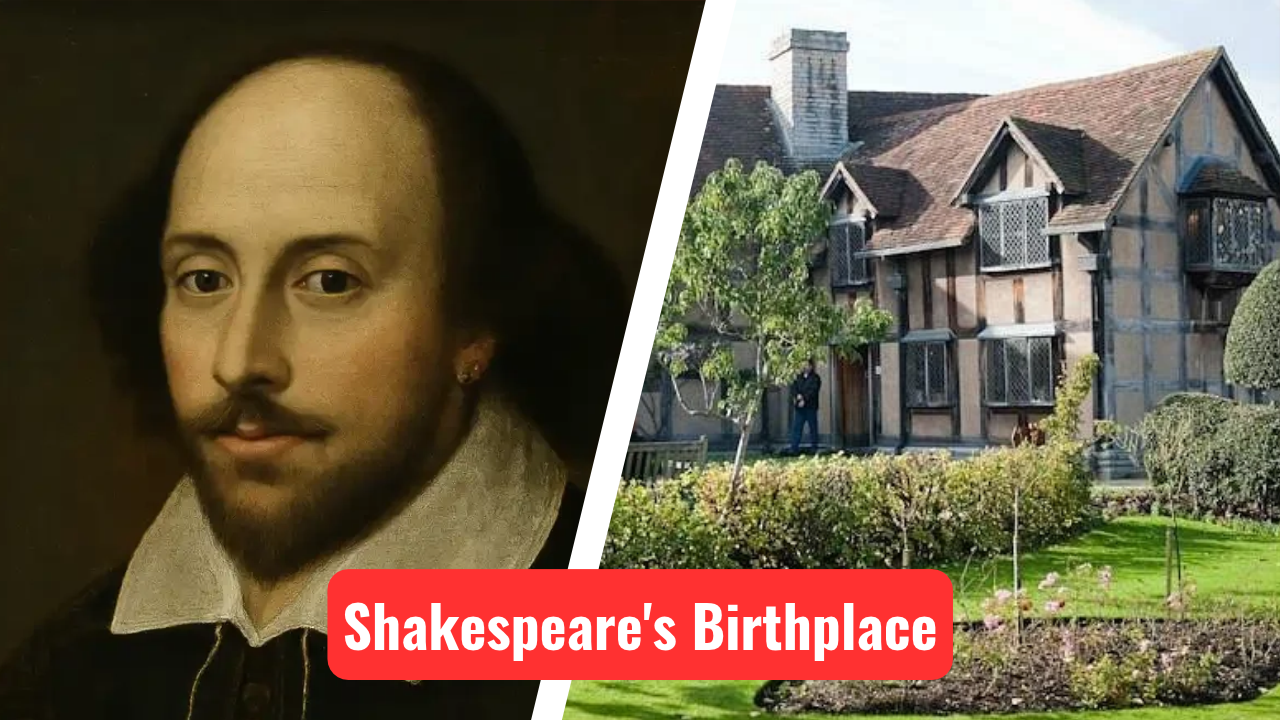
There are historic houses that impress because of their grandeur, and then there are houses that matter because of the stories held within their walls. William Shakespeare’s Birthplace in Stratford-upon-Avon belongs firmly to the second category.
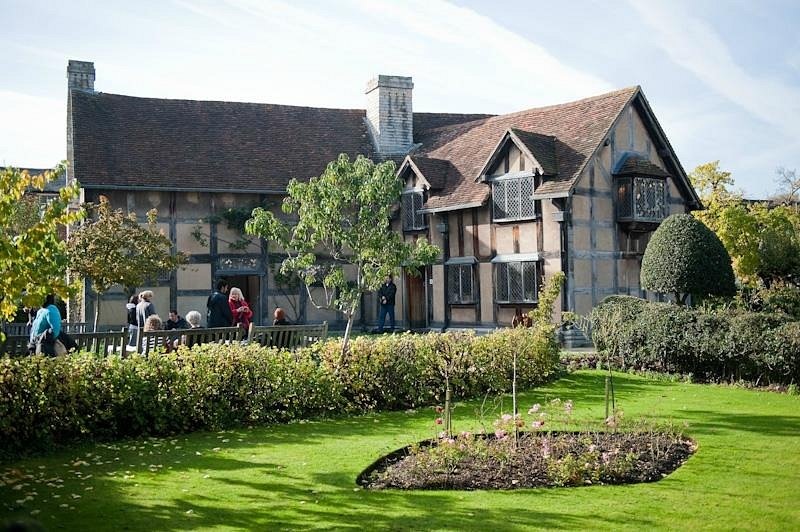
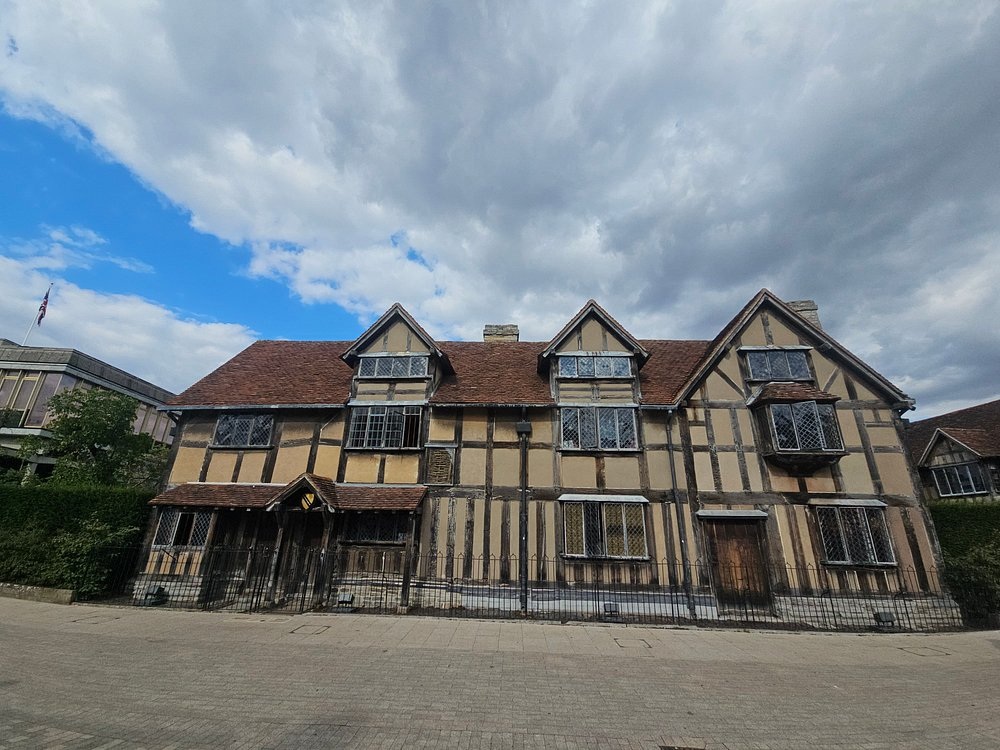
Standing on Henley Street, the modest timber-framed house offers an unusually intimate connection with Shakespeare. This was not a palace or a grand country estate. It was a family home and place of work—one where John Shakespeare made gloves, raised his children and built a life in 16th-century Stratford. It was here that William Shakespeare was born in 1564 and spent his childhood.
For architecture lovers, that modesty is precisely what makes the house fascinating. The building gives us a glimpse not only into the early life of England’s most celebrated playwright, but also into the character of an ordinary working household during the Tudor period.
Key Facts:
- Location: Henley Street, Stratford-upon-Avon, Warwickshire, England.
- Historical association: The house was owned and occupied by Shakespeare’s parents, John and Mary Shakespeare.
- Birth: William Shakespeare was born in 1564.
- Architecture: Historic timber-framed domestic architecture associated with Tudor-era Stratford.
- Original use: Family residence and John Shakespeare’s glove-making workplace.
- Family: John and Mary Shakespeare had eight children.
- Inheritance: William Shakespeare inherited the property after his father’s death in 1601.
- Preservation: The property was purchased for £3,000 in 1847 following a public campaign.
- Custodian: The Shakespeare Birthplace Trust has cared for the property since 1847.
- Modern role: Historic house museum, heritage attraction and centre for Shakespeare-related interpretation and collections.
- Visitor significance: The Trust describes it as a site of international historic significance.
A House on Henley Street
Shakespeare’s Birthplace sits at the heart of Stratford-upon-Avon, Warwickshire, on the historic Henley Street. Documentary records connect the property to Shakespeare’s father, John Shakespeare, as early as 1552. Later property records help establish that the house visitors see today occupies the site associated with the Shakespeare family.
Today, the address is Henley Street, Stratford-upon-Avon, Warwickshire, CV37 6QW. The house is also positioned within easy walking distance of other Shakespeare-related landmarks in the town, making it part of a much larger heritage landscape rather than an isolated attraction.
There is something particularly appropriate about its setting. Henley Street was a working urban thoroughfare, and Shakespeare’s childhood home was part of that everyday environment. The building would have been surrounded by neighbours, shops, workshops and the ordinary movement of Tudor Stratford.
The Family Behind the Famous Name
Before Shakespeare became a literary giant, he was simply William—the son of John and Mary Shakespeare.
John Shakespeare lived and worked at the property for around fifty years. He was a glove-maker, and the house incorporated a workshop where he carried out his trade. The property also had working spaces and a backyard that supported practical family activities.
John and Mary had eight children, with William born in 1564. While the exact date of Shakespeare’s birth is not documented, he was baptised at Holy Trinity Church in Stratford-upon-Avon on 26 April 1564. The traditional date of 23 April is widely celebrated as his birthday.
That distinction between historical evidence and tradition is worth remembering when visiting a building surrounded by centuries of storytelling. Shakespeare’s Birthplace is deeply authentic in its association with the Shakespeare family, but not every detail of his earliest years can be known with certainty.
Where Home and Work Met
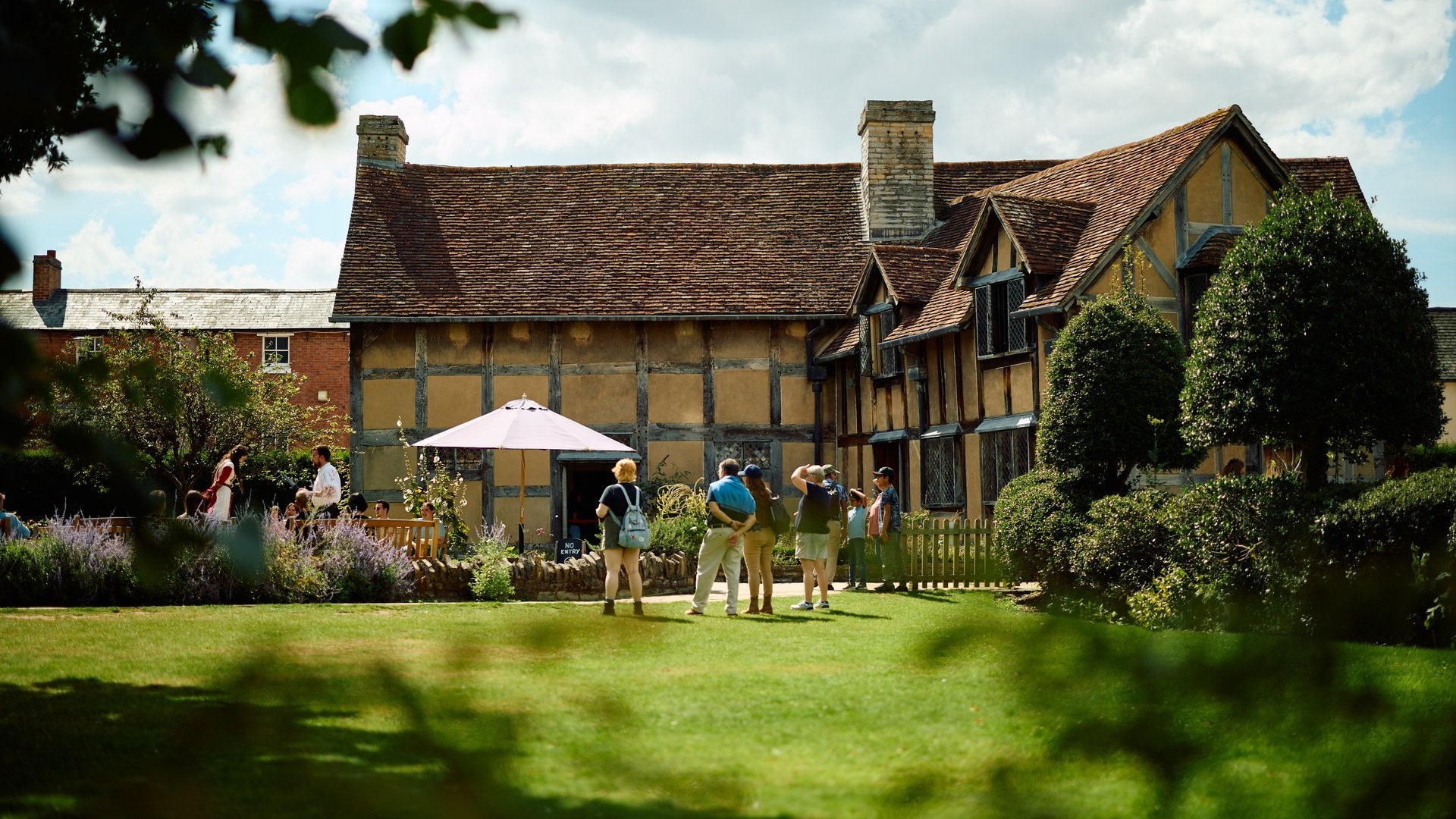
Perhaps the most interesting architectural aspect of the property is its mixed-use character.
John Shakespeare’s glove-making business operated from the house, making the building both a family residence and a workplace. The rear of the property also had practical spaces associated with his wool and glove-making activities, including workshops and storage areas.
In many ways, this sounds surprisingly familiar today.
The contemporary idea of working from home is often presented as something created by digital technology. Yet for centuries, homes doubled as workshops, shops, studios and places of trade. Shakespeare’s childhood house is an excellent reminder that the separation between domestic and professional life is not as universal—or as historically old—as we might assume.
A Tudor House Rather Than a Grand Mansion
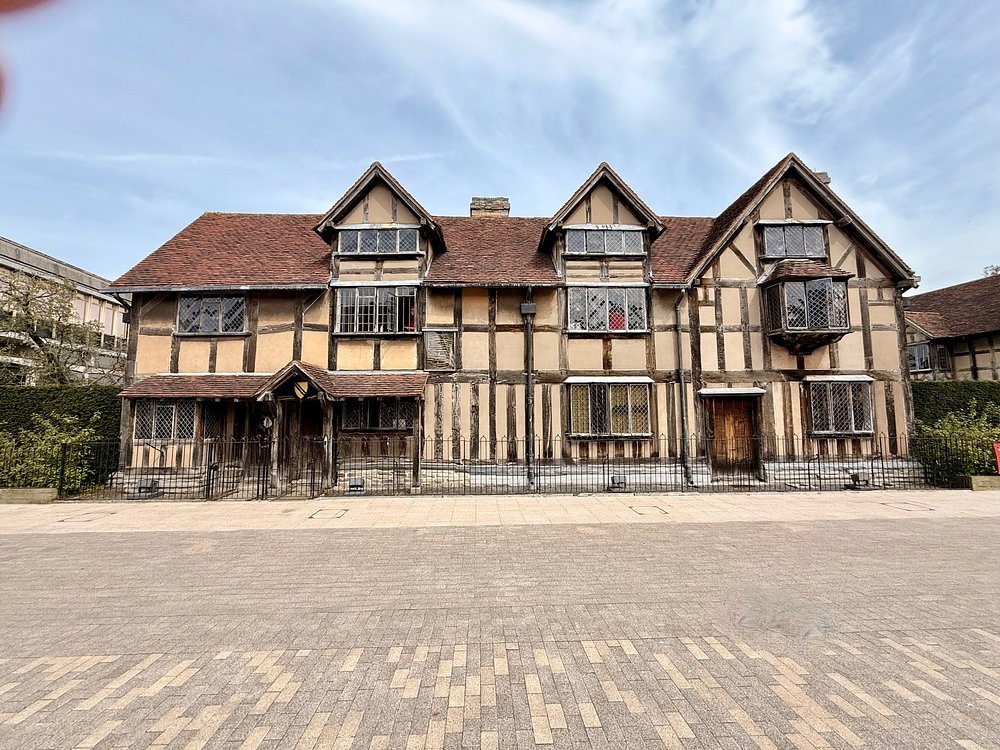
The architecture of Shakespeare’s Birthplace is restrained. Its significance does not come from monumental scale, elaborate ornament or aristocratic grandeur.
Instead, its appeal lies in the character of a historic timber-framed urban house.
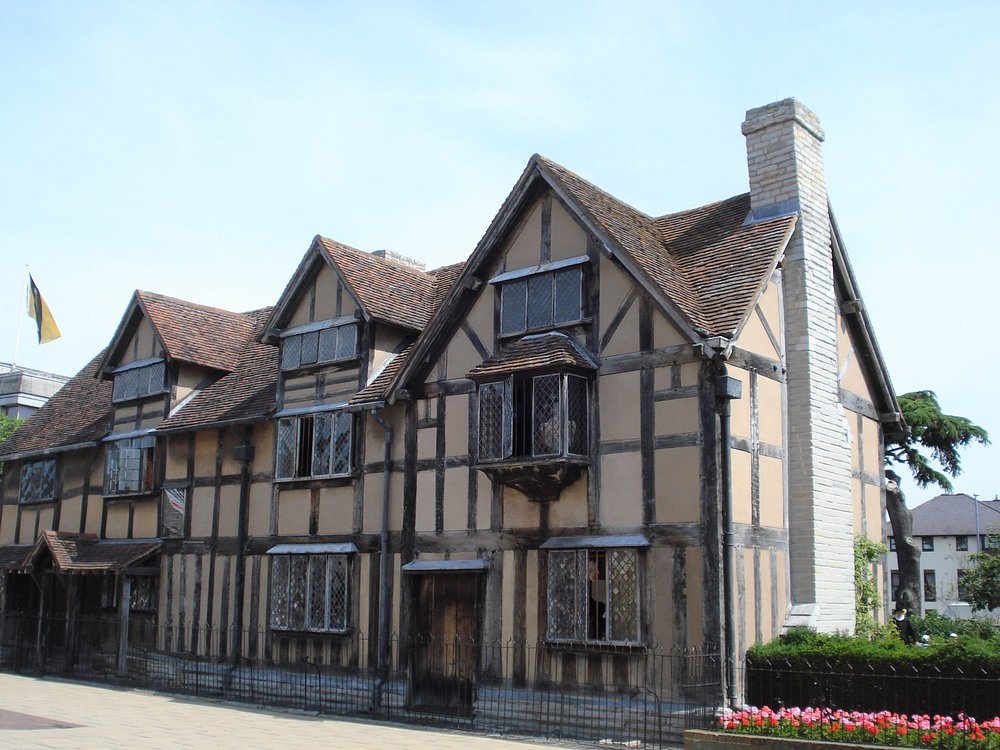
The building has developed over time, and the property once included adjoining structures. The Shakespeare Birthplace Trust’s research describes a two-room cottage added to the western end around twenty years after the original house was constructed. This later became associated with Shakespeare’s sister Joan Hart.
For today’s designers, this layered history is perhaps more interesting than a perfectly preserved building would be.
Historic houses are rarely static objects. They grow, change ownership, acquire extensions and adapt to new uses. Shakespeare’s Birthplace carries those layers visibly within its architectural story.
What Would Shakespeare Have Seen?
Walking through the house today invites an obvious question: what did the young Shakespeare actually experience here?
The answer has to be approached carefully.
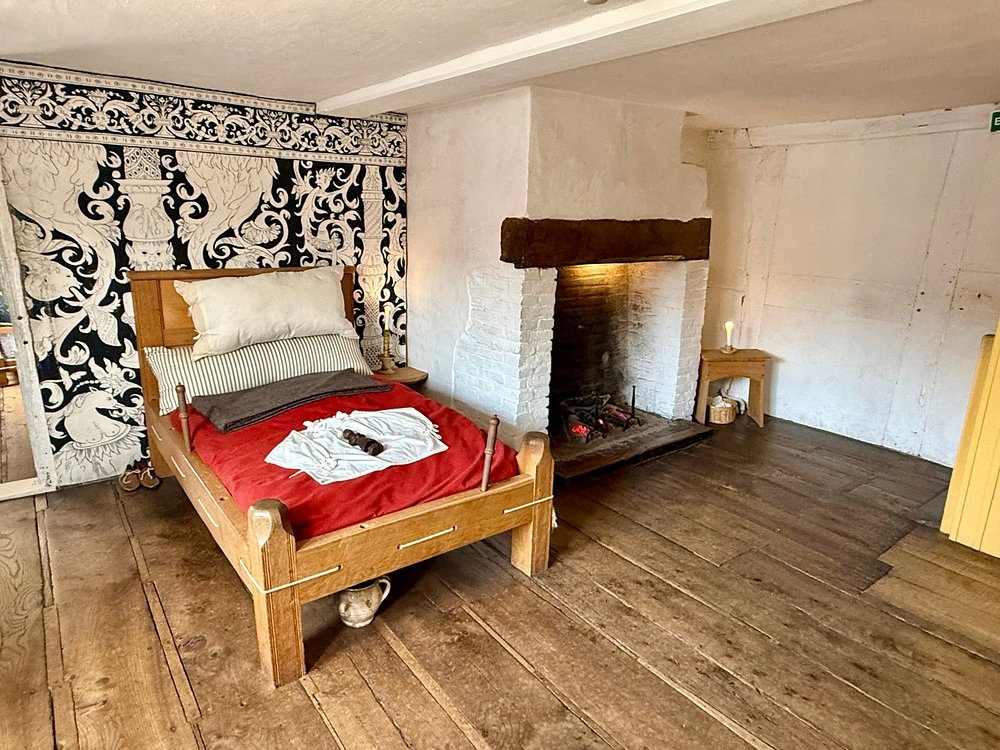
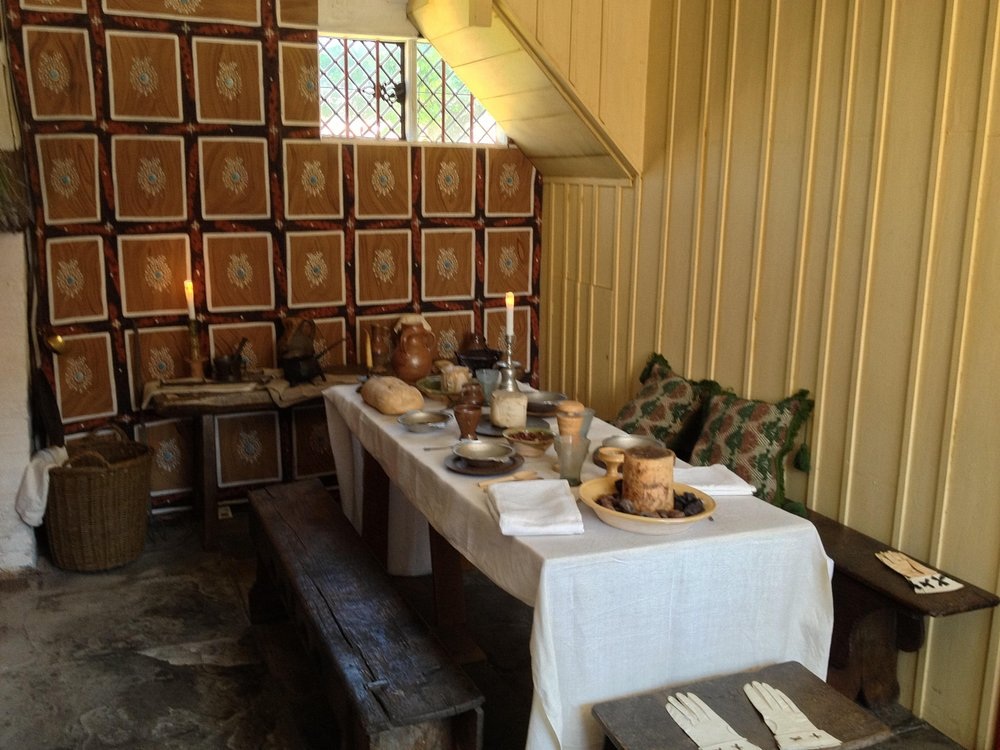
There are no surviving original furnishings from the Shakespeare family, according to the Shakespeare Birthplace Trust. Instead, the interiors have been interpreted using objects from the period and reproductions intended to create a sense of the domestic world Shakespeare would have known.
This makes the experience less about claiming that every chair or object belonged to Shakespeare and more about reconstructing the atmosphere of a Tudor family home.
The uneven floors, compact rooms, timber construction and domestic scale help communicate something that biographies alone cannot: the physical environment in which Shakespeare’s early life unfolded.
Shakespeare’s Childhood Was Not All Comfortable
The house also witnessed more difficult chapters of the family story.
Shakespeare married Anne Hathaway in 1582, and the Shakespeare Birthplace Trust notes that the couple may have continued living with his parents or in the neighbouring property. Their children were born in the Henley Street area, and their son Hamnet died in 1596 at the age of 11.
These details give the building a more human dimension.
It is tempting to approach Shakespeare’s Birthplace as a celebratory literary monument, but it was also a real family home. Births, marriages, work, financial pressures and grief all formed part of its history.
That everyday human story is what makes the architecture resonate.
Shakespeare Inherits the House
John Shakespeare died in 1601, after which William inherited the Henley Street properties.
By this point, the building had already begun another phase of its life. Parts of the property were leased to tenants, and the main house became associated with an inn known as the Maidenhead, later the Swan and Maidenhead.
After Shakespeare died in 1616, the property passed to his daughter Susanna. It subsequently passed to his granddaughter Elizabeth Hall and later through the Hart family, descendants of Shakespeare’s sister Joan.
The house therefore remained part of a living chain of family ownership long after Shakespeare himself was gone.
The Dramatic Story of Its Preservation
The building’s survival into the modern era was not guaranteed.
By the 19th century, the property had been divided into separate uses, including an inn, a butcher’s shop and an adjoining tenement. As Shakespeare’s reputation grew internationally, so did interest in preserving the house associated with his birth.
A public campaign was launched to save the property. Charles Dickens was among those who supported the effort, and the Shakespeare Committee ultimately purchased the property at auction in 1847 for £3,000.
That purchase was a pivotal moment.
What had once been a private family property became a national memorial—and eventually one of the world’s best-known literary heritage sites.
The Threat of Losing Shakespeare’s House
The preservation story becomes even more remarkable when viewed against the ambitions of the 19th-century celebrity culture surrounding Shakespeare.
American showman P. T. Barnum reportedly wanted to acquire and dismantle the house so that it could be transported to the United States. The campaign to preserve it in Stratford therefore became about more than buying a building; it was about keeping the physical site connected to its geographical and cultural context.
The decision to keep the house in Stratford seems obvious today.
But at the time, the idea of moving famous buildings and objects for public entertainment was not unusual. Shakespeare’s Birthplace survived as a place rather than becoming simply an artefact.
Conservation: Keeping the Past Alive
Today, the Shakespeare Birthplace Trust continues to conserve the property.
This is where heritage architecture becomes particularly interesting. Conservation is not simply about making an old building look old. It involves understanding its materials, history, alterations and vulnerabilities while finding ways for modern visitors to experience the site without compromising its future.
The Trust describes conservation as an ongoing responsibility, with the aim of preserving the Birthplace for future generations.
The house therefore exists somewhere between past and present.
It is a Tudor building, a Victorian-era heritage project and a modern museum all at once.
The Modern Building Beside the Historic House
An especially interesting architectural conversation takes place just beside the Birthplace.
The Shakespeare Centre was developed to house the Trust’s growing collections after the original house could no longer accommodate them. Rather than copying the Tudor building, its architects pursued a contemporary design intended to reflect its own period.
That decision is significant.
Heritage districts sometimes face the temptation to make every new building imitate the past. The Shakespeare Centre represents a different approach: allowing contemporary architecture to sit alongside historic fabric without pretending to be something it is not.
It creates a useful dialogue between preservation and modernity.
A House Visited by Millions
The Birthplace has become an international destination, welcoming visitors from across the world. The Shakespeare Birthplace Trust says that more than 25 million people have visited since the property was acquired for museum purposes in 1847.
That number says something about the extraordinary cultural power of a relatively modest house.
The building itself is not enormous. Its rooms are intimate and its architectural language is domestic. Yet generations of visitors have crossed its threshold because the house offers something that a monument or statue cannot: a sense of physical proximity to a person’s everyday life.
Why Shakespeare’s Birthplace Still Matters
It would be easy to dismiss Shakespeare’s Birthplace as simply another historic house museum.
It is much more than that.
The building allows us to consider how people lived and worked in Tudor England. It demonstrates how domestic architecture could accommodate family life and craft production. It shows how a building can accumulate layers of ownership and adaptation. And, perhaps most importantly, it demonstrates how architecture can become a vessel for cultural memory.
The house does not tell us exactly how Shakespeare became Shakespeare.
But it gives us the setting in which his story began.
A Modest House With an Extraordinary Legacy
There is a quiet irony to Shakespeare’s Birthplace.
The man who would eventually produce some of the most influential works in the English language began life in a relatively modest working household on an ordinary street in Stratford-upon-Avon.
Centuries later, that same house has become an international landmark.
Its importance does not come from grand architecture. It comes from association, survival and memory.
For architects and design enthusiasts, perhaps that is the most compelling lesson. Buildings do not become important only because they are monumental. Sometimes their greatest value lies in the lives that unfolded inside them.
Shakespeare’s Birthplace is one such building—a Tudor home that has survived not merely as a relic, but as a place where history still feels remarkably close.









Related Article:
Inside Kumar Vishwas’ Luxurious Noida House: A Blend of Poetry, Art, and Palace-Style Living
Gautam Adani House: Inside the luxurious residence of India’s business tycoon in Ahmedabad
Mukesh Ambani House: Antilia, the world’s most expensive private residence in Mumbai
Jeff Bezos House: Inside the Mansions and Estates of the Amazon Founder
Bill Gates’s House: An inside look at all the homes owned by the Microsoft co-founder
Michael Jordan’s homes: A design-led journey through his signature residences
Abode: Inside Anil Ambani’s iconic Pali hill residence that redefines luxury living in Mumbai
Inside Jalsa: An architectural perspective on Amitabh Bachchan’s iconic Mumbai residence
Abode: Inside Anil Ambani’s iconic Pali hill residence that redefines luxury living in Mumbai
Jatia House: Kumar Mangalam Birla’s iconic home of luxury and heritage in Mumbai
Gulita: The diamond-inspired seafront mansion of Isha Ambani and Anand Piramal
Inside Sea Wind: The 17-Storey family home Mukesh Ambani shared with Anil Ambani before Antilia
Goolestan (Om Arc): Inside Anand Mahindra’s heritage home on Nepean sea road, Mumbai
Deepinder Goyal House: Inside the Zomato Founder’s luxury home at DLF Camellias
Bhavish Aggarwal house: Inside the Ola Co-founder’s Private Residence in Bengaluru
Inside Sundar Pichai and Anjali Pichai’s House: A blend of modern luxury and thoughtful design
Satya Nadella House: A Peek Inside the Microsoft CEO’s Residence
Adar & Natasha Poonawalla’s Farmhouse: Inside a retreat of elegance and equestrian charm
Shiv Nadar’s Residence: Where art and vision shape the HCL founder’s home
Nikhil Kamath House: Inside Zerodha co-founder’s luxury Bengaluru home
Inside Anil Agarwal’s House: A look at the Vedanta billionaire’s London mansion
Uday Kotak House: Inside the iconic sea-Facing “Champagne House” in Mumbai
Sunil Bharti Mittal’s Mansion in Delhi: Inside a legacy home in India’s most exclusive address
Inside Lakshmi Niwas Mittal’s global real estate empire: Steel, Success & Super Homes
Nithin Kamath House: A look inside the Zerodha CEO and founder’s lifestyle & design philosophy
Inside Savitri Jindal House: A Look at the Elegant Residences of India’s Richest Woman
Mamata Banerjee House: A look inside the modest home of Bengal’s CM residence
Inside Pawan Kalyan’s Rs 130 Crore Jubilee Hills Mansion: A perfect blend of luxury and tradition
Pawan Kalyan’s new House at Pithapuram: Where architecture meets political identity
Inside CarryMinati’s House: Modern interiors, gaming studio & creator lifestyle
Sidhu Moose Wala House: Inside the Iconic Punjab mansion that became a landmark for fans
Aamir Khan House: A look inside the Bollywood Star’s elegant and minimalist home
Tim Cook House: Inside Apple’s CEO’s private home and the philosophy behind it
David Warner House: Inside the Five-Level Oceanfront Sydney Home of Australia’s Cricket Star
Cristiano Ronaldo House: Inside the football legend’s stunning luxury homes around the world
Vinod Khosla House: Arthur Erickson’s Concrete Retreat in Portola Valley