A year that asks architecture to look beyond landmarks and return to one of its most fundamental responsibilities: creating homes that are affordable, adequate, resilient and worthy of everyday life.
Architecture is often associated with the extraordinary—the skyline-defining tower, the cultural landmark, the beautifully detailed residence, or the building that eventually finds its place in history books. But architecture also begins somewhere much simpler: with the idea of a home.
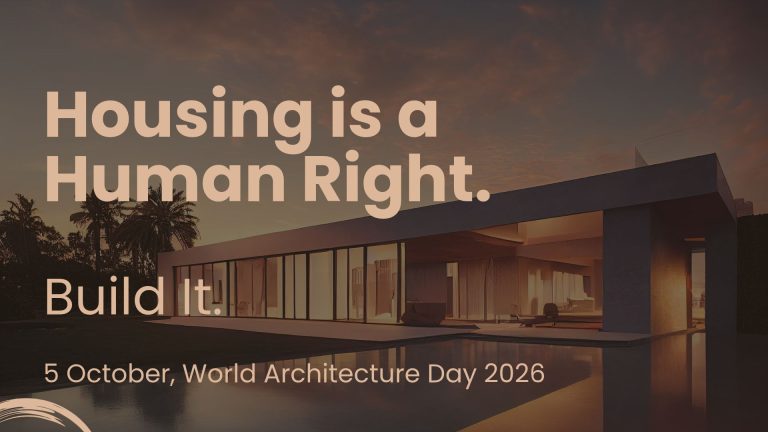
On 5 October 2026, World Architecture Day brings that idea back into focus. The International Union of Architects (UIA) has chosen “Housing is a Human Right. Build It.” as this year’s theme, placing housing at the centre of the architectural conversation. The message is straightforward, but the question behind it is much more complicated: who are our cities being built for, and what does it really mean to provide a decent place to live?
Created by the UIA in 1985, World Architecture Day is observed each year on the first Monday of October, alongside the United Nations’ World Habitat Day. This year’s emphasis on housing comes at a time when affordability, rapid urbanisation, displacement and climate change are putting enormous pressure on communities around the world.
When a House becomes more than four walls
Housing is often discussed as a matter of supply. Governments announce new housing schemes, developers calculate units and cities measure their growth through numbers. But a home is not simply a unit that can be counted. It is part of a person’s everyday life, and its value depends on much more than its floor area.
A genuinely adequate home needs access to clean water, sanitation, daylight, ventilation, safety and privacy. It also needs to be connected to the city around it. A house that is affordable but located far from employment, schools, healthcare and public transport can create another kind of hardship. The quality of housing cannot therefore be separated from the quality of the neighbourhood in which it exists.
This is where architecture has a role that extends beyond the building itself. The way a home is planned, the way it meets the street, the way it responds to climate and the way it accommodates changing family needs can determine whether it becomes a place where people can build a life or simply a place where they can sleep.
The question of affordability and design
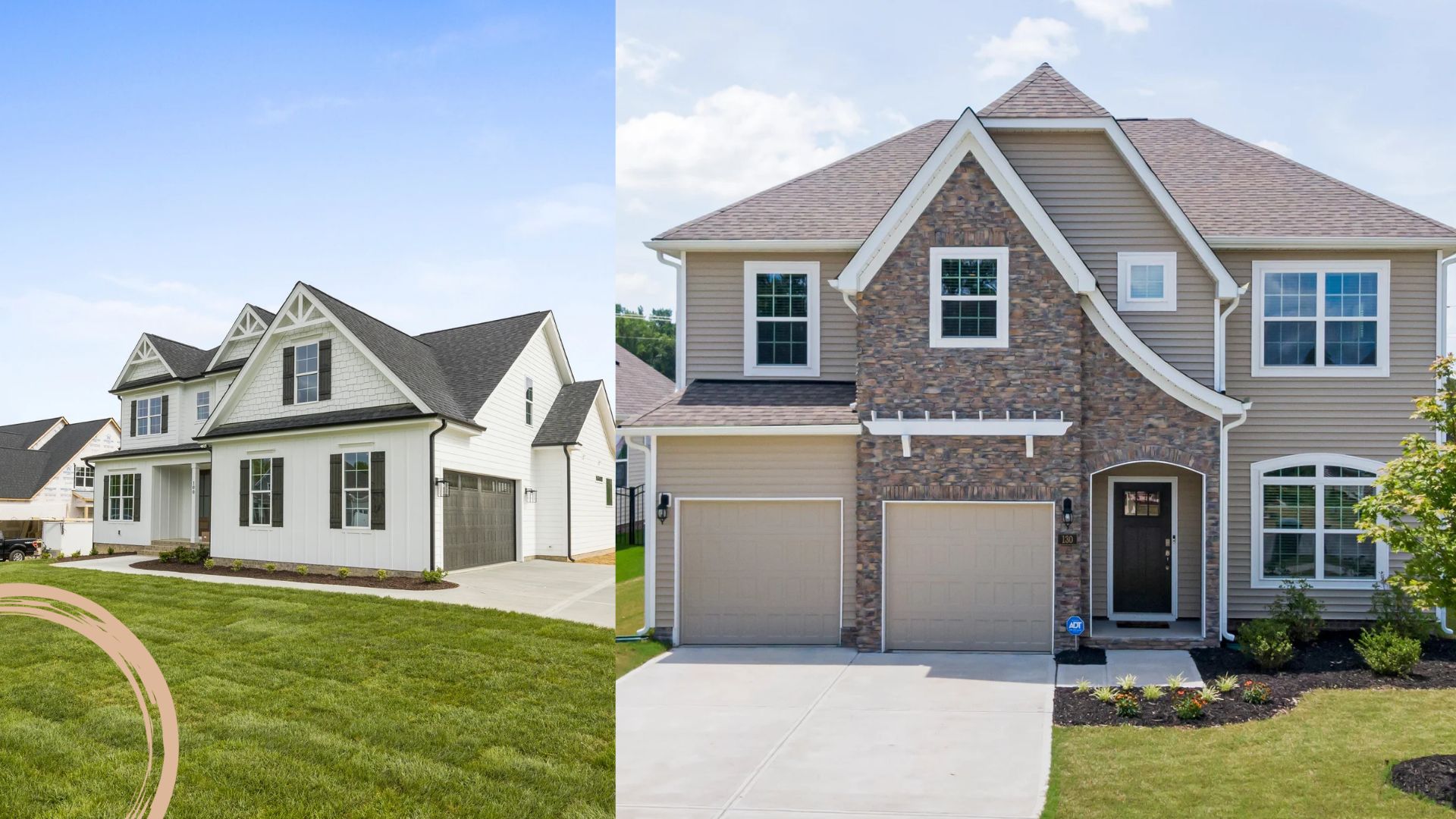
Affordable housing should not automatically mean compromised housing. Yet the two are often treated as if they are inseparable. When budgets become tight, design quality is frequently among the first things to disappear, leaving behind standardised buildings that may satisfy a numerical requirement but do little to improve the everyday experience of their residents.
Good architecture, however, does not necessarily depend on expensive materials or elaborate forms. Some of the most valuable decisions are simple ones: orienting a building correctly, bringing daylight into living spaces, creating cross-ventilation, providing shade and designing rooms that can adapt as families change.
For housing to be genuinely affordable, the calculation also needs to extend beyond the purchase or rental price. A poorly designed building can demand more energy for cooling, require expensive maintenance or leave residents vulnerable to heat and flooding. The cheapest home at the beginning is not always the most affordable home over its lifetime.
The challenge for architects is therefore not to make affordable housing look luxurious. It is to make good design part of affordability itself.
What India can teach us about housing
India’s housing story is particularly complex because there is no single definition of what a typical home looks like. The country’s cities contain high-rise apartments, independent houses, rental accommodation, informal settlements, self-built neighbourhoods and developments that are still evolving from one generation to the next.
The pressures are equally varied. Mumbai faces extraordinary land and density constraints, Bengaluru continues to expand rapidly, Delhi’s housing landscape is shaped by migration and infrastructure, while smaller cities are experiencing their own transformation. Climate, culture, family structures and local economies all influence the way people live.
This diversity makes one-size-fits-all housing particularly difficult.
It also gives architects an opportunity to look more closely at India’s own architectural knowledge. Courtyards, shaded verandahs, deep overhangs, screened openings and locally available materials were historically used to respond to heat, light and ventilation. These ideas do not need to be copied literally, but they remain relevant at a time when climate-responsive design has become an urgent necessity.
The lesson is simple: good housing begins by understanding its place.
A Home in a changing climate
Climate change has made the question of housing even more urgent. For many people, extreme heat, flooding, water shortages and rising energy costs are no longer distant possibilities. They are part of everyday life.
This changes what adequate housing needs to provide. A home must offer protection from the climate while remaining affordable to operate. Natural ventilation, shading, vegetation, water management and passive cooling can become as important as the structural strength of the building.
This is particularly important for lower-income households, who are often the least able to absorb the costs of inefficient buildings or recover from climate-related damage.
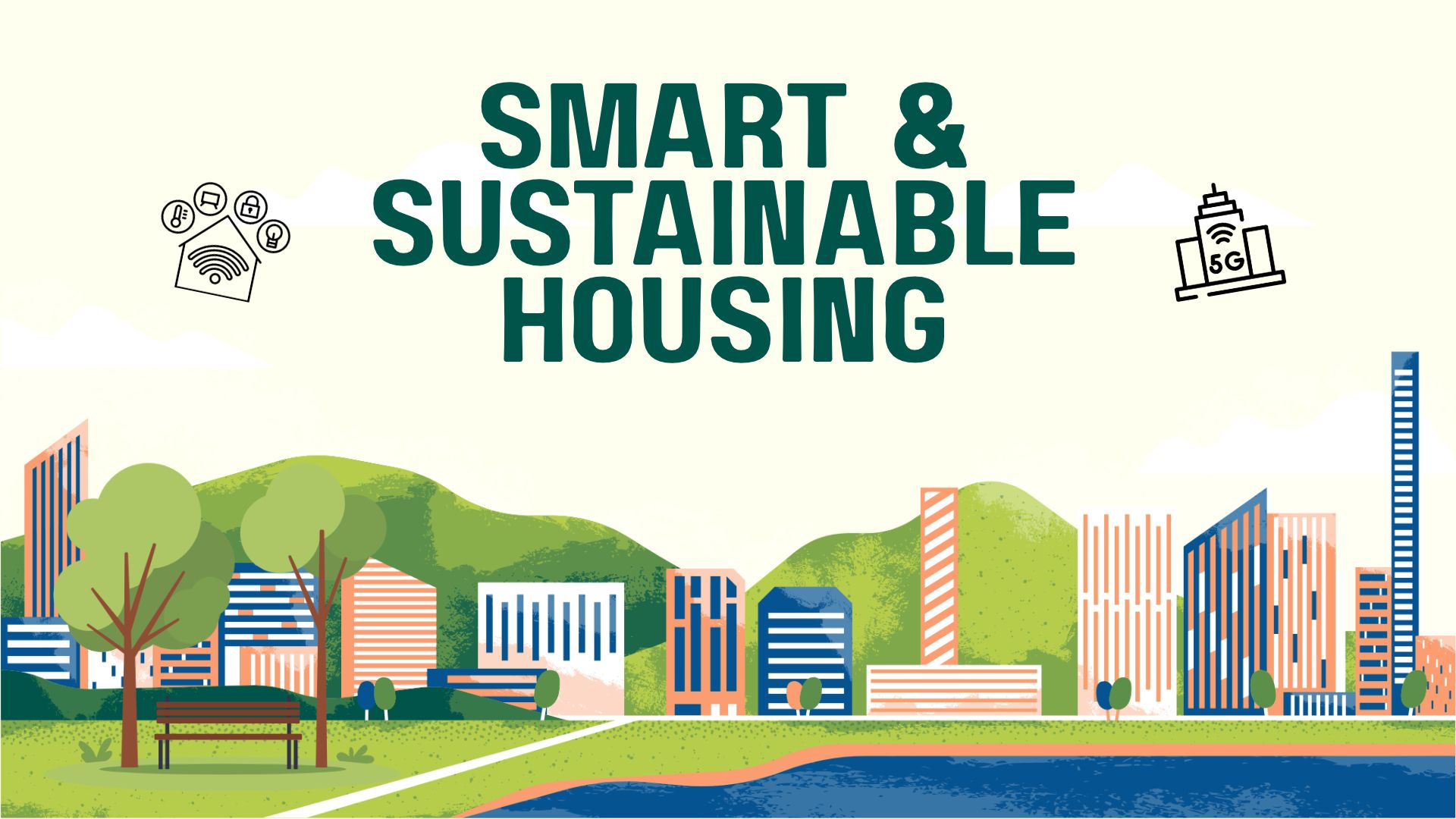
The conversation around sustainable architecture therefore needs to move beyond high-performance buildings and expensive technologies. Sustainability in housing can also mean getting the basics right—using materials intelligently, designing for the local climate and reducing dependence on energy-intensive systems wherever possible.
The most sustainable housing solution may not always be the one with the most technology. Sometimes it is simply the one that understands its environment.
Perhaps we need to build differently
The words “Build It” in this year’s theme could easily be understood as a call for more construction. But cities may also need to ask what can be reused before they decide what needs to be built from scratch.
Across urban areas, there are vacant offices, ageing commercial properties, industrial buildings and underused structures that still have years of useful life left in them. Some can be adapted for housing, while others can support mixed-use neighbourhoods and community facilities.
Adaptive reuse cannot solve the housing shortage on its own, but it can become an important part of a larger strategy. It makes use of existing infrastructure, reduces the need for demolition and can bring new life to neighbourhoods that already have transport, services and established communities.
In this sense, building does not always mean starting again. Sometimes it means repairing, adapting and making better use of what is already there.
The Architect’s role Is changing
Housing also raises a larger question about the role of the architect. The profession has traditionally been understood through the design of buildings, but the problems surrounding housing extend far beyond architecture. Land, planning regulations, finance, infrastructure and public policy all influence who gets access to a home and where that home can exist.
Architects cannot solve these problems alone. But they can no longer afford to stand outside the conversation.
The UIA’s 2026 theme encourages the profession to engage with affordability, equitable access, inclusive housing and the reuse of existing buildings. This points towards a broader understanding of architectural practice—one in which architects participate not only in designing spaces but also in shaping the discussions that determine how those spaces become possible.
It is a role that requires more listening, more collaboration and, perhaps, a willingness to work on problems that do not always result in a spectacular building.
The architecture we don’t usually photograph
The buildings that receive the most attention are rarely the buildings that house the greatest number of people. Architecture publications naturally gravitate towards the new, the experimental and the visually striking. Yet some of architecture’s most important work happens in places that are almost invisible in architectural culture.
It happens in the apartment that remains comfortable during a heatwave. In the shaded courtyard where children play. In the affordable neighbourhood that allows a family to stay close to work and school. In the renovated building that continues to serve a community instead of being demolished.
These places may never become landmarks, but they demonstrate why architecture matters.
A building ultimately exists for the people who use it. Its success cannot be measured only by how it looks on the day it is completed. It has to be judged by how it performs years later, how it adapts to change and whether the people who live there feel safe, comfortable and at home.
Building a more human idea of architecture
The theme of World Architecture Day 2026 is simple: “Housing is a Human Right. Build It.” But its meaning reaches far beyond the construction of houses.
It is a reminder that architecture has a responsibility to think about affordability without sacrificing quality, density without sacrificing dignity, sustainability without making homes inaccessible, and development without forgetting the communities already there.
Most importantly, it asks the profession to remember that housing is not an abstract category. Behind every housing statistic is a person, a family and an everyday life.
Architecture will continue to produce extraordinary buildings, and there is value in that ambition. But the profession’s deeper contribution may be found in something much quieter—the ordinary home that works well, the neighbourhood that feels connected, the building that responds to its climate and the place that allows people to live with dignity.
On World Architecture Day 2026, perhaps that is the architecture worth looking at most closely.
Before architecture becomes a landmark, it becomes someone’s home.