

Murdeshwar Temple
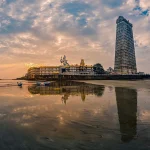
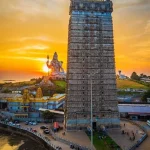
If you’ve ever stood by the sea and felt small in the best possible way, Murudeshwar Temple (Murdeshwar temple) gives you that feeling instantly. Located on a narrow stretch of land along Karnataka’s coastline, the temple rises between the Arabian Sea and the sky, with Lord Shiva standing tall, calm, and unshaken as waves crash endlessly nearby.
Murudeshwar isn’t just a temple you visit—it’s a place you experience. The sound of the ocean, the scale of the architecture, and the deep mythology tied to the land come together to create something truly memorable.
The Setting: A Temple Surrounded by the Sea
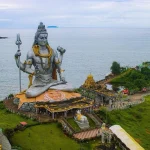
Murudeshwar sits in Uttara Kannada district, close to the town of Bhatkal. What makes it special is its location. The temple complex is almost completely surrounded by the sea, giving it a sense of isolation and serenity that’s rare for such a popular destination.
As you approach, the first thing you notice is the massive statue of Lord Shiva. It’s visible from far away, rising above the coastline like a silent guardian. The salty breeze, the open sky, and the endless horizon make the place feel both powerful and peaceful at the same time.

The Story Behind Murudeshwar
Like many ancient temples in India, Murudeshwar is deeply rooted in mythology. The temple is connected to the legend of the Atma Linga, one of the most sacred symbols of Lord Shiva.
According to the story, Ravana, the king of Lanka, received the Atma Linga from Shiva after intense penance. He was warned never to place it on the ground. Through divine intervention, Ravana was tricked into doing exactly that, and the linga became fixed to the earth. Pieces of it are believed to have fallen across different parts of Karnataka, with Murudeshwar being one of those sacred spots.
For devotees, this belief gives the temple a powerful spiritual presence. For visitors, it adds depth and meaning to the experience—this isn’t just a structure by the sea; it’s a place shaped by centuries of faith.

From a Simple Shrine to a Monumental Temple
The original Murudeshwar Temple was a modest coastal shrine, rebuilt several times over the centuries due to erosion and changing rulers. What we see today is the result of a modern vision that aimed to give the temple a grand identity while preserving its spiritual core.
In the late 20th century, major renovations transformed Murudeshwar into a landmark. The idea was simple but ambitious: create a space that reflects the greatness of Lord Shiva while welcoming pilgrims and travelers from around the world.
The Tower That Changes Your Perspective
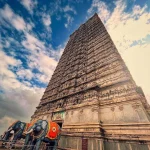
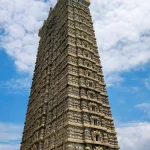
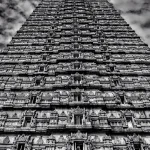
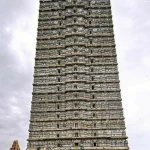
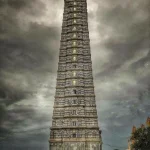
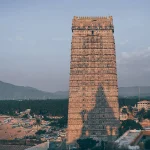
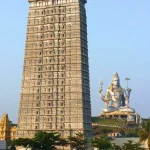
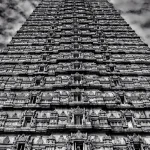
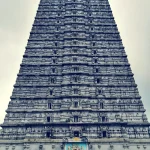
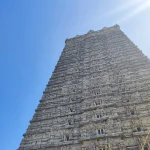
One of the most striking features of the temple is its Raja Gopuram, a towering structure with 20 floors. Unlike traditional temple towers that rely purely on stone, this one uses modern construction techniques, allowing it to reach remarkable heights.
Inside the gopuram, there’s an elevator—something you don’t usually expect in a temple. As you rise upward, the noise of the crowd fades, and at the top, you’re greeted with a breathtaking view. The sea stretches endlessly, the Shiva statue appears almost at eye level, and the temple complex below looks perfectly balanced.
It’s a moment that quietly stays with you.

The Shiva Statue: Calm, Powerful, and Timeless
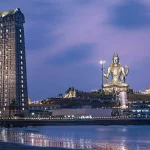
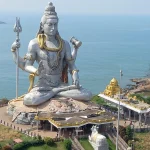
Standing at about 123 feet tall, the statue of Lord Shiva is the heart of Murudeshwar’s visual identity. Shiva is shown in a peaceful, meditative posture, facing the sea as if in eternal contemplation.
Despite its size, the statue doesn’t feel overwhelming. Instead, it feels grounding. There’s a sense of stillness about it, as though Shiva is unaffected by time, weather, or the constant movement around him.
Built using reinforced concrete and designed to withstand harsh coastal conditions, the statue is both an engineering achievement and a deeply symbolic presence.
Walking Through the Temple Complex
The temple complex itself is open and thoughtfully laid out. There’s space to walk, sit, observe, and breathe. The sanctum housing the Shiva Linga feels intimate, especially when compared to the massive structures around it.
Devotees move quietly through the space, while tourists pause to admire the carvings, the scale, and the setting. The sea breeze flows freely through the complex, making the experience feel natural rather than enclosed.

A Place of Faith and Everyday Life
Murudeshwar is alive throughout the year, but during festivals like Maha Shivaratri, it truly comes into its own. The temple fills with lamps, chants, and a sense of shared devotion.
What’s beautiful about Murudeshwar is how naturally faith blends with everyday life here. Fishermen, pilgrims, families, and travelers all share the same space, each connecting with the temple in their own way.
Why Murudeshwar Stays With You
Murudeshwar Temple isn’t just about size or spectacle. It’s about how architecture, nature, and belief come together effortlessly. The modern additions don’t overpower the spiritual essence—they enhance it.
You leave with the sound of waves in your ears and the image of Shiva standing silently against the sky. It’s a reminder that some places don’t need words to explain their power—you simply feel it.
Murudeshwar Temple is proof that when architecture respects its setting and purpose, it can become timeless. A place where stone meets sea, and faith feels quietly monumental.




Most Read Articles:
Shri Ram Janmabhoomi Mandir: A timeless confluence of devotion, architecture & cultural heritage
Grand Janki Mandir to Be Built at Punaura Dham Sitamarhi: ₹882.87 Crore Mega Project Announced
Meenakshi Temple: A Living Masterpiece of Indian Architecture
Maa Vindhyavasini Mandir and Its Corridor: A Divine Fusion of Heritage, Devotion & Modern Vision
Shri Kashi Vishwanath Temple: A Timeless Journey into the Spiritual Heart of India
Tirumala Venkateswara Temple: An Architectural and Spiritual Marvel of South India
Khatu Shyam Ji Mandir: A Timeless testament of devotion, architecture, and living heritage