

When the name Neymar is associated with a home, it is easy to focus on the price tag, the celebrity lifestyle and the sheer scale of the property. But Neymar’s house in Mangaratiba, on Brazil’s Costa Verde, is interesting for another reason: it represents a particular idea of contemporary luxury living—one built around privacy, recreation, nature and entertaining.
Located inside the Portobello development, the property became widely reported after Neymar and his father acquired it in 2016. At the time, reports described a large estate with six suites, a tennis court, swimming pool, gym, underground wine cellar and a helipad.
For an architecture audience, however, the most interesting question is not simply “How luxurious is Neymar’s house?” It is “What does a home like this tell us about the way luxury residences are designed?”
Key Facts:
- Location: Mangaratiba, Rio de Janeiro, Brazil
- Purchased: 2016
- Property Size: Approx. 10,200 sq m
- Suites: 6
- Amenities: Pool, tennis court, gym, sauna & jacuzzi
- Wine Cellar: Capacity for around 3,000 bottles
- Special Feature: Private helipad
- Setting: Tropical coastal landscape of Brazil’s Costa Verde

Where Is Neymar’s House?
Neymar’s famous Brazilian residence is in Mangaratiba, a coastal municipality in the state of Rio de Janeiro.
The location is a significant part of the property’s appeal. Mangaratiba sits along the Costa Verde, where the landscape brings together dense vegetation, hills and the Atlantic coastline. The Portobello development adds another layer of privacy and resort-style amenities.
In other words, the house does not need to manufacture a dramatic setting—the landscape is already doing much of the work.
That relationship between architecture and nature is one of the defining characteristics of contemporary luxury homes in tropical and coastal regions.
A Home Built Around Lifestyle
One of the clearest characteristics of Neymar’s house is that it goes beyond the conventional idea of a residence.
The reported facilities include spaces for sport, wellness, entertainment and relaxation. There is a tennis court for activity, a gym for training, a pool for leisure, a spa area for recovery and an extensive outdoor environment for spending time with family and friends.
This kind of planning reflects a broader change in luxury residential design.
The modern luxury home is increasingly expected to perform several roles simultaneously. It can be a private retreat, a wellness centre, an entertainment space and a holiday home—all without requiring the resident to leave the property.
For a professional athlete, that approach feels particularly relevant.
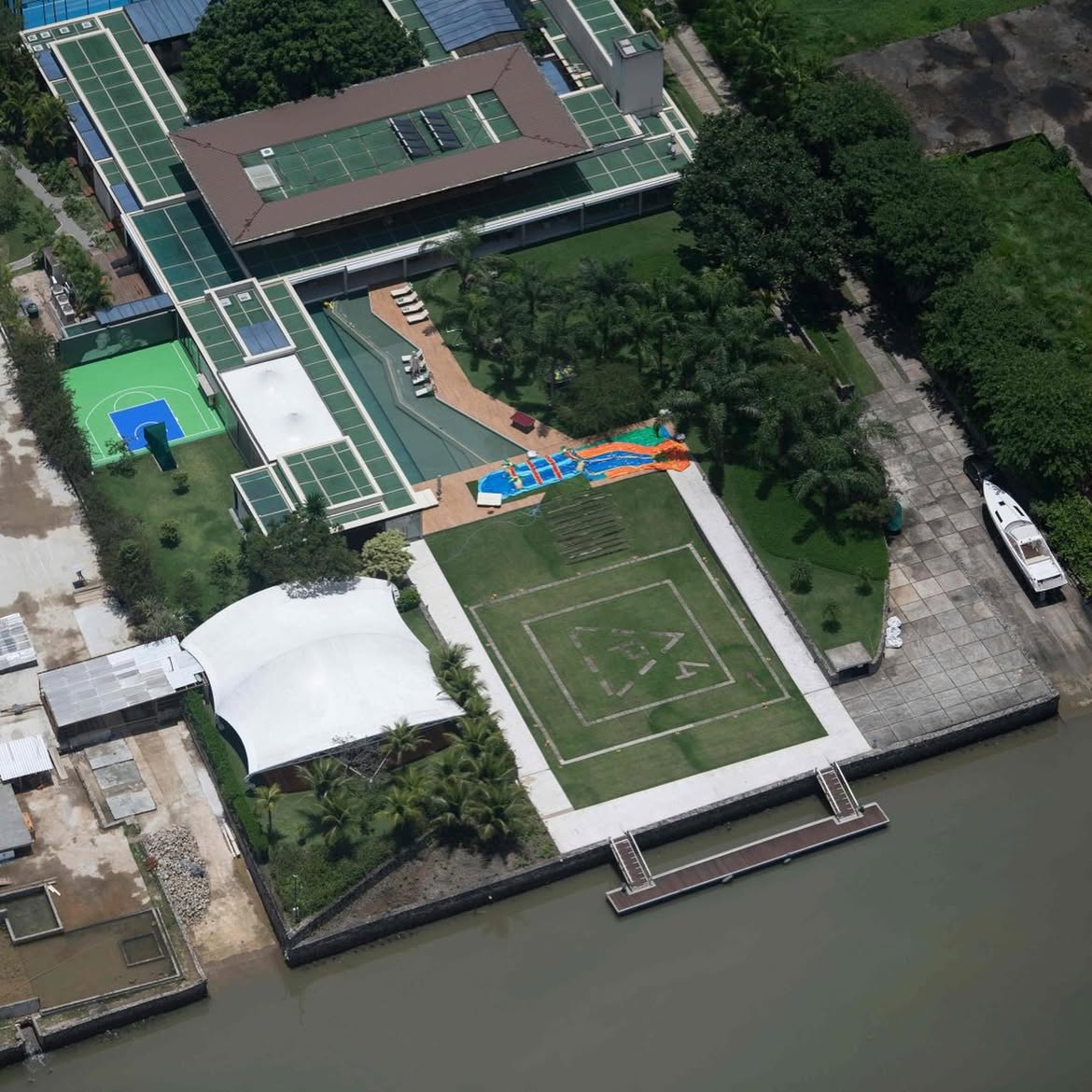
The Pool and Landscape
The outdoor areas are arguably where the Mangaratiba setting becomes most important.
Images published around the time of Neymar’s purchase show a large pool surrounded by landscaped gardens, with the suites opening towards the garden.
Rather than treating the garden as leftover space around the building, the property appears to organise much of its leisure experience around the outdoors.
That is a familiar principle in tropical residential architecture: the boundary between inside and outside becomes part of the design.
Pools, terraces, gardens, shaded areas and large openings can extend the perceived living area without simply adding more enclosed rooms.
Six Suites and the Idea of Privacy
With six suites, the house is clearly designed to accommodate more than just a small household.
That matters when considering the property as an architectural programme. A celebrity residence has to balance two seemingly opposite requirements: it needs to support social gatherings while also providing privacy.
Separate suites allow guests and family members to have their own spaces, while larger common areas can support entertaining.
The result is a residential layout that resembles a private hospitality environment—a home that can function almost like a boutique resort when a large group is staying there.

The Underground Wine Cellar
Among the property’s more unusual features is its underground wine cellar.
Contemporary reports described a climate-controlled cellar with capacity for approximately 3,000 bottles.
From a design perspective, this is an interesting example of how luxury architecture often creates specialised spaces around personal interests.
Instead of simply providing storage, the cellar becomes a dedicated environment with its own functional requirements—temperature control, organisation and protection from the external climate.
It is a small example of a larger principle: high-end residential architecture increasingly designs around the individual rituals of its occupants.
Sport as Architecture
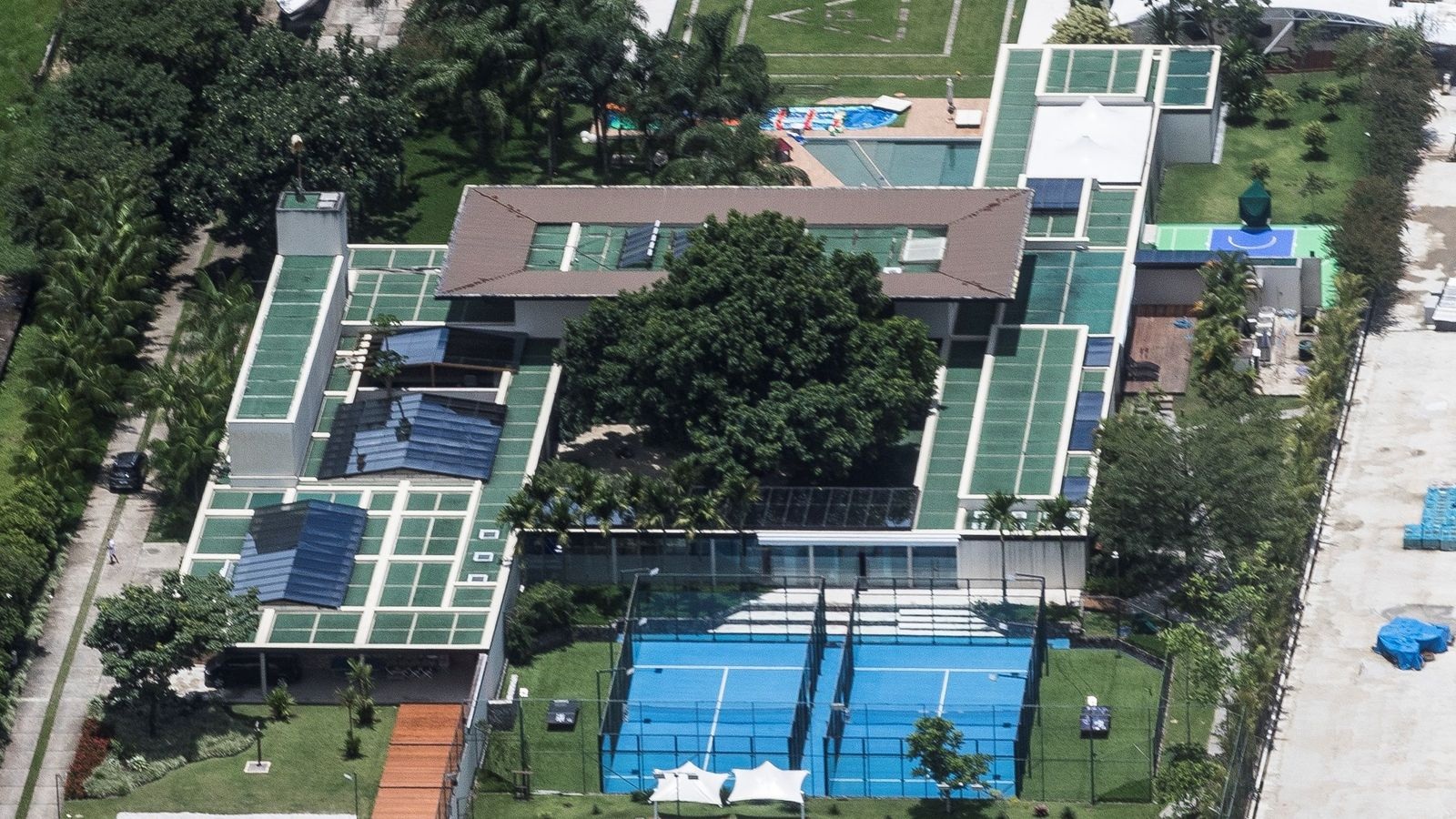
For Neymar, sport is naturally part of everyday life, and the presence of a tennis court and gym reflects that.
But the inclusion of sporting infrastructure also changes how the house operates. A tennis court is not merely an amenity; it becomes part of the landscape and occupies a substantial portion of the site. Likewise, a gym requires dedicated planning for equipment, movement and ventilation.
The property therefore behaves less like a conventional urban house and more like a self-contained recreational compound.
This is one of the strongest architectural ideas behind Neymar House: different aspects of daily life are brought together within one private environment.
Designing for Entertainment
The property was also designed with social life in mind.
Reports from the time highlighted an entertainment-oriented layout, including a gourmet area, integrated sound system and spaces intended for gatherings.
This is where the house’s scale becomes meaningful. A large residence is not necessarily luxurious simply because it has more rooms. Its value can come from how effectively those rooms create different experiences.
A successful entertainment space should allow people to gather without making the rest of the home feel occupied. Outdoor areas can host larger groups, while bedrooms and quieter zones remain private.
That separation between social and personal space is an important planning strategy in large residences.
The Broader Architectural Context
Mangaratiba is also an interesting location for contemporary residential architecture because of its challenging terrain and lush landscape.
An example from the same Portobello development is a 534-square-metre residence designed by Tripper Arquitetura. The architects describe the site as having a 50% slope, with the house divided across different levels using a mixed steel-and-concrete structure. The design was intended to minimise intervention in the terrain and maintain a strong relationship with the surrounding greenery.
This is useful context—not because that residence is Neymar’s house, but because it demonstrates the architectural possibilities of the same landscape.
Working with slopes, vegetation, views and climate can be just as important to a luxury home as its interiors.

What Makes Neymar House Interesting?
The fascination with Neymar’s house ultimately goes beyond celebrity culture.
The property illustrates how a contemporary luxury residence can be designed around experience rather than simply accommodation.
There are spaces for exercise, recovery, entertaining, dining, relaxing and enjoying the landscape. The home also provides the privacy that comes with a large, controlled site.
Perhaps the most interesting takeaway is that luxury does not always mean adding more decoration. Sometimes it means giving every aspect of life its own carefully considered space.
In Neymar’s Mangaratiba retreat, that philosophy appears in the form of a tennis court, pool, wellness facilities, private suites, outdoor areas and even a dedicated wine cellar.

Neymar House is a fascinating example of celebrity residential architecture because it brings together two very different ideas: the scale of a luxury resort and the intimacy of a private home.
Its architecture is difficult to separate from its setting. The Costa Verde landscape provides the backdrop, while the property’s extensive amenities transform the residence into a private world of its own.
And perhaps that is the real appeal of a house like this. Beyond the celebrity name and the impressive list of amenities, it represents an increasingly popular idea in high-end residential design: home as an experience, not merely a place to live.






Related Article:
Inside Kumar Vishwas’ Luxurious Noida House: A Blend of Poetry, Art, and Palace-Style Living
Gautam Adani House: Inside the luxurious residence of India’s business tycoon in Ahmedabad
Mukesh Ambani House: Antilia, the world’s most expensive private residence in Mumbai
Jeff Bezos House: Inside the Mansions and Estates of the Amazon Founder
Bill Gates’s House: An inside look at all the homes owned by the Microsoft co-founder
Michael Jordan’s homes: A design-led journey through his signature residences
Abode: Inside Anil Ambani’s iconic Pali hill residence that redefines luxury living in Mumbai
Inside Jalsa: An architectural perspective on Amitabh Bachchan’s iconic Mumbai residence
Abode: Inside Anil Ambani’s iconic Pali hill residence that redefines luxury living in Mumbai
Jatia House: Kumar Mangalam Birla’s iconic home of luxury and heritage in Mumbai
Gulita: The diamond-inspired seafront mansion of Isha Ambani and Anand Piramal
Inside Sea Wind: The 17-Storey family home Mukesh Ambani shared with Anil Ambani before Antilia
Goolestan (Om Arc): Inside Anand Mahindra’s heritage home on Nepean sea road, Mumbai
Deepinder Goyal House: Inside the Zomato Founder’s luxury home at DLF Camellias
Bhavish Aggarwal house: Inside the Ola Co-founder’s Private Residence in Bengaluru
Inside Sundar Pichai and Anjali Pichai’s House: A blend of modern luxury and thoughtful design
Satya Nadella House: A Peek Inside the Microsoft CEO’s Residence
Adar & Natasha Poonawalla’s Farmhouse: Inside a retreat of elegance and equestrian charm
Shiv Nadar’s Residence: Where art and vision shape the HCL founder’s home
Nikhil Kamath House: Inside Zerodha co-founder’s luxury Bengaluru home
Inside Anil Agarwal’s House: A look at the Vedanta billionaire’s London mansion
Uday Kotak House: Inside the iconic sea-Facing “Champagne House” in Mumbai
Sunil Bharti Mittal’s Mansion in Delhi: Inside a legacy home in India’s most exclusive address
Inside Lakshmi Niwas Mittal’s global real estate empire: Steel, Success & Super Homes
Nithin Kamath House: A look inside the Zerodha CEO and founder’s lifestyle & design philosophy
Inside Savitri Jindal House: A Look at the Elegant Residences of India’s Richest Woman
Mamata Banerjee House: A look inside the modest home of Bengal’s CM residence
Inside Pawan Kalyan’s Rs 130 Crore Jubilee Hills Mansion: A perfect blend of luxury and tradition
Pawan Kalyan’s new House at Pithapuram: Where architecture meets political identity
Inside CarryMinati’s House: Modern interiors, gaming studio & creator lifestyle
Sidhu Moose Wala House: Inside the Iconic Punjab mansion that became a landmark for fans
Aamir Khan House: A look inside the Bollywood Star’s elegant and minimalist home
Tim Cook House: Inside Apple’s CEO’s private home and the philosophy behind it
David Warner House: Inside the Five-Level Oceanfront Sydney Home of Australia’s Cricket Star
Cristiano Ronaldo House: Inside the football legend’s stunning luxury homes around the world
Vinod Khosla House: Arthur Erickson’s Concrete Retreat in Portola Valley
Sydney Sweeney House: A look inside her distinctive property portfolio