Galteshwar Mahadev Temple
Reading the Temple Through Architecture
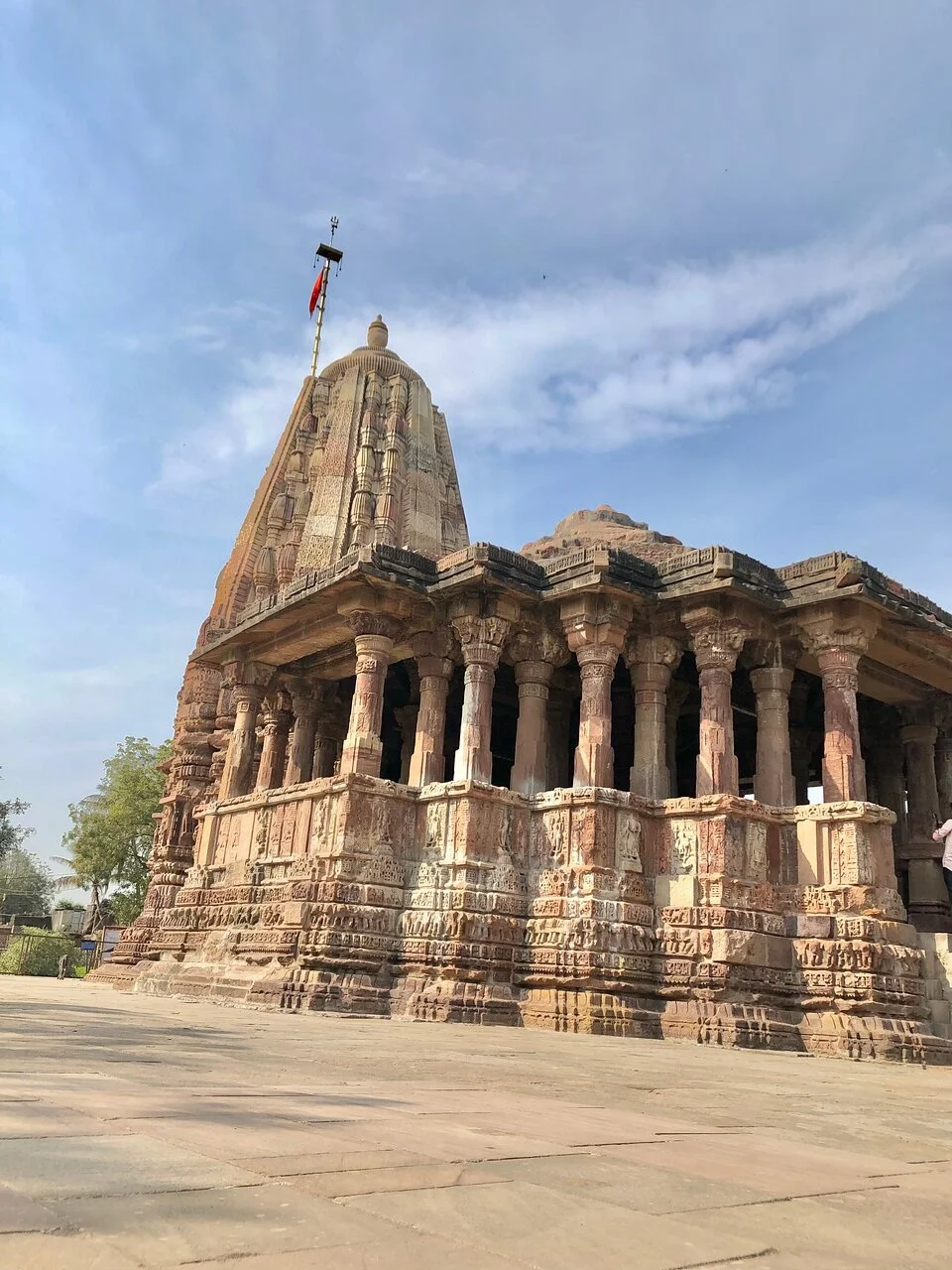
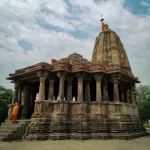
The Galteshwar Mahadev Temple is not merely a religious structure — it is a carefully composed architectural response to landscape, ritual, and time. Positioned at a river confluence, the temple exemplifies how medieval Indian builders seamlessly integrated sacred geography with structural design, allowing water, stone, and symbolism to co-exist as a single architectural narrative.
From an architectural lens, the temple stands as a textbook example of late Solanki craftsmanship, where ornamentation never overwhelms structure, and geometry quietly governs experience.

Site Planning and Landscape Integration
What immediately sets Galteshwar apart is its siteless-yet-site-specific planning. The temple is oriented to command views of the river confluence, reinforcing the sacredness of water within Shaivite worship. The elevated plinth not only protects the structure from seasonal flooding but also creates a processional rise, preparing the devotee psychologically before entering the mandapa.
Unlike urban temples, Galteshwar breathes — open on all sides, visually porous, and deeply tied to its natural context. This openness reflects a design philosophy where nature becomes a co-architect, not a backdrop.
Form, Geometry, and Spatial Experience
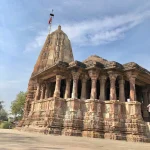
Architecturally, the temple rests on a stellate (star-shaped) platform, a signature feature of Māru-Gurjara design. This geometry:
- Increases surface articulation
- Allows dynamic light and shadow play
- Breaks the visual monotony of planar walls
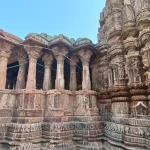
The mandapa is supported by robust stone columns, each intricately carved yet structurally disciplined. These columns guide the eye upward, emphasizing verticality while maintaining human scale — a balance that Solanki architecture mastered.
The spatial sequence follows a clear hierarchy:
- Open mandapa (public, communal)
- Antarala (transitional)
- Garbhagriha (intimate, sacred core)
This compression of space as one moves inward is deliberate — architecture here becomes a tool for spiritual focus.

Materiality and Craftsmanship
Constructed primarily from sandstone, the temple showcases an advanced understanding of material behavior. The stone is:
- Precisely jointed without visible mortar
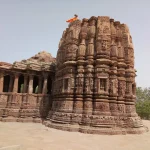
- Carved with high relief detailing
- Structurally expressive rather than decorative alone
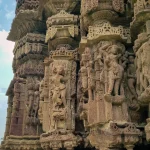
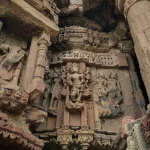
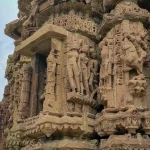
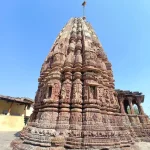
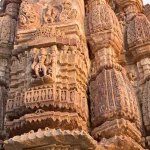
Sculptural panels depict deities, celestial beings, flora, and everyday life — not as surface embellishments, but as integral architectural elements. The carvings soften mass, humanize scale, and narrate cosmology through stone.
From an Archidust perspective, this is where Galteshwar excels: ornament as structure, not appliqué.
The Shikhara: Loss, Absence, and Restoration
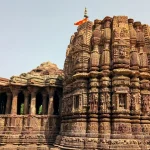
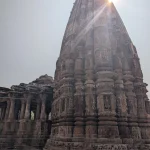
For centuries, the temple existed without its shikhara, altering its original skyline and symbolic completeness. The absence itself became part of the structure’s identity — a reminder of historical disruptions.
The ASI-led reconstruction of the shikhara in 2021 raises important architectural conversations:
- How do we balance authenticity with revival?
- When does restoration become reinterpretation?
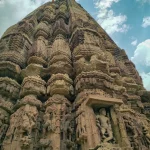
The rebuilt shikhara follows traditional proportions and typology, restoring vertical emphasis and cosmological symbolism, while also reopening dialogue on heritage continuity in contemporary India.

Architecture as Cultural Infrastructure
Beyond form and detail, Galteshwar functions as living architecture. The temple adapts — hosting festivals, rituals, gatherings — without compromising its spatial integrity. Its endurance lies not only in stone but in continued use, making it a case study in sustainable heritage.
For architects and designers today, Galteshwar Mahadev Temple offers lessons in:
- Context-responsive design
- Geometry driven by meaning
- Material honesty
- Architecture that ages with dignity
The Galteshwar Mahadev Temple reminds us that great architecture doesn’t shout — it resonates. Rooted in geometry, shaped by landscape, and animated by human belief, it stands as a quiet yet powerful testament to India’s architectural intelligence.
For platforms like Archidust, Galteshwar isn’t just a monument — it’s a masterclass in timeless design thinking.
Most Read Articles:
Shri Ram Janmabhoomi Mandir: A timeless confluence of devotion, architecture & cultural heritage
Grand Janki Mandir to Be Built at Punaura Dham Sitamarhi: ₹882.87 Crore Mega Project Announced
Meenakshi Temple: A Living Masterpiece of Indian Architecture
Varanasi International Cricket Stadium: Where Spirituality Meets Sports
Statue of Unity: The World’s Tallest Statue at 182 Metres | A Complete Guide
Shri Kashi Vishwanath Temple: A Timeless Journey into the Spiritual Heart of India