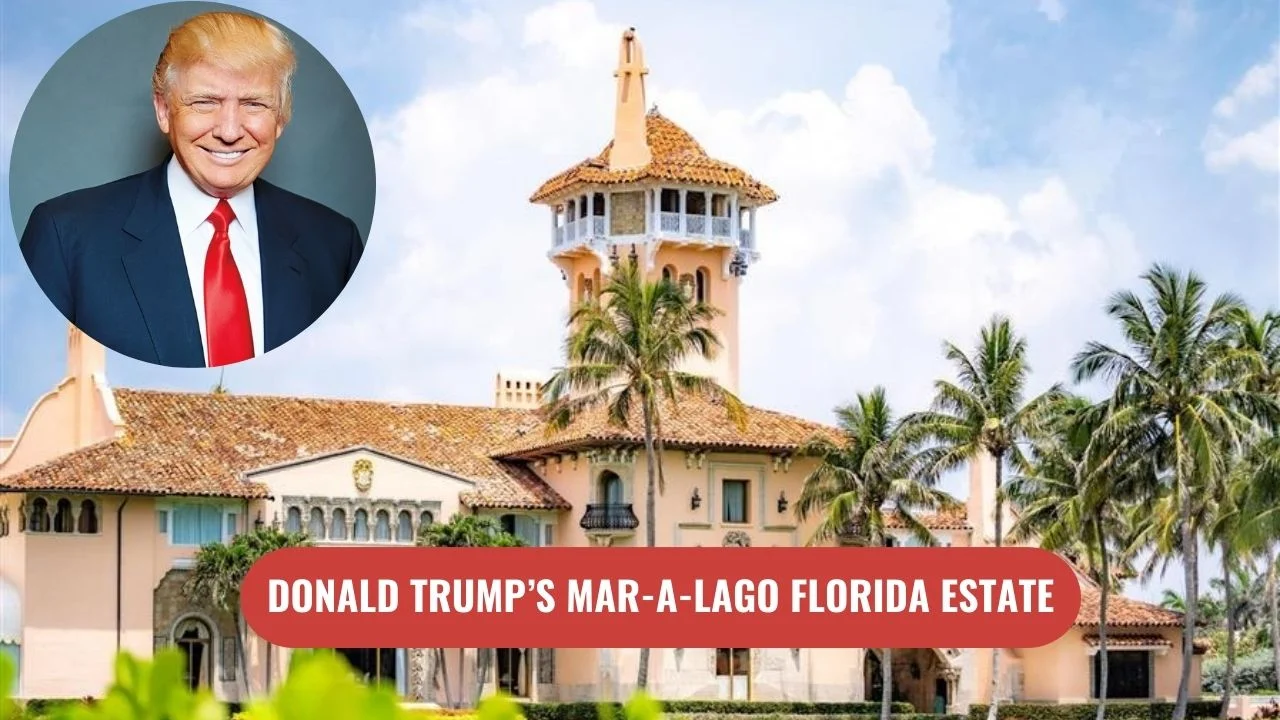
Mar-a-Lago is one of the most famous private estates in the United States — a sprawling ocean-to-lagoon property in Palm Beach, Florida that serves as both a historic architectural landmark and the personal residence and social hub of former (and current) U.S. president Donald J. Trump. Often referred to as the “Winter White House” or “Southern White House,” Mar-a-Lago has drawn global attention for its grandeur, history, controversies, and political significance.
Origins: From Gilded Age Luxury to Historic Landmark
Mar-a-Lago was built between 1924 and 1927 for Marjorie Merriweather Post, an American cereal heiress and one of the wealthiest women of her time. Located on a barrier island in Palm Beach, the estate spans roughly 17 acres with 126 rooms and 62,500 square feet of built space.
Key Facts:
- Architect: Marion Sims Wyeth (architecture) and Joseph Urban (interiors).
- Location: Palm Beach, Florida, USA — uniquely positioned between the Atlantic Ocean and Lake Worth Lagoon.
- Built: 1924–1927 during the Florida land boom.
- Original Owner: Marjorie Merriweather Post, American heiress and socialite.
- Current Owner: Donald J. Trump (purchased in 1985).
- Architectural Style: Spanish Revival / Mediterranean Revival.
- Size: Approx. 62,500 sq ft, 126 rooms, on 17 acres.
- Interiors: 58 bedrooms, 33 bathrooms, 1,800-sq-ft living room with 42-ft ceiling, antique Spanish tiles, imported marble.
- Materials: Italian Dorian limestone, Cuban marble, historic European tiles.
- Historic Status: National Historic Landmark (1980); listed on the National Register of Historic Places.
- Current Use: Private residence and members-only Mar-a-Lago Club; often called the “Winter White House.”

Architectural Style and Features
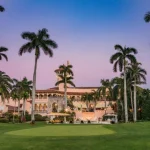
Designed by architect Marion Sims Wyeth with interiors by Joseph Urban, Mar-a-Lago is a masterpiece of Spanish Revival/Mediterranean Revival architecture — a style popular in Florida during the 1920s. Its elements include:
- 58 bedrooms and 33 bathrooms
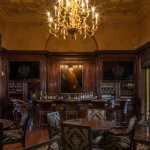
- A dramatic 1,800-square-foot living room with a 42-foot vaulted ceiling
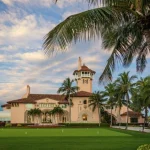
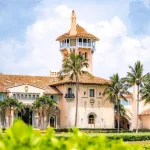
- A 75-foot tower with panoramic views
- Exterior walls of fossil-bearing Doria limestone from Italy
- 36,000 antique Spanish floor tiles, and 2,200 square feet of Cuban castle marble
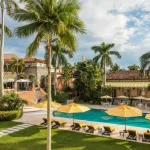
- Amenities like tennis courts, swimming pools, greenhouses, and a citrus grove
The estate’s name, Mar-a-Lago, is Spanish for “Sea to Lake,” reflecting its unique location between the Atlantic Ocean and the Lake Worth Lagoon.
Historic Recognition
Over time, Mar-a-Lago became more than a lavish home. The U.S. government added it to the National Register of Historic Places in 1972 and designated it a National Historic Landmark in 1980 due to its architectural importance and cultural history.

Donald Trump and Mar-a-Lago
Acquisition and Early Years
In 1985, Donald Trump — then a prominent real estate developer — purchased Mar-a-Lago. The sale included the mansion, beach frontage, and original furnishings for a reported price around $10 million.
At the time, Trump was known for his luxury developments and branding prowess. Mar-a-Lago was both a trophy property and a chance to make an enduring cultural statement in one of Florida’s wealthiest communities.
Conversion to a Private Club
By 1995, Trump transformed the estate into the Mar-a-Lago Club, a members-only social and recreational venue that includes:
- Guest accommodations
- A spa and fitness center
- Croquet and tennis facilities
- Multiple dining spaces
- A 20,000-square-foot ballroom with Louis XIV–inspired detailing
The Trump family retained private residential quarters separate from the club’s public areas, allowing them to live on site while hosting exclusive events.

Residence and Legal Debates
In 2019, Trump declared Mar-a-Lago his primary residence, legally moving from New York to Florida — a decision with implications for taxes and official domicile. He also lived there full-time after his first presidential term ended in 2021. Neighbors and local zoning rules led to legal challenges over his residency status, but Trump ultimately continued living there with approval from a court.
Mar-a-Lago as “Winter White House”
During his presidency, Trump passed many holidays at Mar-a-Lago and hosted important political guests, giving rise to the nickname “Winter White House.” Foreign leaders such as Chinese President Xi Jinping and Japanese Prime Minister Shinzo Abe visited the estate for diplomatic meetings.
Unlike the official White House, Mar-a-Lago is not a government facility — raising debates about security, transparency, and potential conflicts between private interests and public duties.

Controversies and National Attention
FBI Search and Classified Documents
In August 2022, the FBI executed a high-profile search at Mar-a-Lago related to classified documents withheld after Trump left office. Thousands of sensitive materials were removed under a warrant. The event prompted extensive legal and political scrutiny.
Later, in early 2025, some materials seized were reportedly returned to Trump, though details about what was returned remain unclear.
Political Base and Command Center
In recent years, Mar-a-Lago has increasingly served as Trump’s political base — hosting strategy meetings, fundraising events, and gatherings with influencers and business leaders. Its role raises questions about the blending of private property and political power.

Public Perception
Supporters often celebrate the estate as a symbol of American luxury, entrepreneurial success, and Trump’s personal brand. Critics point to issues of privilege, influence, and blurring public vs. private roles. Media coverage routinely notes both its architectural beauty and political significance.
Cultural and Architectural Legacy
Beyond politics, Mar-a-Lago remains an important example of 20th-century Florida architecture — blending Mediterranean, Moorish, and European influences. Its elaborate interiors, imported materials, and historic craftsmanship make it a case study in preservation and adaptive reuse.
Restoration and modernization efforts under Trump and professional architects preserved much of the estate’s historic character while converting it into a functional club.
A Landmark of Luxurious Power
Mar-a-Lago is more than Donald Trump’s house — it’s a historic estate, luxury resort, political lightning rod, and architectural showpiece. From its origins as a Gilded Age mansion to its modern role as a global talking point, the property continues to fascinate architects, historians, journalists, and political observers alike.
Whether viewed as a symbol of aspiration or controversy, Mar-a-Lago’s legacy is deeply intertwined with American culture, power, and public life in the 21st century.





Related Article:
Elon Musk’s Houses: Tour the Stunning Homes Owned by the Tesla Billionaire
Mark Zuckerberg’s Houses: An Inside Look at the Luxurious Homes of Facebook’s Founder
Gautam Adani House: Inside the luxurious residence of India’s business tycoon in Ahmedabad
Mukesh Ambani House: Antilia, the world’s most expensive private residence in Mumbai
Jeff Bezos House: Inside the Mansions and Estates of the Amazon Founder
Bill Gates’s House: An inside look at all the homes owned by the Microsoft co-founder
Michael Jordan’s homes: A design-led journey through his signature residences
Abode: Inside Anil Ambani’s iconic Pali hill residence that redefines luxury living in Mumbai
Inside Jalsa: An architectural perspective on Amitabh Bachchan’s iconic Mumbai residence
Abode: Inside Anil Ambani’s iconic Pali hill residence that redefines luxury living in Mumbai
Jatia House: Kumar Mangalam Birla’s iconic home of luxury and heritage in Mumbai
Gulita: The diamond-inspired seafront mansion of Isha Ambani and Anand Piramal
Inside Sea Wind: The 17-Storey family home Mukesh Ambani shared with Anil Ambani before Antilia
Gulistan: Inside Anand Mahindra’s ₹270 Crore Heritage House in Mumbai