
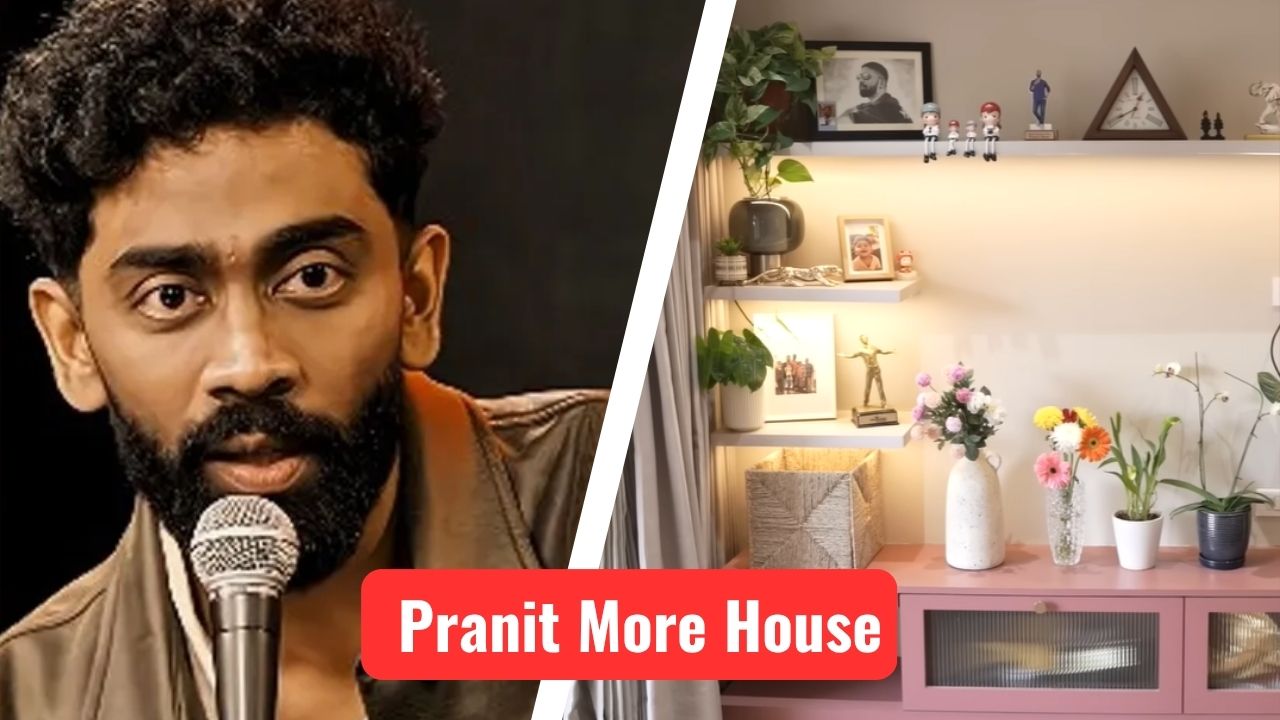
In contemporary residential design, some homes stand out not because of extravagant architecture but because they tell a personal story. The residence of comedian and digital creator Pranit More is one such example. Featured during a home tour with filmmaker Farah Khan, the house reflects a journey from humble beginnings to professional success while maintaining a strong connection to family values and everyday comfort.
Rather than relying on excessive luxury, the home embraces a balanced design language where warm materials, functional planning, and family-oriented spaces create an inviting atmosphere. The residence demonstrates how modern Indian homes can combine practicality with elegance.
Key Facts:
- Located in Navi Mumbai, Maharashtra, India.
- Created by combining two separate apartments into one larger family residence.
- Designed to accommodate both Pranit More’s immediate family and his brother’s family.
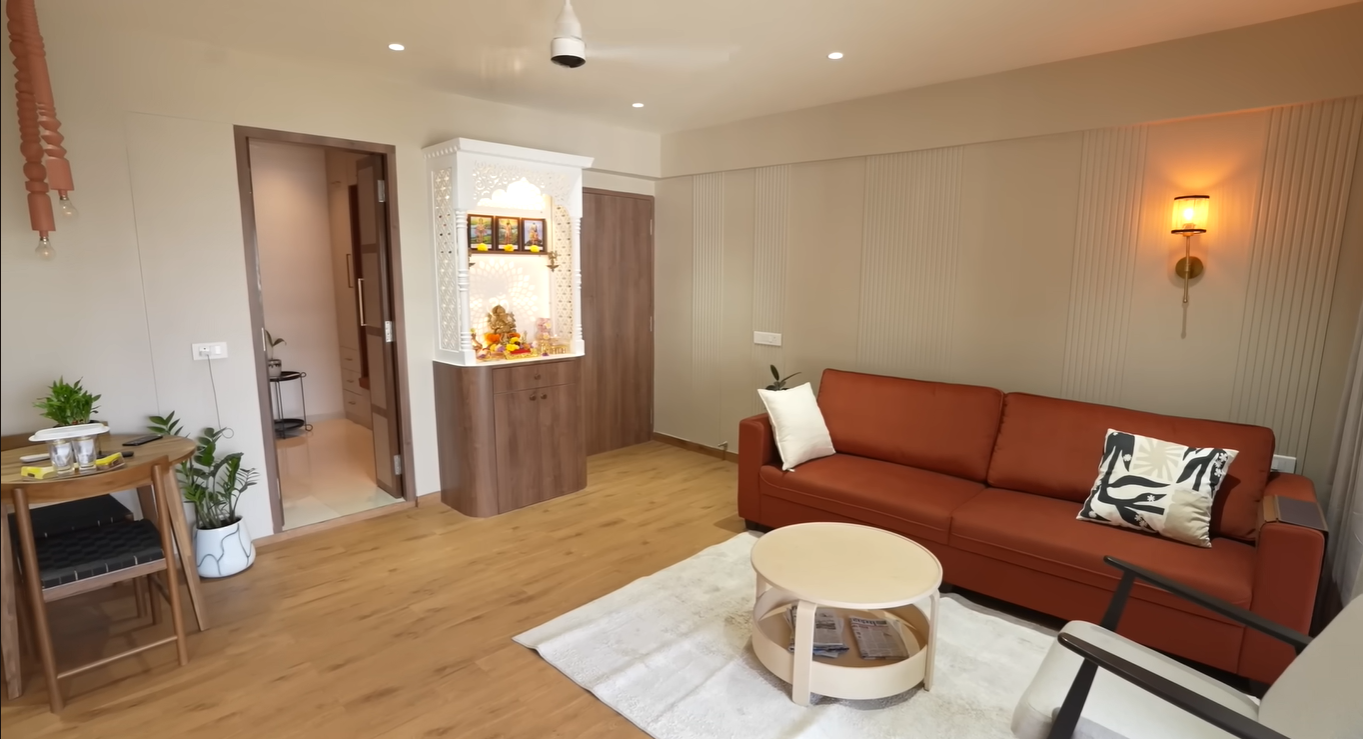
- Features a spacious living room with wooden flooring and a neutral color palette.
- Dominated by warm white and brown tones throughout the interiors.
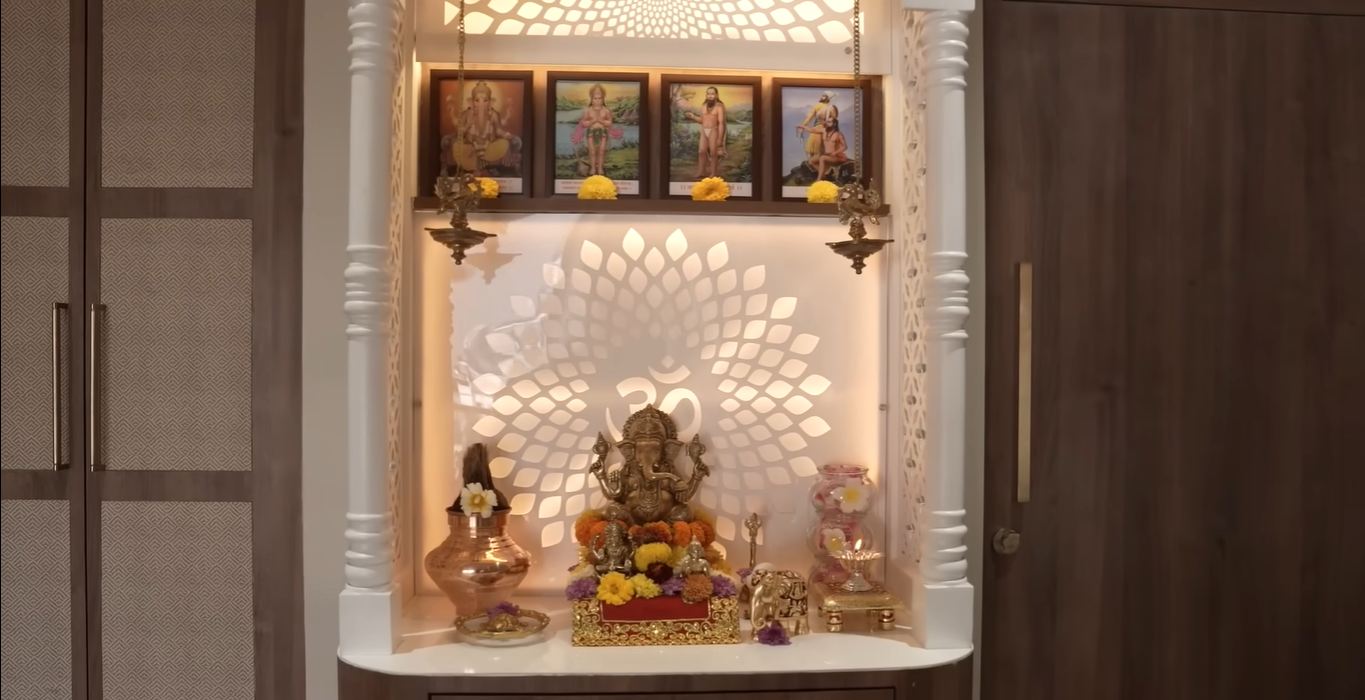
- Includes a dedicated prayer room (mandir) with white and gold detailing.
- Contains a private entertainment and party area for social gatherings.
- Emphasizes comfort through minimalistic furnishings and clutter-free planning.
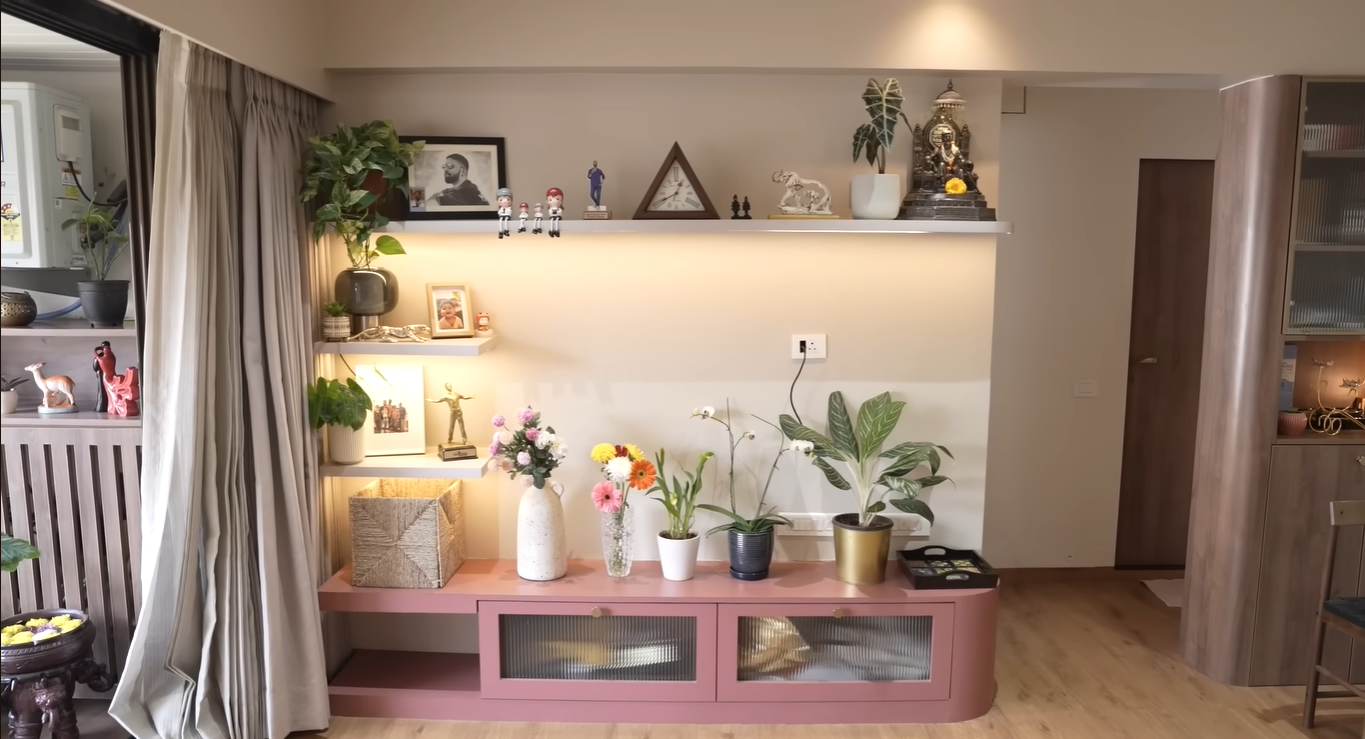
- Integrates indoor plants and natural textures to create a welcoming ambiance.
- Reflects a modern middle-class success story rooted in strong family connections.
Architectural Overview
The most notable aspect of the house is its adaptive residential planning. Instead of purchasing a single large property, two adjacent apartments were connected, creating a more expansive and flexible living environment. This approach demonstrates a growing trend in urban Indian housing where families merge neighboring units to meet changing lifestyle requirements.
The resulting layout offers greater spatial continuity while preserving privacy for different family members. Such adaptive design solutions are particularly relevant in dense metropolitan regions where horizontal expansion is often limited.
Interior Design Language
The interior palette revolves around warm whites, natural wood finishes, and earthy brown accents. This restrained material selection creates visual consistency throughout the residence.
Wood flooring plays a significant role in establishing warmth and comfort. Combined with neutral-colored furniture and soft lighting, the interiors achieve a calm and welcoming atmosphere rather than an overtly luxurious appearance.
The design philosophy appears centered on livability. Instead of decorative excess, the focus remains on creating spaces that support everyday family interactions and relaxation.
The Living Room: The Social Heart of the Home
The living room serves as the primary gathering space and is among the largest areas within the residence. Designed with generous seating and an open layout, it encourages both family bonding and guest entertainment.
Large circulation areas improve movement and spatial comfort, while the neutral palette prevents the room from feeling visually overwhelming. The use of wood textures balances modern finishes with a sense of domestic warmth.
The space reflects a common characteristic of contemporary Indian homes—creating multifunctional zones that can accommodate family gatherings, celebrations, and informal social interactions.
A Spiritual Corner: The Mandir
One of the most distinctive spaces in the house is the dedicated mandir. Designed in an elegant white palette with gold accents, the prayer room introduces a sense of serenity within the home.
In many Indian residences, spiritual spaces remain central to daily life, and this mandir demonstrates how traditional values can be integrated into modern interior design. Its clean aesthetic and refined detailing contribute to the overall calmness of the residence.
Family-Centric Planning
The house stands out for its strong emphasis on multigenerational living. By combining two apartments, the design accommodates multiple family members while maintaining individual zones for privacy.
This planning approach reflects a broader shift in Indian residential design, where homes increasingly serve as shared spaces for extended families. The arrangement promotes interaction while ensuring functional independence for each household unit.
Entertainment and Lifestyle Spaces
Beyond family areas, the home includes a dedicated party and entertainment zone. Furnished as a relaxed social space, it allows the owner to host friends and informal gatherings without disrupting the private portions of the residence.
The inclusion of such spaces highlights changing lifestyle preferences among urban homeowners, where homes increasingly function as venues for social engagement and personal recreation.

Bedroom Design: Minimal Yet Comfortable
The bedroom follows the same visual language as the rest of the house. Soft lighting, neutral colors, and minimal décor create a restful environment.
Built-in storage solutions and a clutter-free layout reinforce the principle of functional luxury—where comfort and usability take precedence over decorative complexity.
The result is a space that feels calm, organized, and suited for everyday living.
Design Lessons from Pranit More House
The home offers several valuable lessons for contemporary residential design:
1. Adapt Existing Spaces Creatively
Combining adjacent apartments can be an effective solution for growing families in urban environments.
2. Prioritize Warm Materials
Wood textures and neutral colors create timeless interiors that remain comfortable and visually balanced.
3. Design Around Family Needs
Successful homes respond to lifestyle requirements rather than simply following trends.
4. Blend Tradition with Modernity
The inclusion of a dedicated mandir demonstrates how cultural values can coexist with contemporary aesthetics.
5. Create Flexible Social Spaces
Entertainment zones and multifunctional living rooms improve the usability of residential environments.
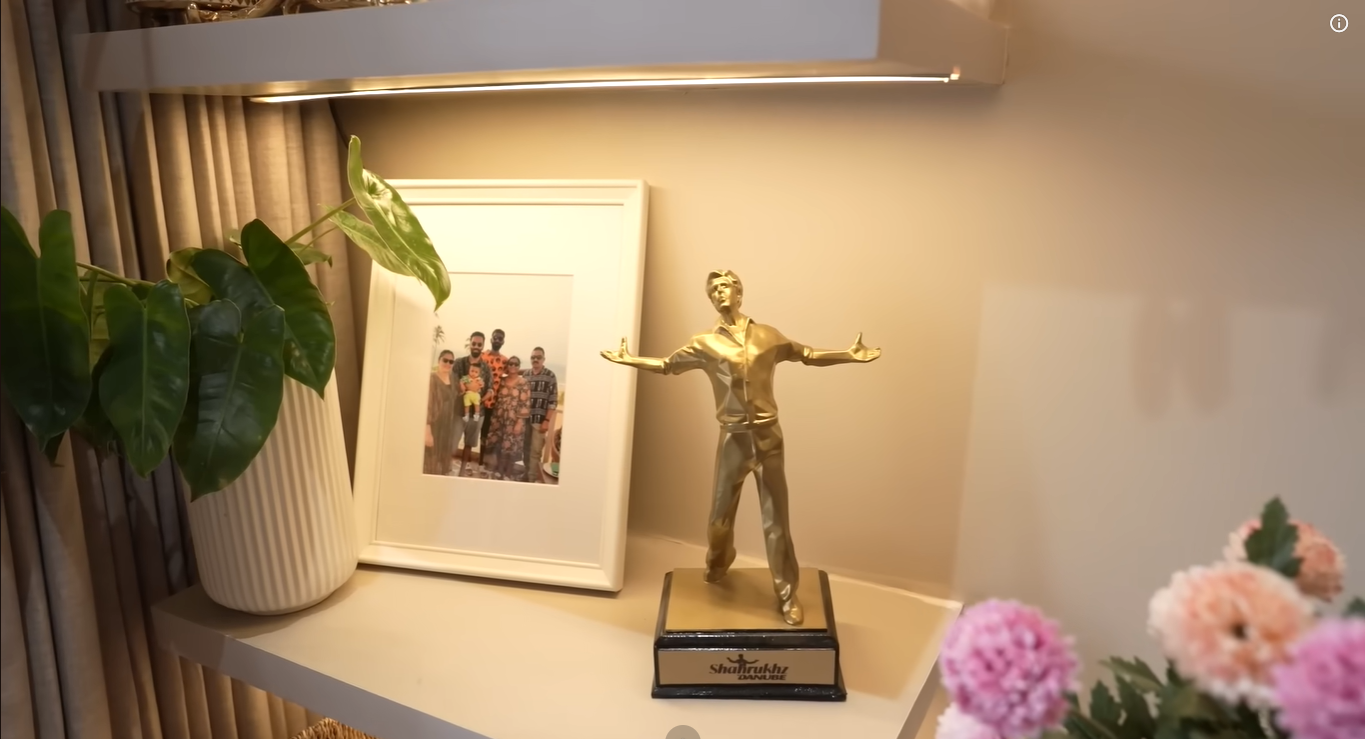
Pranit More House is less about architectural spectacle and more about thoughtful living. Through adaptive planning, warm material choices, and family-oriented design, the residence demonstrates how modern homes can be both functional and emotionally meaningful.
Its greatest achievement lies in balancing comfort, spirituality, social interaction, and family togetherness within a cohesive residential environment. The result is a home that reflects personal success while remaining deeply rooted in everyday life and family values.

Related Article:
Inside Kumar Vishwas’ Luxurious Noida House: A Blend of Poetry, Art, and Palace-Style Living
Gautam Adani House: Inside the luxurious residence of India’s business tycoon in Ahmedabad
Mukesh Ambani House: Antilia, the world’s most expensive private residence in Mumbai
Jeff Bezos House: Inside the Mansions and Estates of the Amazon Founder
Bill Gates’s House: An inside look at all the homes owned by the Microsoft co-founder
Michael Jordan’s homes: A design-led journey through his signature residences
Abode: Inside Anil Ambani’s iconic Pali hill residence that redefines luxury living in Mumbai
Inside Jalsa: An architectural perspective on Amitabh Bachchan’s iconic Mumbai residence
Abode: Inside Anil Ambani’s iconic Pali hill residence that redefines luxury living in Mumbai
Jatia House: Kumar Mangalam Birla’s iconic home of luxury and heritage in Mumbai
Gulita: The diamond-inspired seafront mansion of Isha Ambani and Anand Piramal
Inside Sea Wind: The 17-Storey family home Mukesh Ambani shared with Anil Ambani before Antilia
Goolestan (Om Arc): Inside Anand Mahindra’s heritage home on Nepean sea road, Mumbai
Deepinder Goyal House: Inside the Zomato Founder’s luxury home at DLF Camellias
Bhavish Aggarwal house: Inside the Ola Co-founder’s Private Residence in Bengaluru
Inside Sundar Pichai and Anjali Pichai’s House: A blend of modern luxury and thoughtful design
Satya Nadella House: A Peek Inside the Microsoft CEO’s Residence
Adar & Natasha Poonawalla’s Farmhouse: Inside a retreat of elegance and equestrian charm
Shiv Nadar’s Residence: Where art and vision shape the HCL founder’s home
Nikhil Kamath House: Inside Zerodha co-founder’s luxury Bengaluru home
Inside Anil Agarwal’s House: A look at the Vedanta billionaire’s London mansion
Uday Kotak House: Inside the iconic sea-Facing “Champagne House” in Mumbai
Sunil Bharti Mittal’s Mansion in Delhi: Inside a legacy home in India’s most exclusive address
Inside Lakshmi Niwas Mittal’s global real estate empire: Steel, Success & Super Homes
Nithin Kamath House: A look inside the Zerodha CEO and founder’s lifestyle & design philosophy
Inside Savitri Jindal House: A Look at the Elegant Residences of India’s Richest Woman
Mamata Banerjee House: A look inside the modest home of Bengal’s CM residence
Inside Pawan Kalyan’s Rs 130 Crore Jubilee Hills Mansion: A perfect blend of luxury and tradition
Pawan Kalyan’s new House at Pithapuram: Where architecture meets political identity
Inside CarryMinati’s House: Modern interiors, gaming studio & creator lifestyle
Sidhu Moose Wala House: Inside the Iconic Punjab mansion that became a landmark for fans