
Zoho Corporation — a globally successful Indian software company — is not only disrupting the tech world with its robust cloud-based productivity platforms and business software, but also with an unconventional vision of office design and workplace culture that challenges stereotypical corporate architecture. In an era when tech workspaces are often defined by glass towers and cookie-cutter floors, Zoho’s approach — rooted in regional identity, nature integration, and human-centric design — offers an intriguing case study for architects, designers, and workplace strategists alike.
A Distributed Network of Offices
Zoho’s office footprint spans multiple countries and architectural expressions, a reflection of its expanding global presence and decentralised hiring philosophy. Headquartered in Chennai, India, the company operates offices across Asia, the United States, and beyond, with major campuses and satellite workspaces in Chennai, Tenkasi, Renigunta, Nagpur, Kochi, and other cities including Singapore and Beijing.
Rather than concentrating all talent into one towering headquarters, Zoho embraces a hub-and-spoke model, decentralising work to tier-2 and tier-3 cities, as well as rural locations. This strategy reduces migration pressures on metropolitan cities and nurtures local talent pools — a radical departure from conventional corporate clustering.

Architectural Philosophy — Beyond the Glass Syndrome
Breaking the Corporate Mold
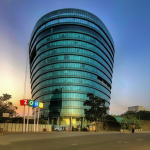
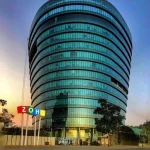
Zoho openly rejects the ubiquitous “glass box” office typology commonly found in global tech parks. In its Tharuvai campus, for instance, the architecture celebrates regional vernacular influences such as Kerala’s traditional forms and agraharam houses of Tamil Nadu, blending them with thoughtful workplace planning. The result is an office that feels more like a cultural environment than a corporate cage — a strategy that consciously makes the workplace relatable to employees’ lived experiences.
Key design elements here include:
- Serene riverfront landscaping that enhances the campus environment.
- Tranquil verandas and walkways that encourage circulation and informal interactions.
- Use of local, climate-appropriate materials such as clay tiles and terracotta, which also improve energy efficiency and reduce reliance on artificial cooling.
- Structural elements inspired by local temple geometry — including wind-redirecting building forms — which enhance natural ventilation.
These choices underscore Zoho’s commitment to architectural sustainability and cultural resonance, moving away from generic big-box structures to spaces that feel rooted in place.

Tenkasi Office — Nature as Workplace Catalyst
One of Zoho’s most talked-about workspaces — the Tenkasi campus — exemplifies how architecture, climate, and nature can harmonise. Shared by founder Sridhar Vembu on social media, the design showcases open courtyards that flood into pond-like spaces during monsoon rains, creating a workspace that literally becomes part of nature’s rhythm.
Inspired by the traditional Tamil “muttram” — a central courtyard commonly found in South Indian homes — this layout brings:
- Sunlight, fresh air, and rainwater into the heart of daily work life.
- A sense of serenity and connection that many employees and social media observers praised as revitalising.
- An architectural narrative that bridges traditional domestic spatial language with modern corporate functions.
This focus on ecological design and place-based aesthetics makes the Tenkasi office not just a technical workplace, but a holistic environment that supports wellbeing and creativity.

Rural and Small-Town Offices — Redefining Work Geography
Zoho’s architectural strategy extends beyond aesthetics; it embodies geo-social transformation. In Tirunelveli, Tamil Nadu — a city with a population far smaller than typical tech hubs — Zoho’s campus is designed in a traditional South Indian style, with sloping roofs, sprawling single-story units, and lush green surroundings. This approach integrates local building traditions with contemporary work needs, fostering comfort and cultural familiarity while also signalling tech work’s decentralised future.
In these rural offices:
- Wood-panelled interiors and comfortable workspaces evoke regional architectural identity.
- Green spaces around structures ensure visual and environmental connectivity to nature.
This model challenges the assumption that high-tech work must be urban, dense, and enclosed — opening doors for new paradigms in workplace planning.

Infopark Kochi Collaboration — Inclusive Workspaces
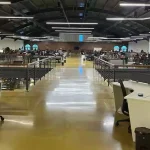
Zoho’s recent office presence in Ernakulam’s “i by Infopark” coworking facility further demonstrates its adaptive approach to office environments. Occupying a full floor in this innovative space, Zoho’s design emphasises wellness, inclusivity, and flexibility, with interiors featuring soft pastel palettes and amenities aimed at enhancing comfort and collaboration.
The i by Infopark building itself — Kerala’s first neurodiversity-friendly coworking space — is designed with floors themed around sensory experiences, catering to individuals with autism, ADHD, and other conditions. Zoho’s integration within this environment aligns with its broader ethos of supportive, people-centric workspace design.
Design Implications for Architects and Planners
Zoho’s office design strategies offer several takeaways for architects and workplace designers:
- Cultural Integration: Embedding regional architectural vocabulary — from materials to spatial forms — fosters identity and belonging within corporate environments.
- Nature-Integrated Workplaces: Using open courtyards, water features, and natural landscaping enhances wellbeing and creates dynamic spatial experiences.
- Decentralised Workspace Models: Breaking away from urban cores into rural and small-town contexts can unlock new talent pools and diversify architectural expressions.
- Human-Centred Inclusion: Designing for accessibility and sensory diversity — particularly within coworking and shared spaces — is becoming a key ingredient in future workplace design.
Zoho’s offices are more than mere workspaces; they are architectural statements about how work, culture, nature, and locality can coexist. From the courtyard-centred Tenkasi campus to culturally evocative rural setups and inclusive coworking floors in Kochi, Zoho proves that workplace architecture can extend beyond glass towers to places that nourish body, mind, and community. For architects and designers, Zoho’s evolving portfolio offers rich insights into how contextual design, sustainability, and human wellbeing can shape the offices of tomorrow.