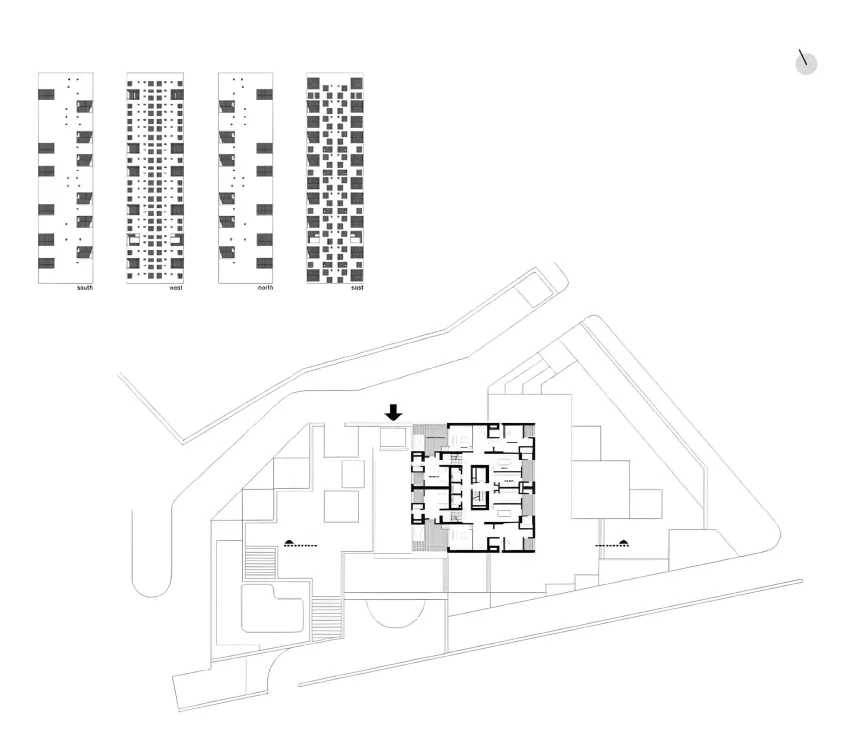
© Charles Correa
Kanchanjunga Apartments by Charles Correa: A Bold Vision for Urban Living
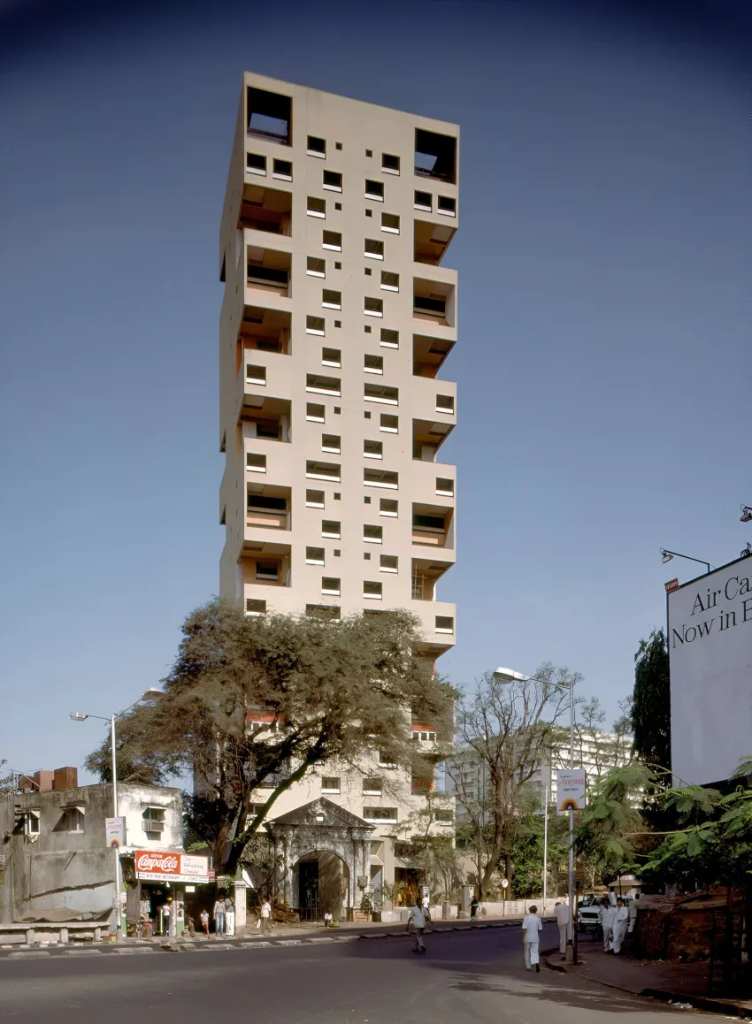
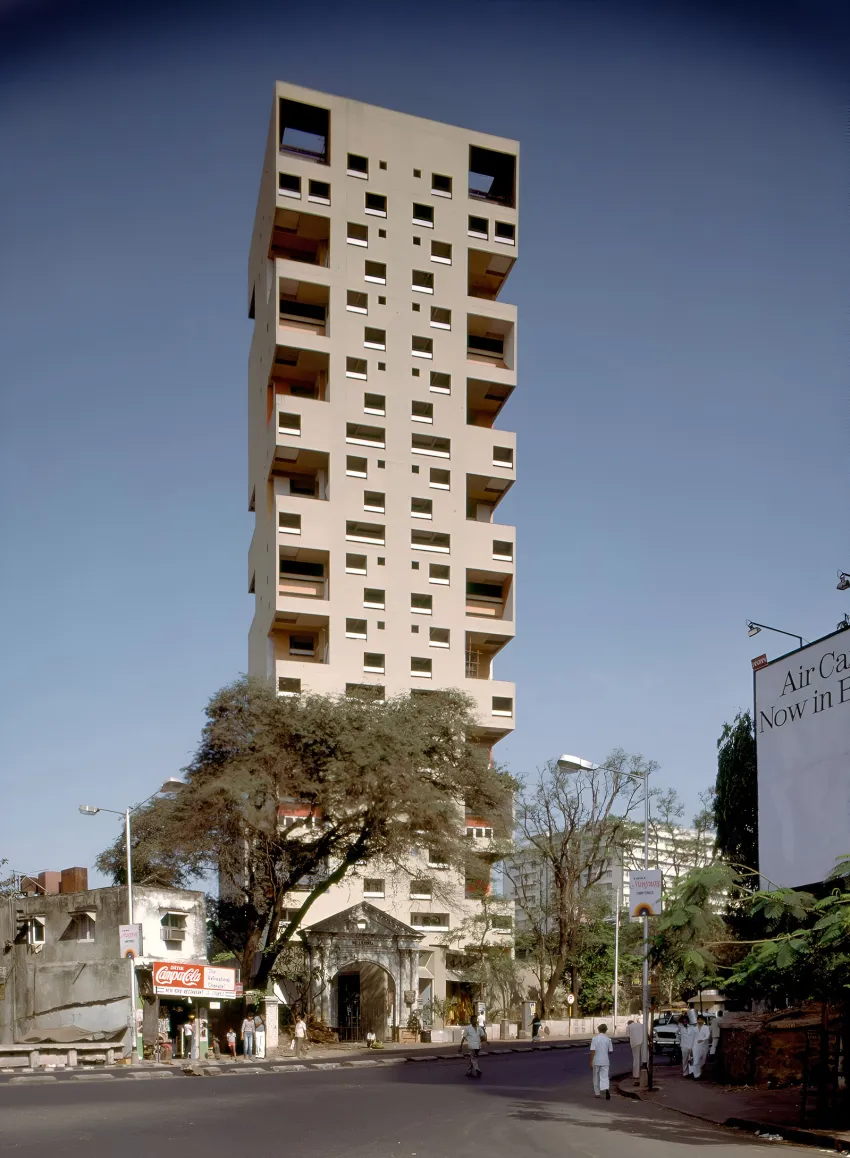
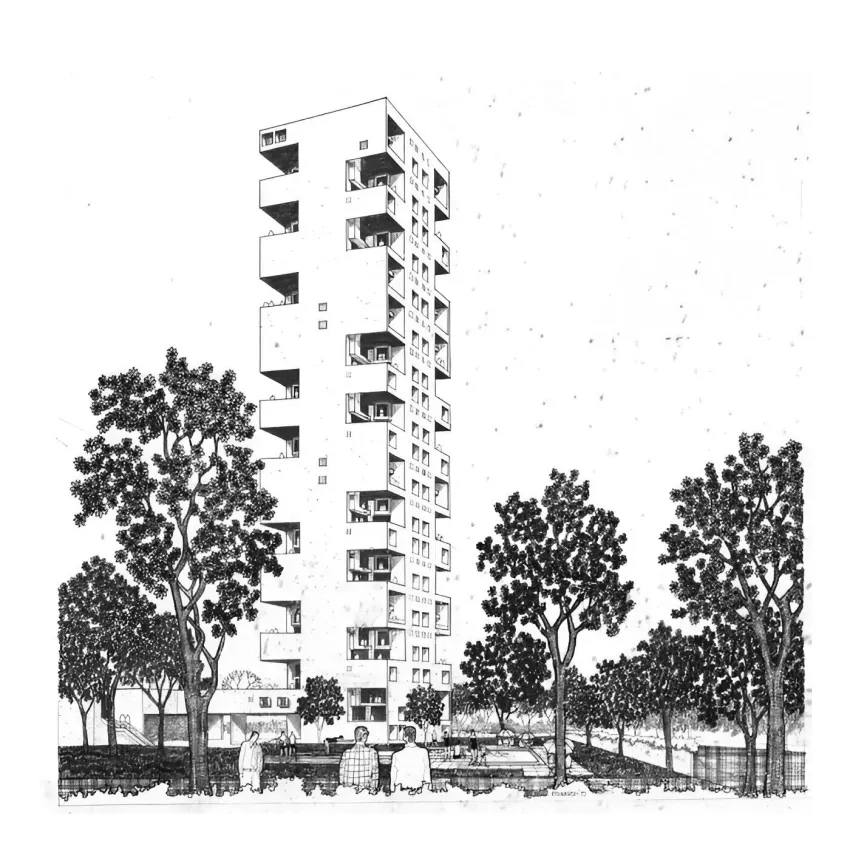
In the heart of South Mumbai, rising above the city’s dense urban fabric, stands one of India’s most remarkable residential towers — the Kanchanjunga Apartments, designed by Charles Correa. Completed in 1983, this 28-storey high-rise is far more than concrete and glass; it’s a thoughtful response to the challenges of climate, culture, and urban life in India.
Facts:
Architects: Charles Correa
Location: Mumbai, Maharashtra, India
Area: 6,500 m2 | 69,900 Sq. Ft.
Project Year: 1970 – 1983
Additional Credits:
Structural Engineer: Mahindra Raj
Client: Private Commission
Building Type: High-rise Residential
Number of Stories: 32
Total Area: Approx. 6,500 square meters
Charles Correa by Kenneth Frampton
Reimagining the High-Rise for India
When Charles Correa set out to design Kanchanjunga, he wasn’t interested in copying Western models of vertical housing. He had a different question in mind: How do you design a high-rise that feels like home in a tropical, Indian context?
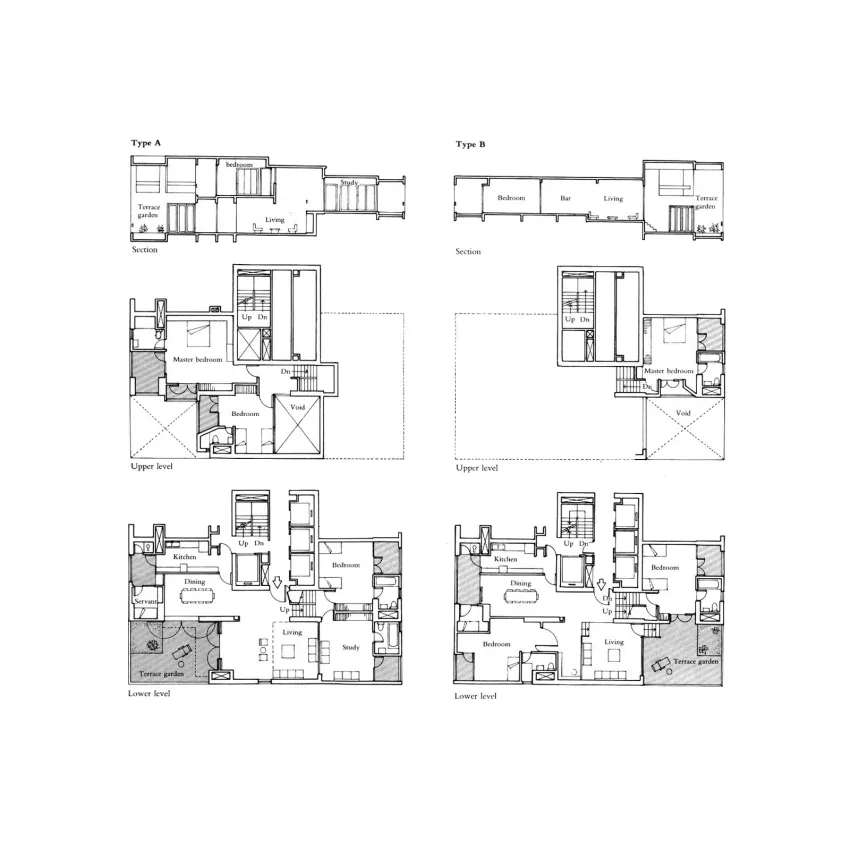
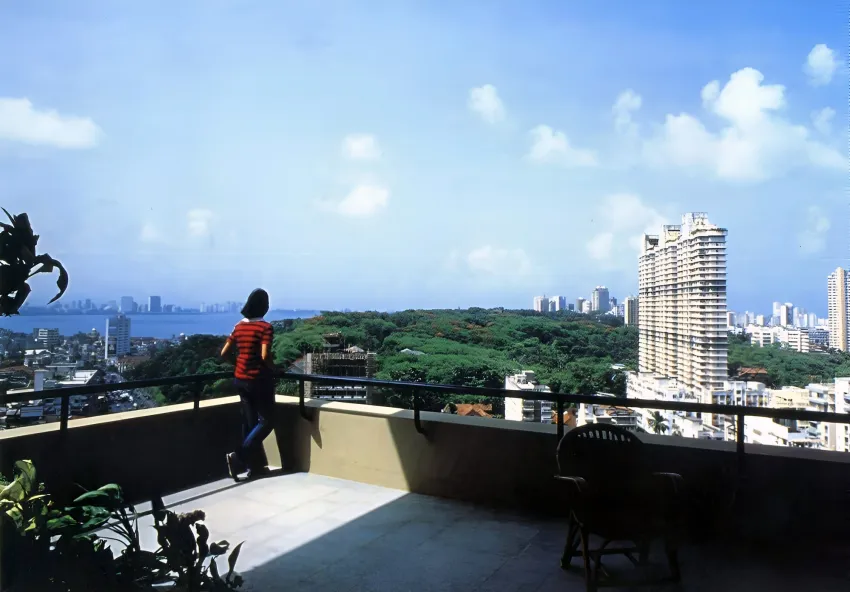
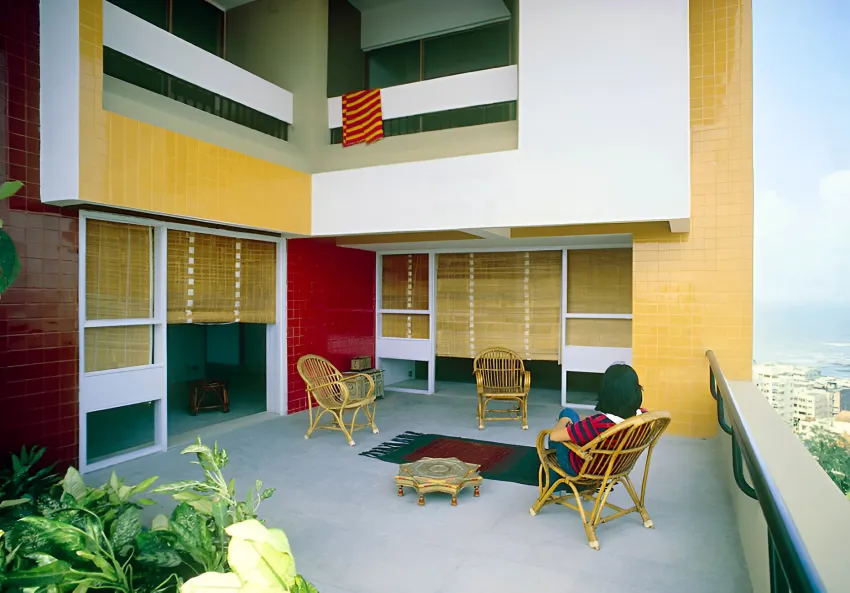
His answer came in the form of “bungalows in the sky.” Each apartment is a duplex, designed with split levels that bring natural light, cross-ventilation, and a spatial experience similar to living in an independent house — but stacked vertically.
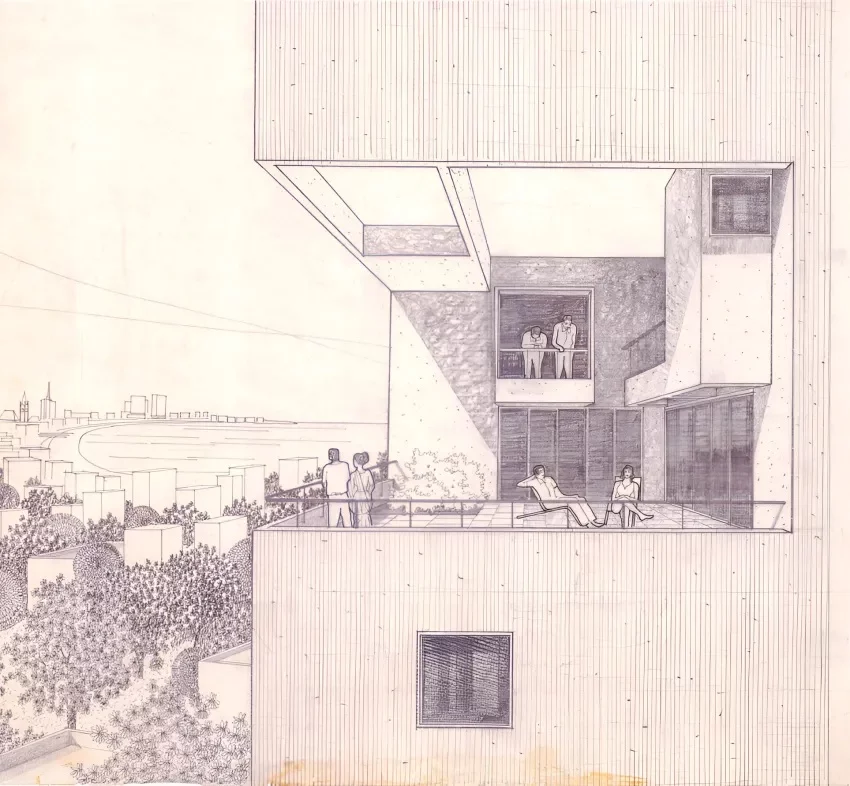
Rather than isolating residents behind uniform façades, Correa introduced variety and rhythm. The alternating arrangement of deep, open terraces and solid walls gives the building its iconic silhouette and serves a practical function: shielding interiors from Mumbai’s intense sun and monsoon rains.
Designing with Climate in Mind
One of the standout features of Kanchanjunga Apartments is its approach to climate-responsive design. At a time when air-conditioning was not the norm, Correa’s design made passive cooling a priority.
-Recessed verandahs act as natural buffers against heat and rain.
-Cross-ventilation is built into every unit.
-The building’s white exterior helps reflect sunlight and reduce heat absorption.
This wasn’t sustainability as a buzzword — it was good design rooted in necessity.
A Building That Reflects Its Culture
Correa’s vision wasn’t just about form or function. It was about creating architecture that felt authentically Indian, even as it pushed the boundaries of modernism.
The generous terraces, the sense of layered privacy, and the blurred boundaries between indoor and outdoor space — all echo traditional Indian homes, but translated into a vertical format. This is what makes Kanchanjunga so compelling: it’s a modern high-rise that feels deeply connected to place and people.
Enduring Influence and Legacy
More than four decades later, the Kanchanjunga Apartments continue to draw attention from architects, students, and urban planners around the world. It’s studied not just for its aesthetics, but for its smart, context-driven approach to high-density housing — something cities everywhere are grappling with.
For Correa, architecture was never just about buildings. It was about people, communities, and the environments they inhabit. Kanchanjunga embodies that philosophy in every detail — from the thoughtful floor plans to the sculptural silhouette that still defines part of Mumbai’s skyline.
About Charles Correa
Charles Correa (1930–2015) was a visionary Indian architect, urban planner, and thinker, widely celebrated as the father of modern Indian architecture. Born in Secunderabad, he studied architecture at the University of Michigan and later at the Massachusetts Institute of Technology (MIT), where he honed a design sensibility that seamlessly blended modernism with India’s rich cultural, social, and climatic context.
Upon returning to India, Correa embarked on a prolific career that redefined post-independence architecture. His work—characterized by a deep respect for tradition, a commitment to human-scale spaces, and a keen sensitivity to local environments—includes landmarks such as the Kanchanjunga Apartments in Mumbai, the Gandhi Memorial Museum in Ahmedabad, and the Jawahar Kala Kendra in Jaipur.
Beyond his architectural achievements, Correa was a tireless advocate for affordable housing and sustainable urbanism. His influence extended into public policy and urban planning, where he championed inclusive and equitable city development. In recognition of his extraordinary contributions, he was awarded numerous honors, including the RIBA Royal Gold Medal in 1984.