National Fisheries Development Board Building
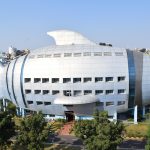
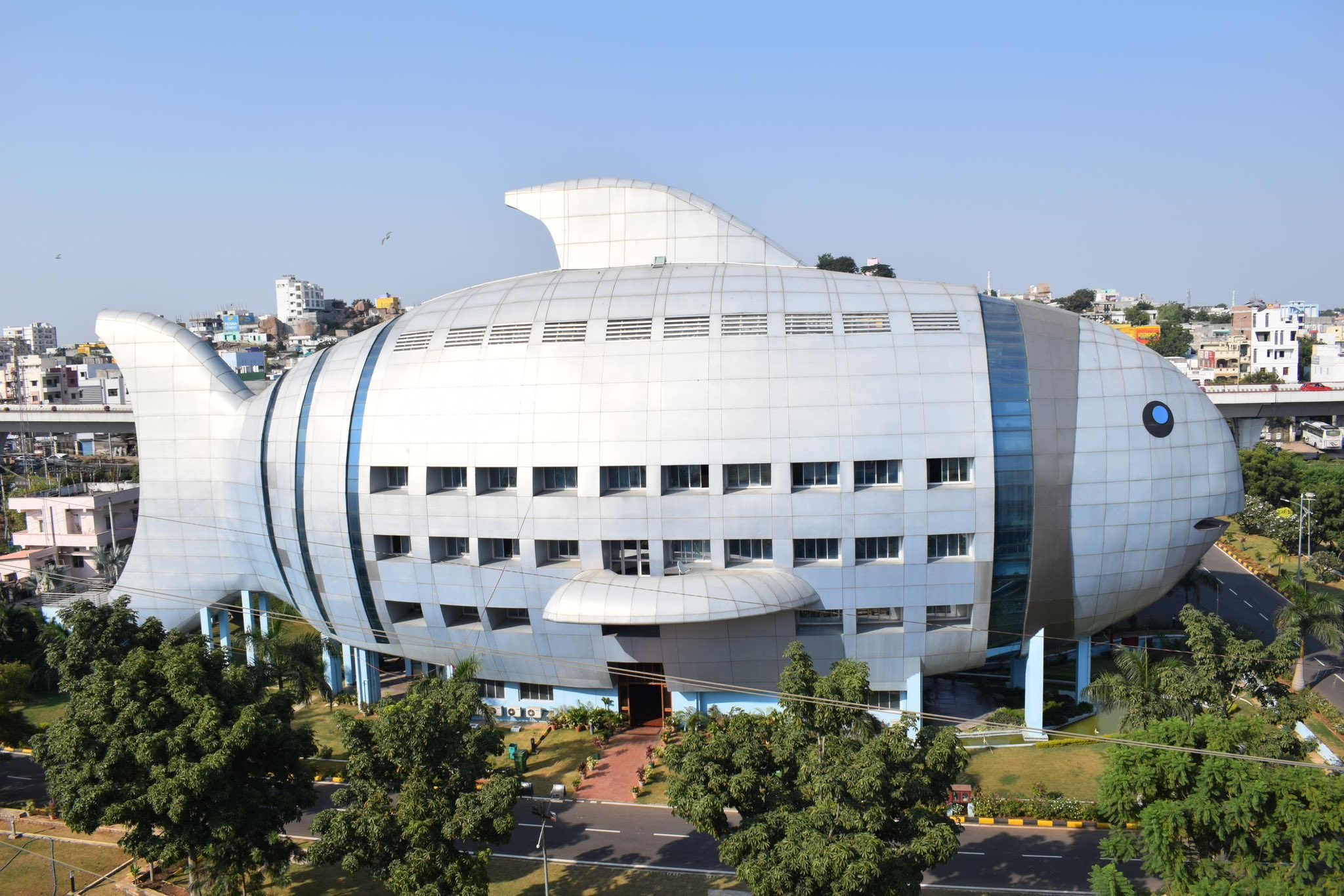
Some buildings are designed to blend into the urban skyline, while others become landmarks because they challenge conventional architecture. The National Fisheries Development Board (NFDB) Building in Hyderabad belongs to the latter category. Instantly recognizable by its enormous fish-shaped form, this government office has become one of India’s most unusual architectural attractions. Located beside the PV Narasimha Rao Expressway, the structure demonstrates how architecture can visually communicate an institution’s purpose while creating a memorable identity.
Unlike traditional government offices that prioritize functionality over appearance, the NFDB headquarters embraces mimetic architecture—a style where a building physically resembles the object associated with its function. As the headquarters of India’s National Fisheries Development Board, the building symbolizes the country’s fisheries sector in the most literal and creative way possible.
Key Facts:
- Location: Hyderabad, Telangana, India
- Official Name: National Fisheries Development Board (NFDB) Building
- Popular Nickname: Fish Building
- Completed: April 2012
- Architect & Concept Designer: Central Public Works Department (CPWD), Government of India
- Architecture Style: Mimetic (Novelty) Architecture
- Floors: Four
- Primary Function: Headquarters of the National Fisheries Development Board
- Construction Material: Stainless-steel exterior cladding over a reinforced concrete structure
- Landmark: Located near Pillar No. 235 on the PV Narasimha Rao Expressway
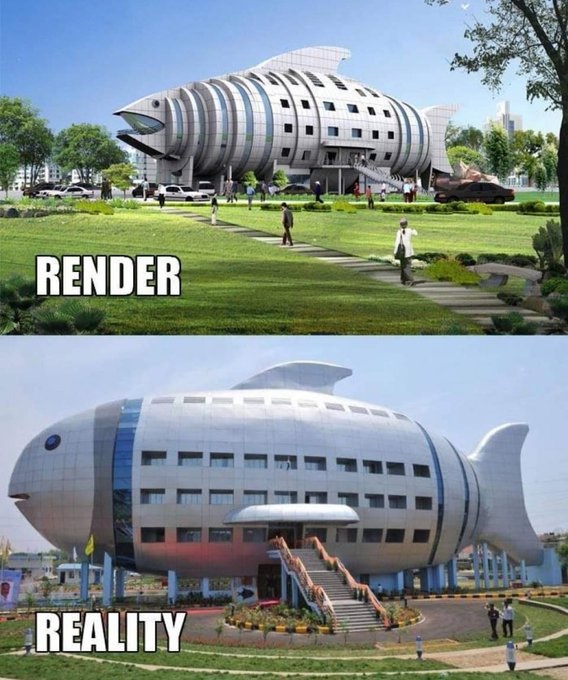
- Unique Feature: Entire building resembles a giant fish with fins, scales, eyes, and tail integrated into the architectural design.
An Architectural Landmark That Reflects Its Purpose
The NFDB Building is one of India’s finest examples of architecture inspired directly by an organization’s mission. Instead of relying on signage or branding alone, the building itself communicates its identity through its form.
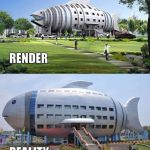
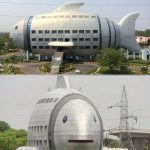
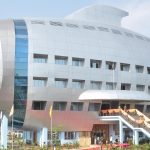
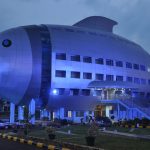
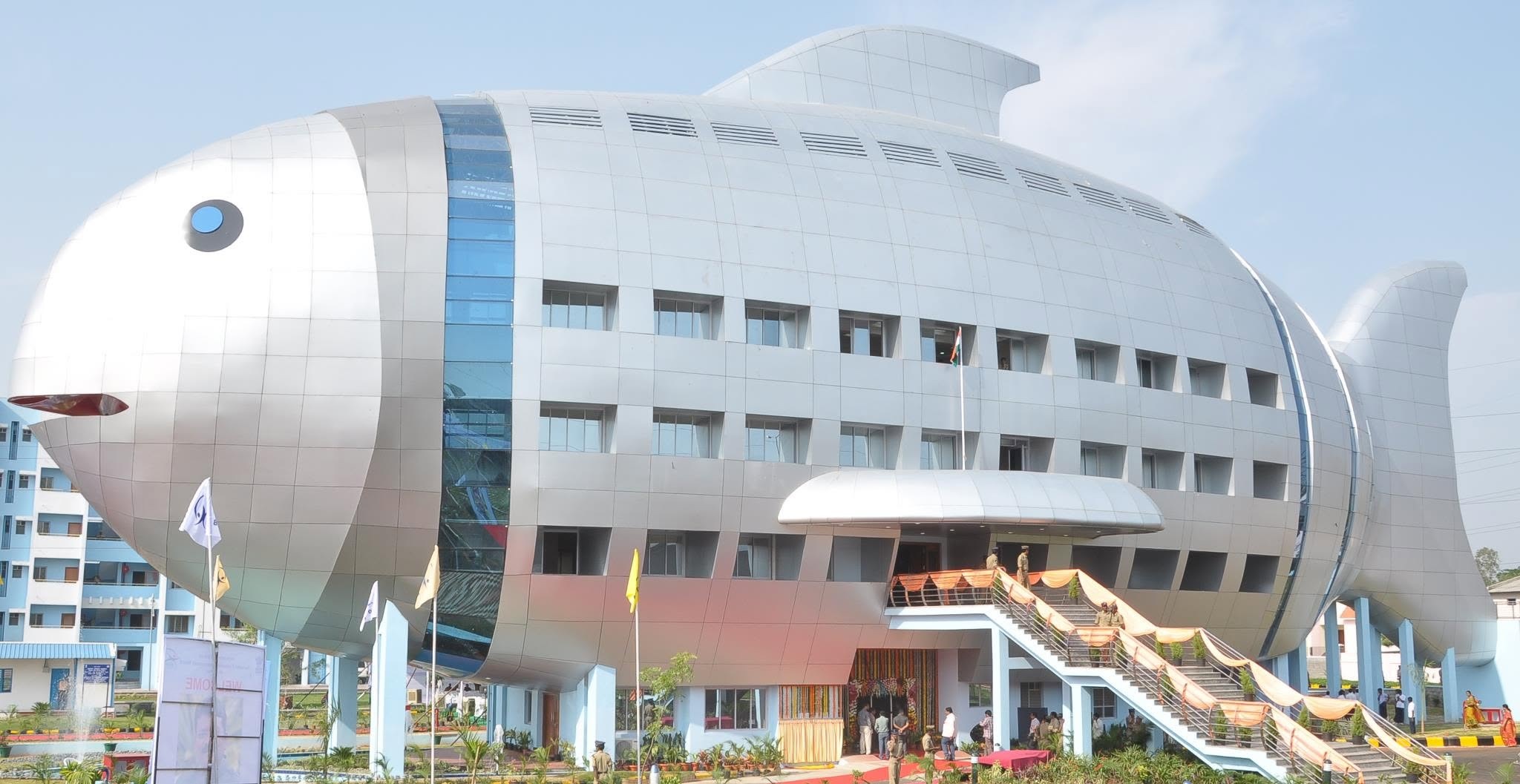
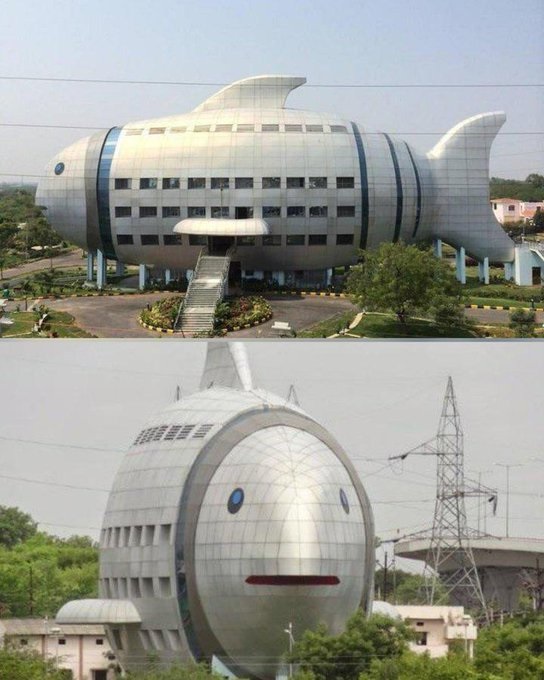
From a distance, the headquarters appears like a gigantic metallic fish emerging from the ground. The curved body, fins, rounded windows representing eyes, and sculpted tail create an instantly recognizable silhouette that has made it one of Hyderabad’s most photographed modern buildings.
Despite its playful appearance, the structure functions as a fully operational government office responsible for fisheries development across India. The building successfully balances symbolism with practicality, proving that public infrastructure can be both functional and visually engaging.
The Story Behind the Design
The building was conceptualized by the Central Public Works Department (CPWD) and officially opened in April 2012. Reports suggest that the inspiration came from internationally recognized examples of sculptural architecture, particularly the famous fish sculpture created by architect Frank Gehry in Barcelona.
Rather than designing a conventional office block and decorating it with fisheries-themed artwork, the architects chose to transform the entire structure into a symbolic representation of a fish.
This approach places the NFDB headquarters among the world’s notable examples of mimetic architecture, where the form of a building directly reflects its function or purpose.
Mimetic Architecture in India
Mimetic architecture has existed for decades around the world, especially in museums, restaurants, exhibition halls, and commercial buildings. However, government buildings rarely adopt such expressive forms.
The NFDB headquarters stands out because it demonstrates that public institutions can also embrace creativity.
Several architectural elements reinforce this concept:
- The pectoral fin extends outward to create an entrance canopy.
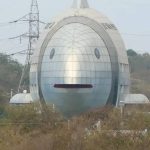
- Circular windows resemble the fish’s eyes.
- Metallic cladding imitates shimmering fish scales.
- Elevated supports create the illusion that the fish is swimming above the landscape.
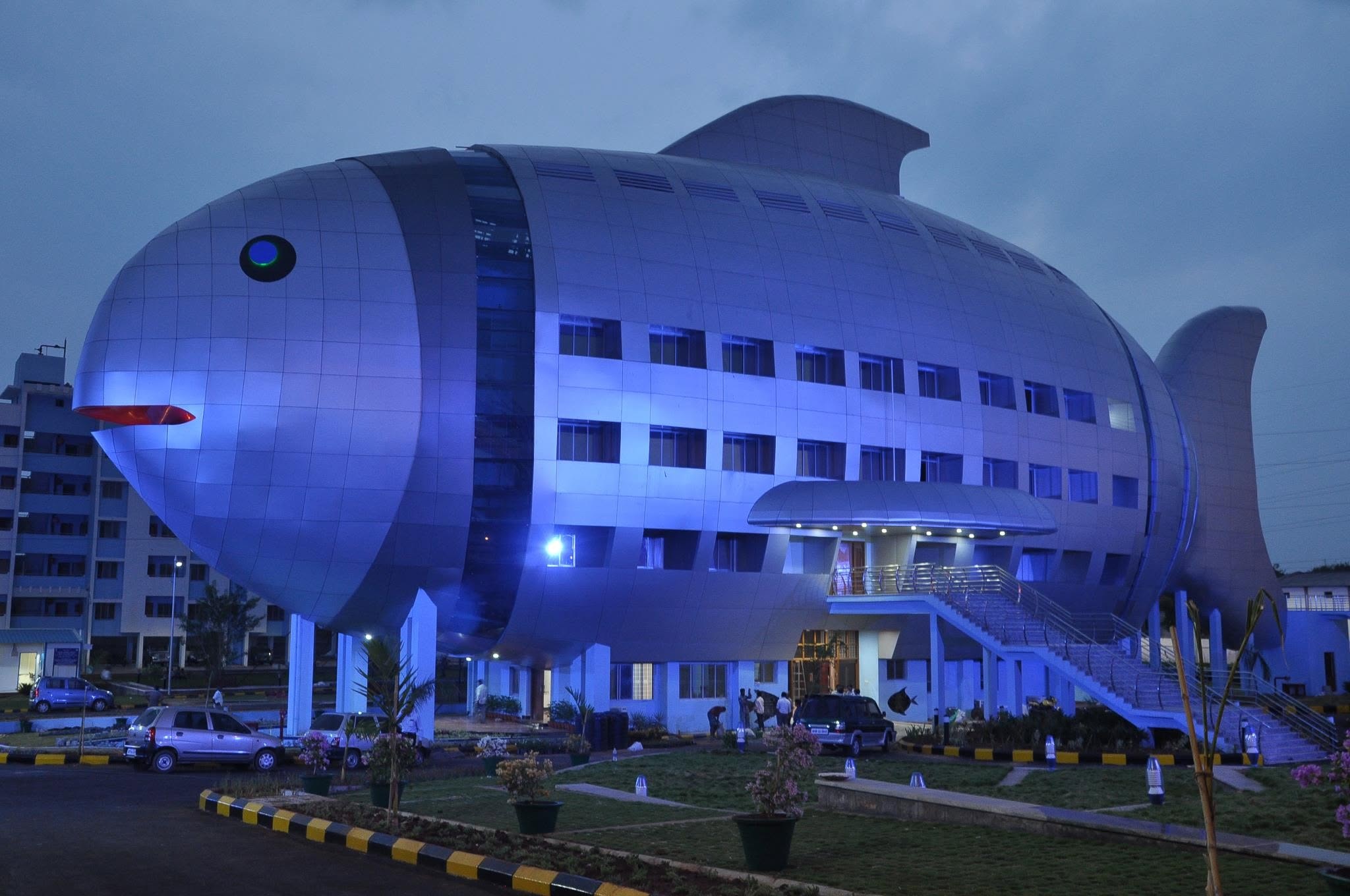
- Blue and purple lighting at night enhances the aquatic effect.
These carefully integrated features ensure that the symbolism is not merely decorative but forms an essential part of the building’s architecture.
Exterior Design and Materials
The building’s reflective stainless-steel façade plays a significant role in its visual appeal. During daylight, sunlight reflects off the metallic surface, giving the impression of shimmering fish scales.
The streamlined body follows aerodynamic curves instead of conventional rectangular geometry. Its elevated structural system further emphasizes movement, making the building appear as though it is gliding through water.
The expressive form is complemented by practical office spaces housed within a reinforced concrete framework concealed beneath the sculptural exterior.
Interior Functionality
Although the exterior attracts global attention, the interior remains a fully functional administrative headquarters.
The NFDB manages initiatives related to:
- Fisheries development
- Aquaculture promotion
- Fish production enhancement
- Infrastructure development
- Training programs
- Technology transfer
- Sustainable fisheries management
The campus also includes demonstration facilities showcasing modern aquaculture systems, ornamental fish units, aquaponics, recirculating aquaculture systems (RAS), and other technologies used for awareness and capacity building.
A Landmark Along Hyderabad’s Airport Route
Millions of travelers using the PV Narasimha Rao Expressway between Hyderabad city and the airport notice the enormous fish-shaped building.
Over the years, it has evolved from an unusual government office into one of Hyderabad’s modern architectural landmarks.
Its striking appearance has made it popular among photographers, architecture enthusiasts, and tourists, who often stop to capture images despite the building being an operational government office rather than a tourist attraction.
Global Recognition
The NFDB Building has received international attention for its unconventional appearance. It has frequently appeared in online compilations of the world’s most unusual or distinctive buildings and is often cited as one of the boldest examples of novelty architecture in India. Its memorable design has helped elevate the visibility of the National Fisheries Development Board beyond its administrative role.
Architecture That Builds Identity
Government buildings often emphasize permanence and efficiency, but the National Fisheries Development Board Building demonstrates another possibility: architecture can also communicate purpose, inspire curiosity, and create a strong civic identity.
Rather than relying solely on logos or signage, the building itself acts as a visual ambassador for India’s fisheries sector. It transforms a routine administrative headquarters into an instantly recognizable symbol that is remembered by visitors and residents alike.
In an era when cities increasingly seek iconic landmarks, Hyderabad’s Fish Building proves that even functional public infrastructure can become an architectural conversation piece.