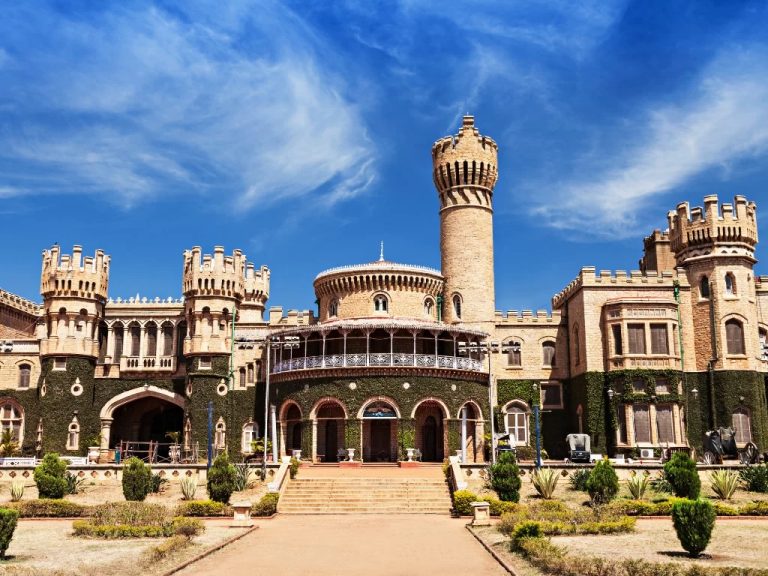
In a city largely defined by rapid urbanization and contemporary development, Bangalore Palace stands as one of Bengaluru’s most significant architectural landmarks. Built during the late 19th century under the patronage of the Wadiyar dynasty, the palace introduced a distinctly European architectural vocabulary into the Indian context.With its fortified towers, Gothic-inspired windows, ornamental interiors, and expansive grounds, Bangalore Palace represents a fascinating intersection of colonial influence and royal Indian craftsmanship. More than just a heritage structure, the palace reflects how architecture can embody power, aspiration, and cultural exchange within a changing urban landscape.Key Facts:Architect: Rev. J. Garrett.Located in Vasanth Nagar, Bengaluru, Karnataka, IndiaConstruction began in 1874Commissioned by Maharaja Chamaraja Wadiyar XCompleted in 1878Inspired by Windsor Castle in EnglandDesigned in the Tudor Revival architectural styleOriginally spread across nearly 454 acresFeatures fortified towers, arches, courtyards, and elaborate woodworkContinues to remain under the ownership of the Mysore royal familyFunctions today as a heritage landmark and event venueBangalore PalaceHistorical Background and Royal PatronageThe origin of Bangalore Palace can be traced to Reverend J. Garrett, the first principal of Central High School in Bengaluru, who initially owned the property. The land was later acquired by the Wadiyar royal family, who envisioned a grand palace inspired by the aristocratic residences of Europe.During the late 19th century, British influence had already begun shaping architecture across many Indian princely states. The Wadiyars, known for their patronage of art, culture, and architecture, commissioned a palace that reflected sophistication while aligning with emerging European design trends. (bangalorepalace.in)Completed in 1878, Bangalore Palace soon became a royal residence that symbolized prestige and cosmopolitan influence. Unlike traditional South Indian palaces that followed Dravidian or Indo-Islamic forms, this structure embraced a medieval European visual language rarely seen in India at the time.Tudor Revival Architecture in the Indian ContextOne of the most striking aspects of Bangalore Palace is its Tudor Revival architectural style. Originating in England during the 19th century, Tudor Revival architecture was inspired by late medieval English buildings and castles.The palace incorporates several defining elements of this style, including:Fortified towers and battlementsPointed arches and Gothic detailingSteeply articulated rooflinesDecorative parapetsLarge bay windowsExposed stone surfacesSymmetrical compositionThe castle-like appearance immediately distinguishes the palace from most Indian royal residences. The influence of Windsor Castle is particularly visible in the massing, verticality, and defensive architectural expression. (britannica.com)However, the palace is not a direct imitation of European architecture. Local materials, climatic adaptations, and Indian craftsmanship create a hybrid architectural identity that feels rooted within Bengaluru despite its foreign stylistic origins.Bangalore PalaceSpatial Planning and Interior DesignThe spatial organization of Bangalore Palace reflects both ceremonial hierarchy and residential comfort. Large halls transition into intimate chambers, while long corridors visually connect various functional spaces across the structure.The interiors are characterized by:Intricately carved teak wood elementsDecorative ceilings and floral motifsVintage furniture and royal portraitsStained glass detailingOrnamental staircasesLarge ceremonial hallsThe Durbar Hall remains one of the palace’s most architecturally significant spaces. Designed for royal gatherings and ceremonies, the hall combines grandeur with decorative sophistication through its columns, lighting, and spatial scale.Another notable feature is the extensive use of timber throughout the interiors. The warm wooden surfaces soften the otherwise fortress-like exterior and add a sense of elegance and craftsmanship to the palace environment.Landscape and Urban PresenceOriginally spread across nearly 454 acres, the palace estate once existed within a relatively open urban context. Over time, Bengaluru’s rapid urban expansion transformed the surrounding landscape, reducing much of the original grounds.Despite this urban pressure, Bangalore Palace continues to maintain a strong visual presence within the city. The open lawns surrounding the structure create an important spatial buffer that enhances the monumentality of the palace.The grounds have also evolved into cultural spaces hosting:Music concertsPublic exhibitionsFashion eventsArt festivalsCultural gatheringsThis adaptive use demonstrates how heritage architecture can remain relevant within contemporary urban life without losing its historical identity.Bangalore PalaceArchitectural SignificanceBangalore Palace occupies an important place in India’s architectural history because it reflects a transitional design moment shaped by colonial influence, royal ambition, and cultural hybridity.For architects and design enthusiasts, the palace offers valuable insight into:Colonial-Era Hybrid ArchitectureThe blending of Tudor Revival aesthetics with Indian craftsmanship represents an important example of architectural adaptation during British colonial influence.Material and Craftsmanship StudiesThe use of stone masonry, timber detailing, stained glass, and ornamental surfaces showcases the craftsmanship standards of late 19th-century palace construction.Heritage ConservationAs Bengaluru continues to urbanize rapidly, Bangalore Palace highlights the growing importance of preserving architectural heritage within dense metropolitan environments.Spatial ExperienceThe palace demonstrates how scale, circulation, and ornamentation can shape ceremonial and emotional experiences within architecture.Bangalore PalaceContemporary Relevance in Architecture and DesignToday, Bangalore Palace remains relevant not only as a tourist destination but also as a case study in adaptive heritage preservation.Architects and conservationists increasingly view such structures as important urban memory anchors that preserve the identity of rapidly changing cities. The palace also encourages discussions around:Conservation versus commercializationHeritage management in expanding citiesAdaptive reuse strategiesPublic engagement with historic architectureIts continued use as a cultural venue illustrates how historic buildings can sustain relevance when integrated thoughtfully into modern urban life.Bangalore Palace stands as one of India’s most distinctive examples of Tudor Revival architecture adapted within a royal Indian context. Its fortified exterior, richly detailed interiors, and layered historical narrative make it an important architectural landmark within Bengaluru’s evolving urban identity.Beyond its visual grandeur, the palace represents a deeper dialogue between local craftsmanship and imported architectural styles. For architects, designers, and students, it remains an insightful study in cultural hybridity, spatial hierarchy, and heritage conservation.In a city constantly moving toward the future, Bangalore Palace quietly preserves the architectural memory of another era. Bangalore Palace Bangalore Palace Bangalore Palace Bangalore Palace Bangalore Palace Bangalore Palace Bangalore Palace Bangalore Palace Bangalore Palace