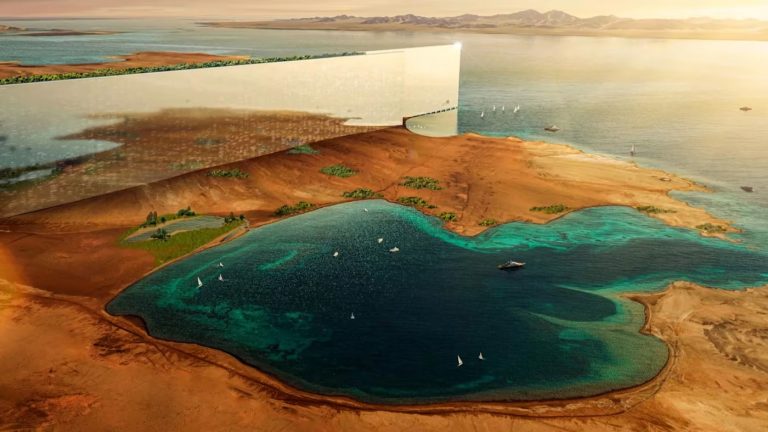
When Saudi Arabia first unveiled The Line, the internet reacted with equal parts excitement and disbelief. A city stretching across the desert in a perfectly straight line? No cars, no roads, no carbon emissions? It sounded more like science fiction than urban planning.But The Line is very real — and it has become one of the most talked-about architectural and infrastructure projects in the world. Part of the larger NEOM development, The Line represents Saudi Arabia’s attempt to rethink how future cities could function in a world facing climate change, overcrowding, and rapid urbanization.Here’s a detailed look at what The Line is, why it matters, and why architects, planners, and critics around the world continue to debate its future.What Is The Line?The Line is a planned linear smart city being developed in northwestern Saudi Arabia as part of the country’s Vision 2030 initiative. The project was officially announced in 2021 under the leadership of Crown Prince Mohammed bin Salman.Unlike traditional cities that spread outward in circular or grid patterns, The Line is designed as two parallel mirrored structures running through the desert for approximately 170 kilometers (105 miles). The concept aims to eliminate urban sprawl while preserving surrounding nature.The proposed city will be:170 km long200 meters wide500 meters tallDesigned to house around 9 million residentsPowered entirely by renewable energyAt full scale, it would become one of the largest and most technologically advanced urban developments ever attempted.The Line, Saudi Arabia; © NeomThe Vision Behind The LineThe idea behind The Line is simple but radical: redesign urban life around people instead of cars.Modern cities are heavily dependent on roads, highways, and long commutes. According to NEOM’s official vision, The Line wants to remove these problems entirely by creating a compact vertical city where everything residents need is accessible within a five-minute walk.The city plans include:No private cars or traditional roadsHigh-speed underground transit systemsAI-powered infrastructureMixed-use neighborhoods stacked verticallyIntegrated green spaces and nature corridors100% renewable energy operationsA high-speed rail system is expected to connect the entire city from end to end in around 20 minutes.For urban designers, The Line introduces the idea of “vertical urbanism,” where communities are layered upward instead of spread outward.The Line, Saudi Arabia; © NeomArchitectural Design and ScaleArchitecturally, The Line is impossible to ignore.The project’s mirrored exterior walls are designed to reflect the surrounding desert landscape, creating a futuristic appearance unlike any existing city. The buildings themselves form a continuous linear megastructure cutting across mountains, valleys, and coastal regions.More than 20 global architecture and engineering firms have reportedly contributed to the broader NEOM project, including internationally recognized names like Zaha Hadid Architects, Bjarke Ingels Group, and Gensler.One of the most unusual aspects of The Line is its extremely narrow footprint. Despite accommodating millions of residents, the city would occupy only about 34 square kilometers of land.This dense arrangement is intended to reduce infrastructure costs, improve energy efficiency, and preserve 95% of the surrounding natural environment.Sustainability GoalsSustainability is one of the strongest selling points behind The Line.According to official plans, the city aims to operate with:Zero carbon emissionsZero road trafficRenewable energy systemsReduced water and land consumptionWalkable neighborhoodsNature preservation strategiesThe project markets itself as an answer to the environmental failures of traditional urban development. Instead of endless highways and suburbs, The Line proposes a compact urban ecosystem where transportation, housing, and services are tightly integrated.In theory, this could significantly reduce pollution and commuting times.However, sustainability experts remain divided on whether constructing such a massive steel-and-glass megastructure can truly be environmentally friendly at scale. Critics argue that the embodied carbon involved in construction may offset many of the proposed environmental benefits.The Line, Saudi Arabia; © NeomTechnology and Smart City FeaturesThe Line is also being promoted as a “cognitive city,” meaning artificial intelligence and predictive systems will play a central role in daily life.Planned technologies include:AI-managed transportationAutomated logistics systemsSmart energy gridsPredictive public servicesAdvanced surveillance and data systemsDigital infrastructure integrated into buildingsSaudi Arabia hopes the project will position the country as a global technology and innovation hub while reducing dependence on oil revenues under Vision 2030.Challenges and CriticismAs ambitious as The Line sounds, the project has attracted intense criticism from architects, economists, environmentalists, and human rights organizations.1. Feasibility ConcernsMany experts question whether a 170-kilometer linear city is practical or economically sustainable.Urban planners have pointed out that traditional cities evolved in circular and networked patterns for a reason — they naturally optimize movement, accessibility, and social interaction. Critics argue that a single linear layout could create transportation bottlenecks and psychological monotony.2. Construction CostsReports suggest the total cost of NEOM could exceed hundreds of billions — potentially even trillions — of dollars over time.Due to rising costs and delays, several reports in recent years have indicated that the original scale of The Line may be revised or phased differently than initially announced.3. Human Rights IssuesHuman rights groups have raised concerns over worker conditions and the displacement of local tribes, particularly the Howeitat community, from areas linked to the development zone.These criticisms continue to shape international conversations around the project.The Line, Saudi Arabia; © NeomCurrent Construction ProgressConstruction work on The Line is ongoing, although the full vision will likely take decades to complete.Satellite imagery and on-ground footage show excavation, foundation work, and supporting infrastructure already underway in parts of the NEOM region.Saudi officials have acknowledged that the project will be developed in phases rather than completed all at once.Even if the final city differs from the original renderings, The Line has already changed global discussions about urban planning and megaproject architecture.Why The Line Matters GloballyWhether it succeeds or fails, The Line represents a major experiment in future urbanism.For architects and planners, it raises important questions:Can cities function without cars?Can dense urban living coexist with nature?How much should AI control city infrastructure?Is radical urban reinvention necessary for climate adaptation?Few projects in modern history have generated this level of debate before construction was even completed.Some see The Line as visionary innovation. Others see it as an unrealistic megaproject driven more by spectacle than practicality.The Line, Saudi Arabia; © NeomThe truth may ultimately lie somewhere in between.The Line is more than just a futuristic city proposal — it is a statement about how Saudi Arabia wants to position itself in the future global economy.The project combines architecture, sustainability, artificial intelligence, transportation, and urban planning at a scale never attempted before. Its mirrored walls and linear form have already become iconic symbols of futuristic design.At the same time, The Line faces enormous technical, financial, environmental, and ethical challenges that could reshape or limit its original vision.Still, one thing is certain: the world is watching closely. Whether The Line becomes a revolutionary success or a cautionary tale, it will remain one of the defining architectural conversations of the 21st century. The Line, Saudi Arabia; © Neom The Line, Saudi Arabia; © Neom The Line, Saudi Arabia; © Neom The Line, Saudi Arabia; © Neom The Line, Saudi Arabia; © Neom The Line, Saudi Arabia; © Neom