
Amazon Spheres
Amazon’s global identity isn’t just about e-commerce and cloud computing — it’s also expressed through its Seattle headquarters (HQ1), a sprawling urban campus that reshaped corporate workplace design by blending architecture, ecology, and urban life. Unlike a single corporate tower, the Seattle HQ integrates multiple buildings with public streets, plazas, and one of the most unusual office structures in the world: the Amazon Spheres.
Overview
Amazon’s Seattle campus sits in the Denny Triangle and South Lake Union neighborhoods, a bustling urban core transformed over the past decade through significant development. Rather than a gated corporate compound, the headquarters integrates with its city environment, encouraging public interaction and creating urban vitality around its office towers.
The headquarters includes multi-block office buildings designed to house tens of thousands of employees, retail at street level, landscaped plazas, dog parks, and transit connections. Many buildings on the campus have received LEED Gold and Platinum certifications for sustainable design and operation.

The Spheres – Icon of the Campus
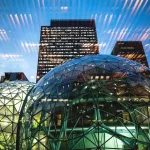
Perhaps the most talked-about feature of Amazon’s Seattle headquarters is The Spheres — three connected glass-and-steel domes that bring a mini rainforest into the heart of the city.
Key Facts:
- Name of Office: Amazon Headquarters (Seattle Campus)
- Iconic Office Building: Amazon Spheres
- Location: Seattle, Washington, USA
- Client: Amazon.com, Inc.
- Architect: NBBJ
- Structural Engineer: Magnusson Klemencic Associates
- Project Type: Corporate Headquarters / Office Campus
- Iconic Feature: The Spheres
- Total Campus Area: Approx. 8+ million sq ft
- The Spheres Area: Approx. 65,000 sq ft
- Height (Spheres): ~90 ft (27 m)
- Year Completed: 2018
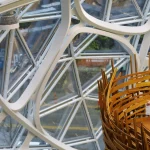
- Structure: Steel space-frame
- Façade: Glass panels (hexagonal & pentagonal geometry)
- Design Concept: Biophilic architecture
- Key Feature: 40,000+ plants from 400+ species
Interior & Ecology
- Plants: Home to more than 40,000 plants representing over 400 species from cloud forest ecosystems around the world.
- Spaces: Includes treehouse meeting rooms, terraces, waterfall features, paludariums (land and water ecosystems), and a four-story “living wall.”
- Function: Designed as biophilic workspace — not traditional offices, but collaborative and creative zones that immerse employees in nature.
- Visitor Access: A public visitor center called The Understory offers educational experiences about the design, engineering, and plant life.
The biophilic ethos of The Spheres highlights how architecture can directly connect people with nature, even in dense urban settings. This design approach — driven by research showing that contact with nature can boost creativity and well-being — sets The Spheres apart from traditional corporate offices.

Campus Design & Urban Impact
Amazon’s Seattle headquarters spans several blocks and includes multiple high-rise office towers, public walkways, and streets designed to feel like part of the city rather than a closed campus.
The campus blends work and public life by:
- Supporting public transportation access and encouraging walking and biking.
- Incorporating green spaces, plazas, and parks, which are open to neighbors and visitors.
- Featuring sustainable design elements, such as heat recovery from a neighboring data center and green roofs to reduce urban heat island effects.
Buildings across the campus have achieved multiple LEED certifications, reflecting Amazon’s commitment to sustainable architecture and operations.

Why It Matters
Amazon Headquarters in Seattle is more than an office — it’s a symbol of workplace evolution, where architecture doesn’t just house employees but inspires them. By integrating nature with cutting-edge design, the campus challenges traditional office typologies and promotes a healthier, more dynamic way to work in the urban core. The Spheres, with their rainforest-like environment, are a standout example of biophilic design at corporate scale, influencing how future workplaces might look around the world.

Related Post:
Jeff Bezos House: Inside the Mansions and Estates of the Amazon Founder
Elon Musk’s Houses: Tour the Stunning Homes Owned by the Tesla Billionaire
Mark Zuckerberg’s Houses: An Inside Look at the Luxurious Homes of Facebook’s Founder
Gautam Adani House: Inside the luxurious residence of India’s business tycoon in Ahmedabad
Mukesh Ambani House: Antilia, the world’s most expensive private residence in Mumbai
Bill Gates’s House: An inside look at all the homes owned by the Microsoft co-founder
Jatia House: Kumar Mangalam Birla’s iconic home of luxury and heritage in Mumbai
Gulita: The diamond-inspired seafront mansion of Isha Ambani and Anand Piramal
Abode: Inside Anil Ambani’s iconic Pali hill residence that redefines luxury living in Mumbai