Amara House Bengaluru
In a world dominated by concrete apartments and fast-paced urban lifestyles, homes that reconnect people with nature instantly stand out. One such residence is Amara, a beautifully designed holiday home in Bengaluru that recently gained attention through a house tour by content creator Priyam Saraswat.
Designed with a deep respect for natural materials, ventilation, and slow living, Amara is more than just a weekend getaway. It is a thoughtful example of how architecture can create comfort without depending heavily on artificial systems or excessive ornamentation.
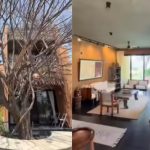
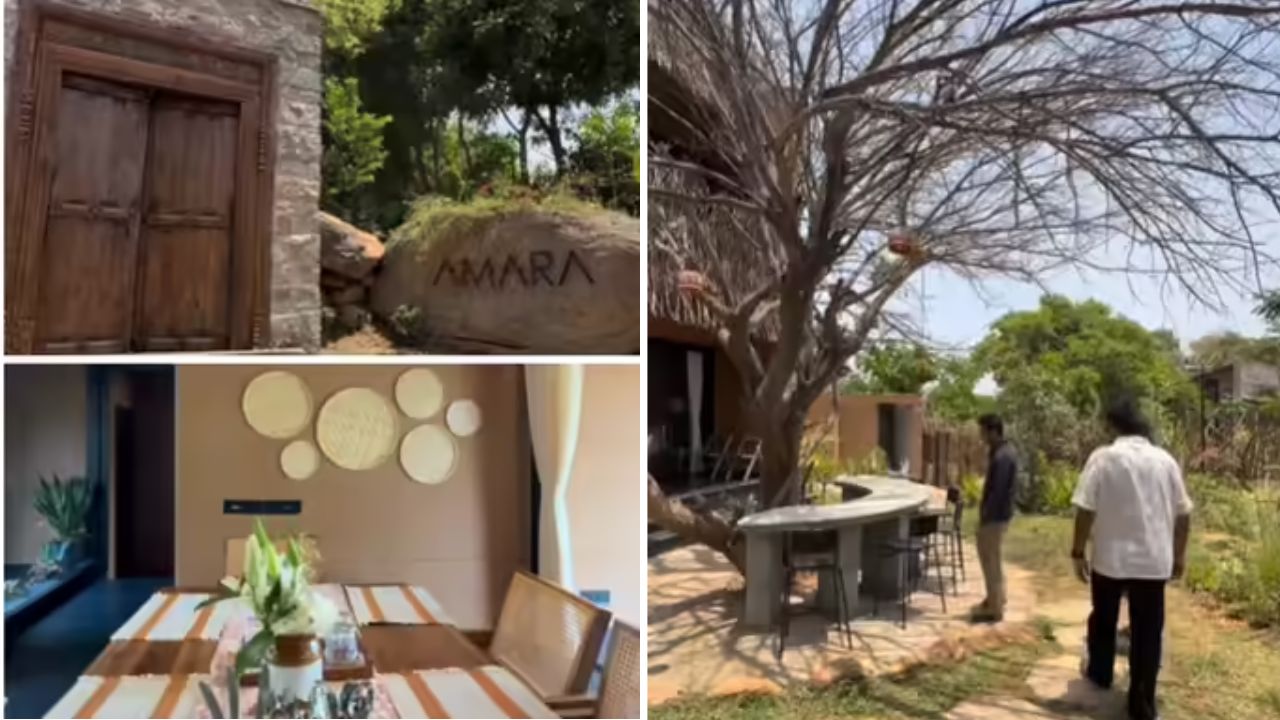
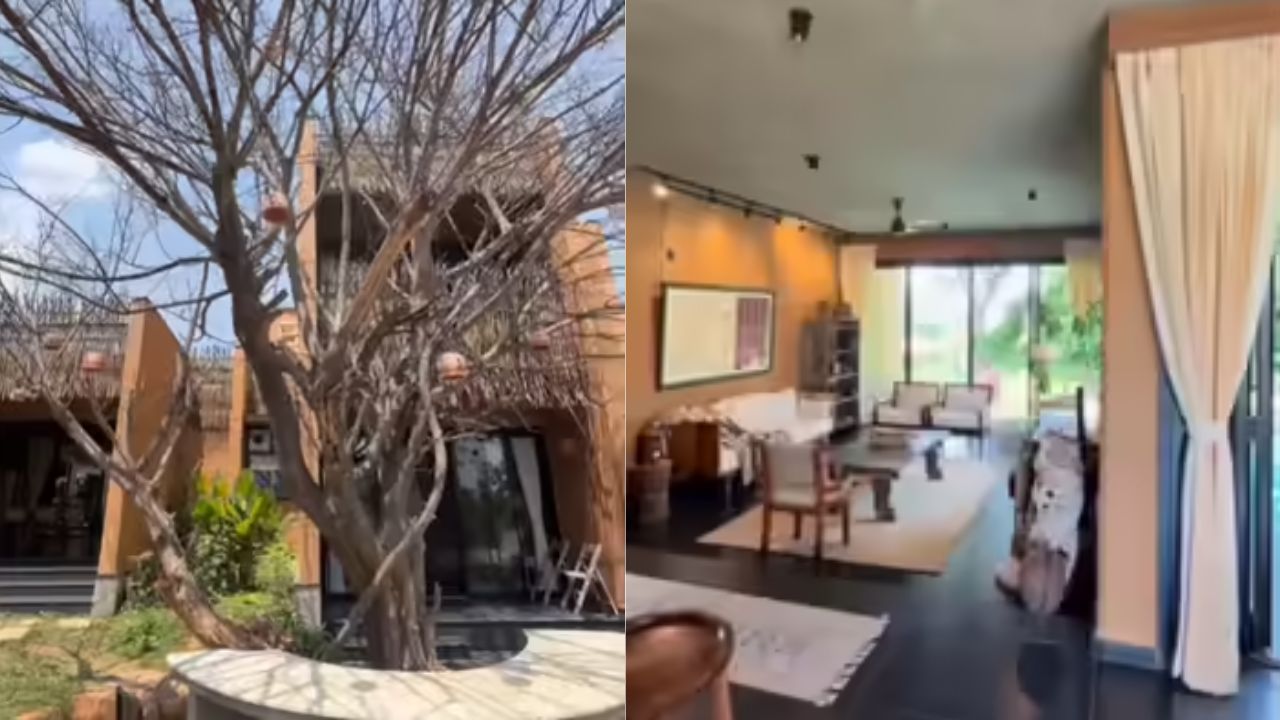
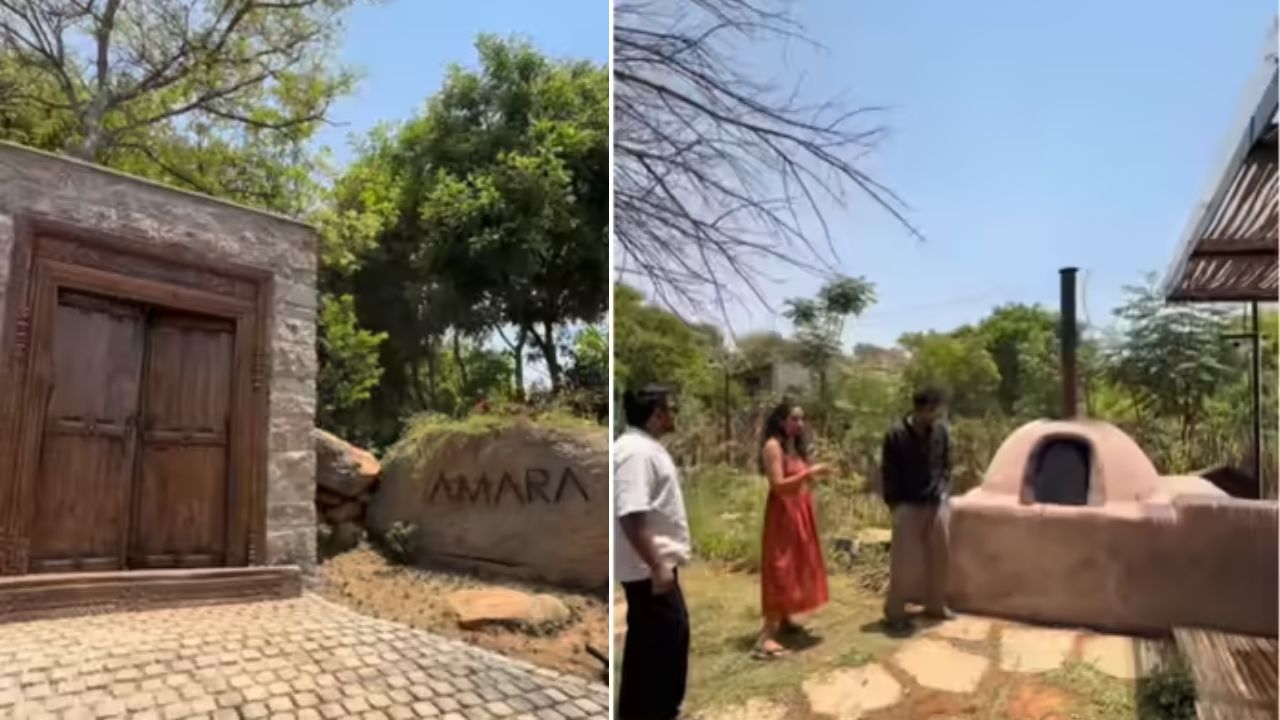
The first impression of Amara begins with a large wooden entrance door that opens into a spacious, open-air layout. Rather than relying on excessive finishes or luxury materials, the home embraces an earthy architectural language rooted in texture, warmth, and authenticity.
The walls are one of the most striking aspects of the house. Built using soil-based materials, they naturally keep the interiors cooler while allowing the structure to breathe. This approach reflects a growing movement in contemporary Indian architecture where traditional construction wisdom is being reinterpreted for modern lifestyles.
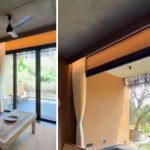
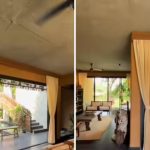
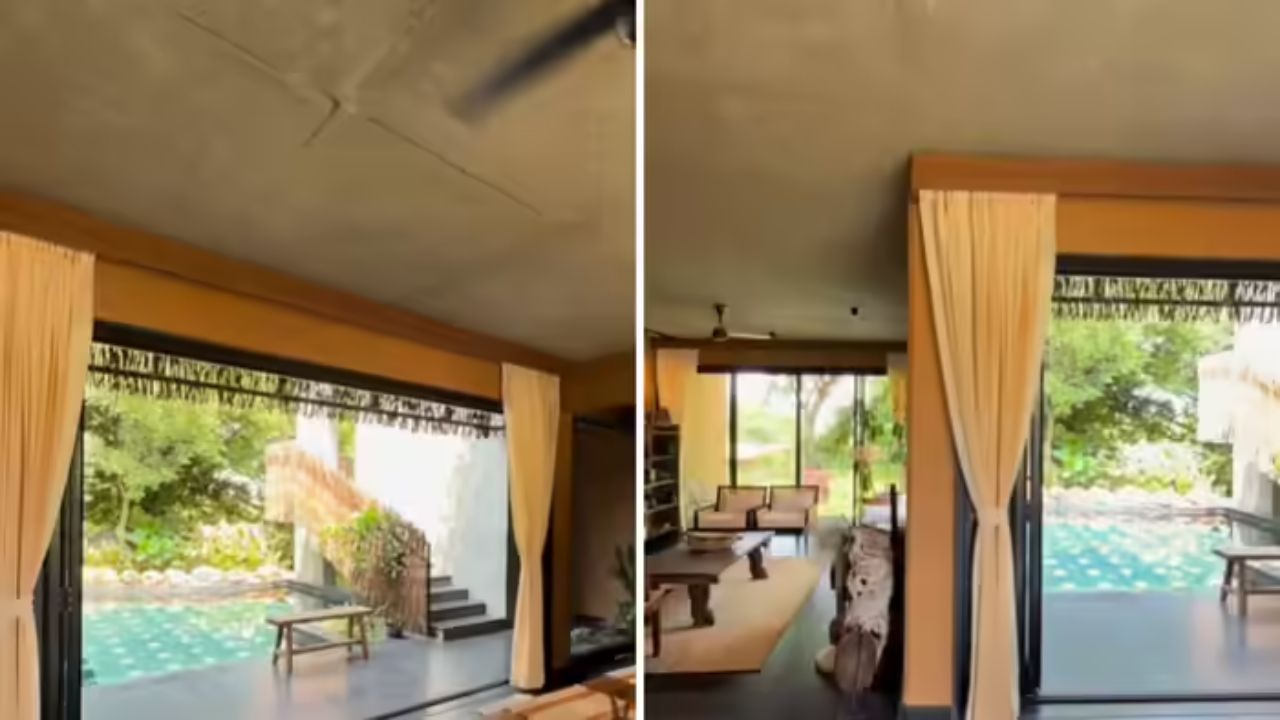
Instead of creating rigid boundaries between indoor and outdoor spaces, the design encourages a seamless transition between the two. Natural light, airflow, and visual openness become central elements of the living experience.
Interiors Inspired by Nature
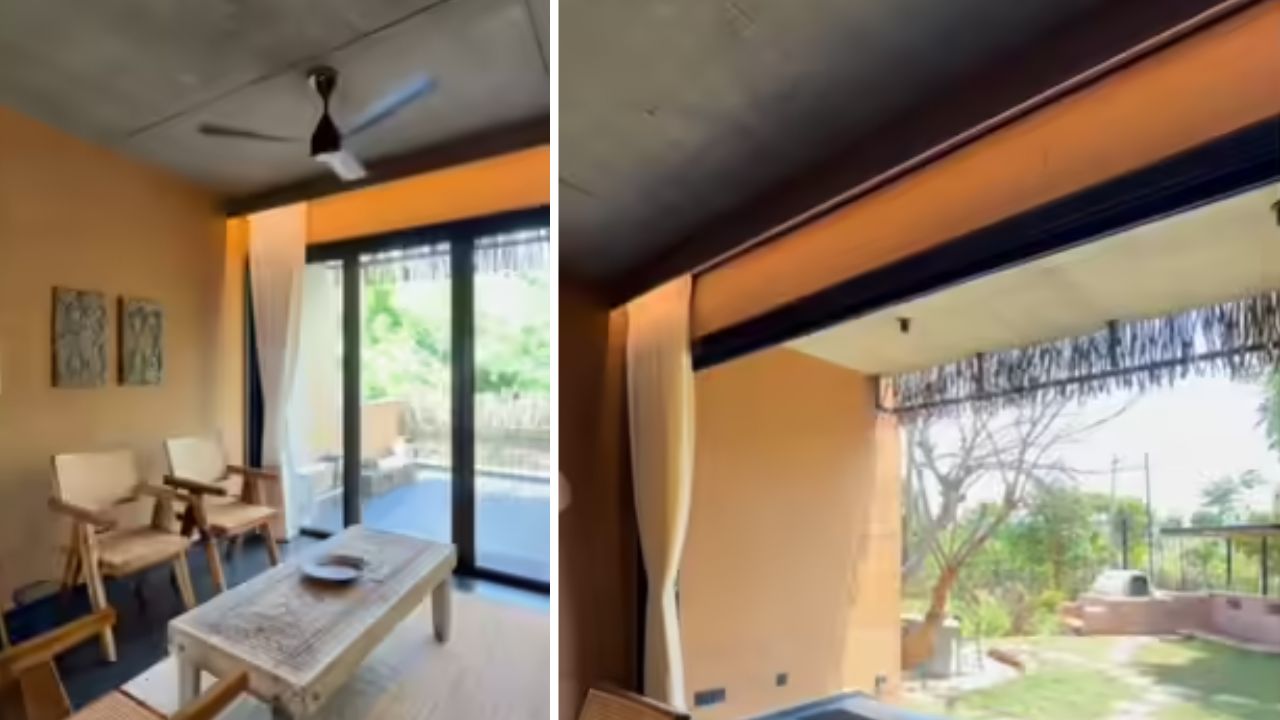
Amara’s interiors continue the architectural narrative established by the structure itself. The living room features earthy tones, handcrafted décor, and natural textures that create a sense of calm.
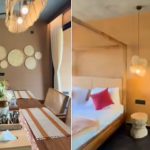
One particularly unique feature is an accent wall decorated with textile artwork crafted from a saree, adding cultural character to the space. The open kitchen complements the overall design language with bamboo and cane lighting fixtures sourced from Assam, introducing regional craftsmanship into a contemporary setting.
Throughout the home, natural materials take precedence over synthetic finishes. Wood, bamboo, soil textures, and handcrafted elements work together to create an atmosphere that feels both timeless and welcoming.
The Pizza Unit: A Social Heart of the House
Among Amara’s most talked-about features is its dedicated pizza-making unit. While many holiday homes focus solely on aesthetics, this addition emphasizes lifestyle and community.
The pizza space transforms casual gatherings into memorable experiences, encouraging friends and family to cook, eat, and spend time together outdoors. It reflects a broader design philosophy where architecture supports human interaction rather than simply serving as a backdrop.
In many ways, this feature symbolizes what Amara stands for: slowing down, connecting with people, and enjoying simple pleasures.
A Response to Modern Urban Living
As Indian cities continue to become denser, many homeowners are seeking alternatives to compact apartment living. Amara represents this shift beautifully.
The house offers generous open spaces, natural cooling strategies, and a stronger relationship with the surrounding environment. Rather than isolating occupants from nature, the design embraces it.
The result is a home that feels restorative—an escape from the visual and mental clutter often associated with urban life.
Why Amara Matters
Amara is part of a larger architectural conversation happening across India today. Architects, designers, and homeowners are increasingly exploring sustainable materials, passive cooling techniques, and vernacular construction principles.
What makes Amara noteworthy is how effortlessly these ideas are integrated into everyday living. Sustainability here is not presented as a technological statement; it is experienced through comfort, material honesty, and thoughtful spatial design.
The home demonstrates that environmentally conscious architecture can also be warm, elegant, and deeply personal.
Amara is not defined by grand gestures or extravagant luxury. Its appeal lies in its simplicity, material authenticity, and ability to create meaningful experiences.
By combining earth-based construction, handcrafted interiors, open planning, and community-focused spaces, the house offers a compelling vision for the future of residential design in India. It serves as a reminder that great architecture is not only about how a building looks, but also about how it makes people feel.