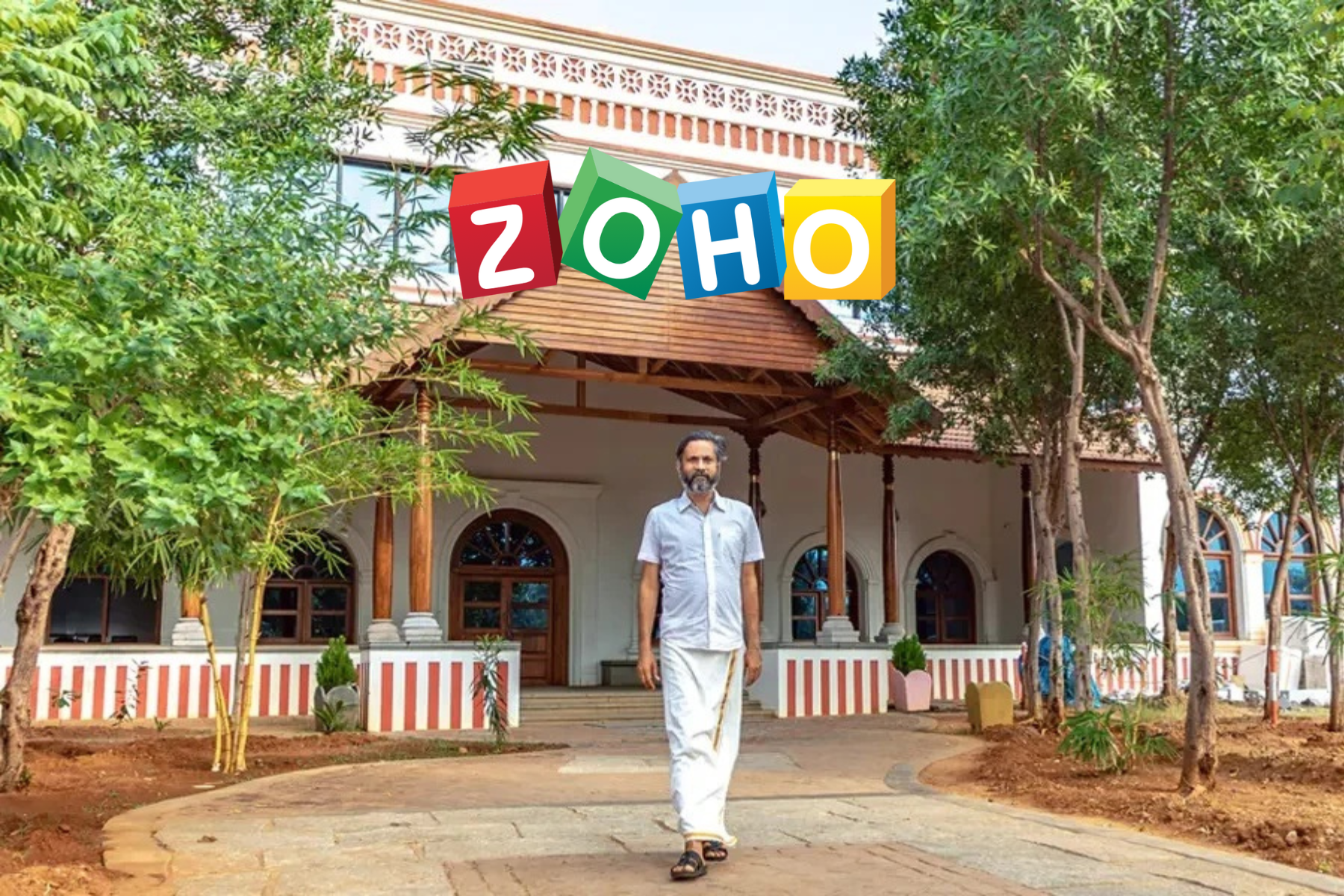
Sridhar Vembu in front of his Zoho office in Mathalamparai village of Tenkasi
For decades, the modern office has been defined by glass. Glass walls, glass cubicles, glass towers stretching toward the sky—symbols of transparency, efficiency, and progress. Yet as work itself evolves, the glass box is beginning to feel less like a symbol of innovation and more like a constraint. The rise of remote work, hybrid teams, digital collaboration, and a renewed focus on employee well-being has forced organizations to ask a fundamental question: What is the office really for?
Thinking outside the glass box means challenging long-held assumptions about productivity, presence, and professionalism. It means reimagining the office not as a container for work, but as a dynamic environment that supports human needs, creativity, and meaningful connection.
The Glass Box Legacy: How We Got Here
The open-plan, glass-heavy office emerged as a response to rigid, hierarchical workplaces of the past. Closed doors and private offices symbolized power and secrecy. Glass promised openness, flattened hierarchies, and visual connection. It also aligned neatly with efficiency-driven management philosophies—if everyone could be seen, everyone could be measured.
However, what was intended to foster collaboration often produced unintended consequences. Constant visibility led to distraction, performative busyness, and cognitive overload. Employees learned to look productive rather than be productive. Over time, the glass box became a paradox: transparent yet isolating, open yet mentally claustrophobic.

The Shift in Work Itself
The modern office crisis is not about architecture alone—it is about how work has fundamentally changed.
Knowledge work is no longer linear or location-dependent. Deep thinking, creativity, and problem-solving often happen away from desks: during walks, quiet reflection, or informal conversations. At the same time, digital tools allow teams to collaborate across continents, making physical presence less essential for many tasks.
The pandemic accelerated this realization. When offices emptied, productivity did not collapse as many feared. Instead, employees demonstrated adaptability, autonomy, and resilience. This forced leaders to confront an uncomfortable truth: the office is no longer the default place where work happens—it is one of many possible environments.
From Surveillance to Trust
One of the most radical shifts required in reimagining the office is moving from surveillance to trust.
Glass walls, badge swipes, desk occupancy tracking, and rigid schedules reflect a belief that productivity must be monitored. But modern work thrives on autonomy. When employees are trusted to manage their time and energy, engagement and innovation increase.
A reimagined office is not designed to control behavior but to enable choice. Employees should be able to decide when to come in, where to sit, and how to work based on the task at hand. Trust becomes embedded not only in management practices but also in spatial design.

Designing for Human Needs, Not Just Efficiency
The future office must start with a simple premise: humans are not machines.
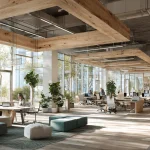
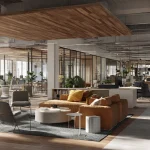
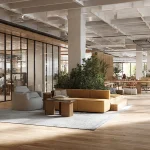
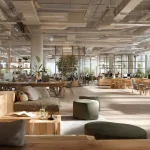
People need variety—quiet and stimulation, solitude and social interaction. A single, uniform open floor plan cannot support this diversity of needs. Instead, offices should offer a range of environments:
- Focus zones for deep, uninterrupted work
- Collaborative spaces for brainstorming and teamwork
- Social areas that encourage informal connection
- Restorative spaces for rest, reflection, and mental reset
Lighting, acoustics, materials, and even scent play a role in cognitive and emotional well-being. Natural light, plants, warm textures, and adaptive soundscapes can significantly reduce stress and improve concentration. The office becomes less of a container and more of an ecosystem.
Rethinking Collaboration Beyond Proximity
For years, offices were designed around the idea that collaboration happens best when people are physically close. While proximity can spark spontaneous interaction, it does not guarantee meaningful collaboration.
True collaboration requires psychological safety, clear purpose, and inclusive communication. In hybrid environments, this means designing offices that integrate seamlessly with digital work rather than competing with it.
Meeting rooms equipped for hybrid participation, shared digital whiteboards, and spaces designed for both in-person and remote contributors ensure that no one is a second-class participant. The modern office should amplify collaboration across distances, not privilege those physically present.

The Office as a Cultural Anchor
As work becomes more distributed, the office takes on a new role: a cultural anchor rather than a productivity factory.
Employees may not come to the office every day, but when they do, it should matter. The office becomes a place for alignment, learning, mentorship, and shared experiences that are difficult to replicate remotely.
This shifts design priorities toward spaces that support storytelling, rituals, and community. Town halls, workshops, onboarding sessions, and celebrations find a natural home here. The office expresses organizational values not through slogans on walls, but through how it makes people feel and interact.
Sustainability and Responsibility
Thinking outside the glass box also means confronting the environmental impact of traditional offices. Glass towers are energy-intensive, often disconnected from local communities, and designed for permanence in a world that demands adaptability.
Future offices must be sustainable, flexible, and responsive. This includes:
- Adaptive reuse of existing buildings
- Modular furniture and spaces that can evolve
- Energy-efficient systems and materials
- Integration with public spaces and local neighborhoods
Sustainability is no longer a branding exercise; it is a responsibility that directly affects employee pride, attraction, and retention.

Leadership and the Courage to Let Go
Reimagining the modern office is not primarily a design challenge—it is a leadership challenge.
Leaders must let go of the idea that presence equals performance. They must accept ambiguity, experiment with new models, and listen deeply to employee feedback. This requires humility and courage, especially for organizations built on decades of tradition.
The most successful offices of the future will not be those with the most impressive architecture, but those aligned with how people actually work, think, and live.
Beyond the Glass Box
The glass box served its purpose in a different era. Today, it is time to move beyond it.
The modern office is no longer a static destination but a flexible, intentional space—one that supports focus and connection, autonomy and belonging. By thinking outside the glass box, organizations can create workplaces that are not only more productive, but more humane.
In doing so, they acknowledge a profound truth: work is something people do, not a place they go.