
Lokapriya Gopinath Bardoloi International Airport, Guwahati, Assam
Lokapriya Gopinath Bardoloi International Airport (LGBIA), Guwahati, has long been known as the primary aerial gateway to Northeast India. With the inauguration of its new integrated terminal in December 2025, the airport enters a new phase—one that blends infrastructure scale with cultural sensitivity, landscape-driven design, and contemporary aviation needs.
More than a functional upgrade, the new terminal represents a shift in how large public infrastructure in India can respond to place, climate, and identity.
A Strategic Gateway with Historic Roots
Located at Borjhar, around 26 kilometers from Guwahati’s city center, LGBIA occupies a critical position in the Brahmaputra Valley. Guwahati acts as the nerve center for the northeastern states, and air connectivity here is not a luxury but a necessity—given the region’s terrain, climate, and dispersed urban centers.
Originally developed as a military airbase during World War II, the airport later transitioned into a civil aviation hub. It was named after Lokapriya Gopinath Bordoloi, Assam’s first Chief Minister and a key figure in safeguarding the region’s political and cultural integrity. The airport, in many ways, mirrors Bordoloi’s legacy—acting as a bridge between Assam and the rest of the country.
The New Terminal: Opening and Vision
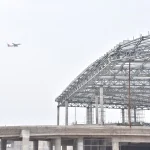
The new integrated terminal building was officially inaugurated on 20 December 2025. Designed to significantly increase passenger capacity while improving experience, the terminal marks a turning point in how aviation infrastructure is imagined in Northeast India.
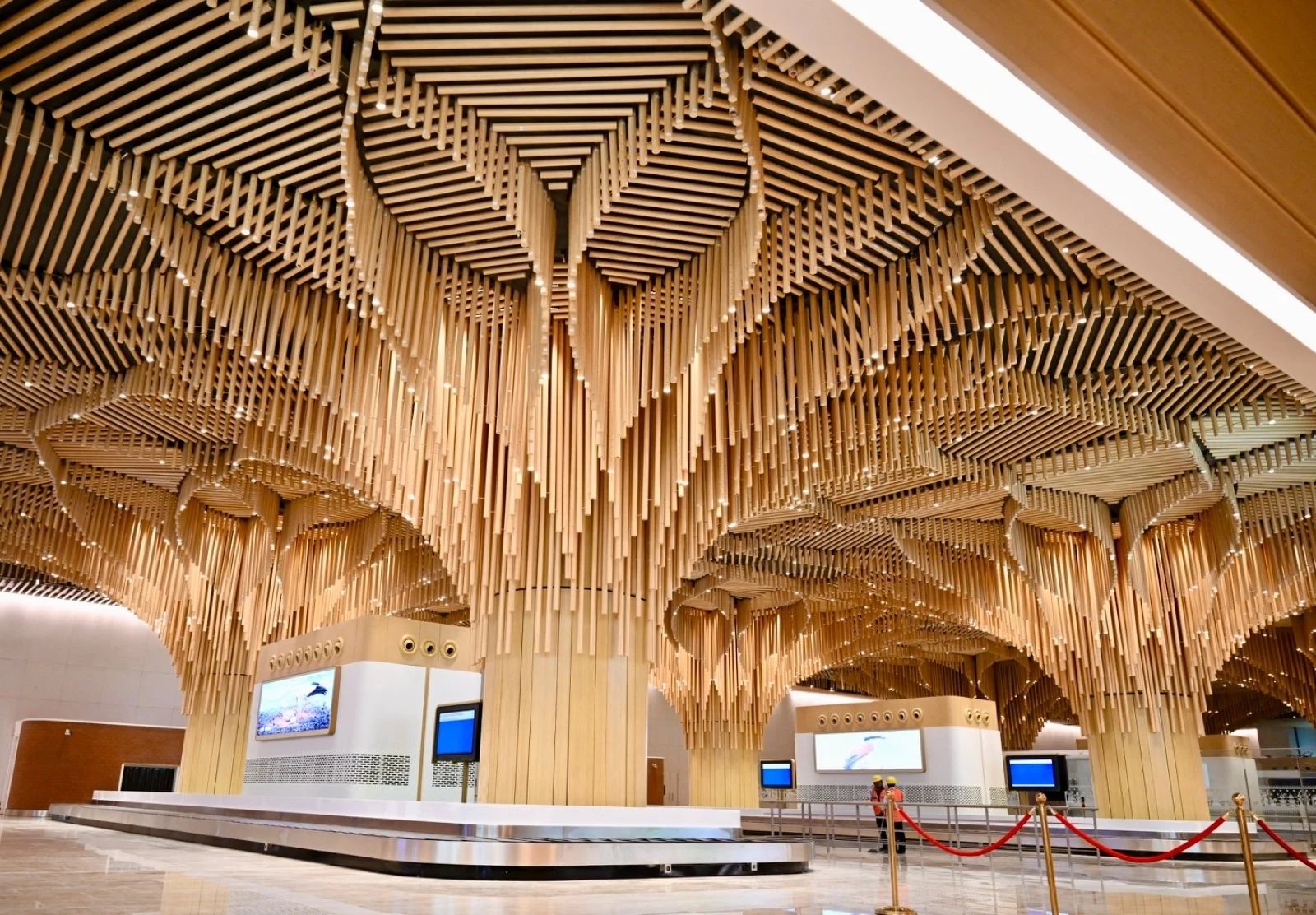
This terminal is not conceived as a neutral, placeless structure. Instead, it is envisioned as India’s first nature-themed airport terminal, where architecture becomes a medium to introduce travelers to Assam even before they step outside.
The Minds Behind the Masterpiece
This airport terminal isn’t just a building — it’s the outcome of collaboration between some of India’s notable design and construction professionals:

Architectural Design
Firm: NUDES, a Mumbai-based architecture studio known for blending context-sensitive design with modern infrastructure.
Lead Architect: Nuru Karim — the visionary responsible for steering the cultural narrative of the project.
Design Team: The core team included:
- Mahesh Khanapurkar
- Vishesh Khetawat
- Vatsal Kapadia
- Atul Hanchate
- Nirmal Kumar
- Tanvi Savla
Together, they shaped the aesthetic, functional flow, and regional symbolism within the design.
Landscape Architecture
Hemali Landscape Design Studio — responsible for integrating greenery and environmental experiences into the terminal environment.
General Contractor
Shapoorji Pallonji and Company Pvt. Ltd. — one of India’s most respected infrastructure developers, handled the construction and delivery of the terminal.
Client & Operator
The redevelopment project was commissioned and is operated by Adani Airport Holdings Ltd. — the entity managing LGBIA under a 50-year concession.

Project Scale & Features
Size: The new terminal spans roughly 140,000 m² of built-up area.
Passenger Capacity: Designed to handle over 13 million passengers per year — a huge jump from the previous terminal’s capacity.
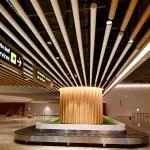
Modern Amenities: DigiYatra gates, expanded security zones, digitally-assisted wayfinding, and efficient baggage handling systems are part of the passenger experience.
Sustainability: The terminal uses passive daylighting, green walls, open sky gardens, and other features to reduce energy and improve comfort.
Architectural Design: Rooted in Nature and Culture
The architectural design of the terminal has been led by NUDES, a Mumbai-based architecture firm known for its context-driven approach to large-scale public projects. The project was headed by Architect Nuru Karim, along with a multidisciplinary in-house design team.
The conceptual inspiration is drawn from Assam’s natural ecology, particularly:
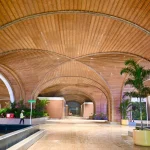
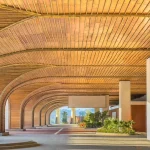
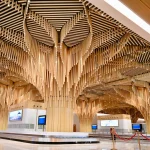
- Bamboo, a material deeply embedded in local construction traditions
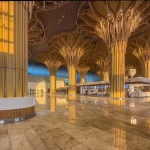
- Foxtail orchids (Kopou Phool), culturally symbolic and visually expressive
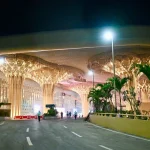
These ideas translate into flowing roof forms, structural rhythms, and interior spatial sequences that echo organic growth rather than rigid geometry.
The terminal’s most distinctive feature is the “Sky Forest”—a large, landscaped interior zone filled with indigenous plants. This space softens the scale of the terminal while offering passengers a calm, immersive environment that reflects the forests and wetlands of the region.

Landscape Integration
The landscape design has been handled by Hemali Landscape Design Studio, ensuring that greenery is not treated as decoration but as an integral architectural layer. The indoor and outdoor landscapes respond to Assam’s climate, rainfall patterns, and biodiversity.
Planning, Engineering, and Construction
The terminal development is part of a larger modernization initiative led by Adani Airport Holdings Ltd., which operates the airport under a long-term concession agreement.
The construction contractor for the project is Shapoorji Pallonji and Company Pvt. Ltd., a firm with extensive experience in complex infrastructure and aviation projects across India.
While individual structural, MEP, and airport systems consultants are not publicly listed in detail, a project of this scale typically involves:
- Specialized structural engineering teams for long-span roofing systems
- Advanced MEP coordination for climate control in humid conditions
- Aviation systems engineers for baggage handling, security, and airside integration
The coordination between design, engineering, and construction teams is evident in the terminal’s seamless spatial flow and operational clarity.

Scale, Capacity, and Passenger Experience
The new terminal spans approximately 140,000 square meters, making it one of the largest airport terminals in eastern India. It is designed to handle over 13 million passengers annually, a significant increase from the earlier capacity.
From a planning perspective, the terminal emphasizes:
- Clear separation of arrival and departure flows
- High ceilings and daylight-filled interiors
- Wide concourses that reduce congestion during peak hours
- Intuitive wayfinding and visual connectivity
Passenger amenities include modern security systems, DigiYatra-enabled entry points, expanded retail and food zones, and comfortable waiting areas—all integrated without overpowering the architectural narrative.
Climate Response and Sustainability
Designing an airport in Assam means responding to high humidity, heavy rainfall, and temperature variation. The terminal incorporates passive strategies such as:
- Extensive daylighting to reduce artificial lighting loads
- Shaded facades and deep overhangs
- Efficient drainage and roofing systems
- Energy-efficient lighting and mechanical systems
While not positioned as a fully net-zero building, the terminal reflects a measured, climate-aware approach suited to regional conditions.

Recognition and Architectural Significance
Even before becoming fully operational, the terminal has received international architectural recognition, including the International Architectural Award 2025 in the Transport and Airports category. This acknowledgment places the project among a small group of Indian infrastructure developments recognized for design excellence on a global stage.
For architects and urban designers, the project stands as a strong example of how infrastructure can be experiential, contextual, and culturally expressive—without compromising efficiency.
Shaping Guwahati’s Urban Future
The expansion of LGBIA is already influencing development patterns around Guwahati. Improved road connectivity, hospitality projects, logistics hubs, and commercial growth along the airport corridor are reshaping the city’s western edge.
As Guwahati continues to evolve into a major metropolitan center, the airport will remain one of its most visible and influential architectural landmarks.
The new terminal at Lokapriya Gopinath Bardoloi International Airport is more than an upgrade in capacity—it is a statement about how public infrastructure in India can evolve. By combining architecture, landscape, engineering, and cultural storytelling, the project redefines what an airport can represent for a region.
For Northeast India, it is a long-awaited gateway that finally reflects the richness of its land, people, and identity—right from the moment of arrival.


Read more articles:
Varanasi International Cricket Stadium: Where Spirituality Meets Sports
Maa Vindhyavasini Mandir and Its Corridor: A Divine Fusion of Heritage, Devotion & Modern Vision
A Monument of Devotion: World’s tallest statue 77-ft Bronze Idol of Lord Shree Ram Rises in Goa