

Menezes Braganza House
Introduction: A Living Museum of Goan Heritage
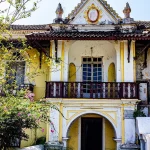
Hidden in the quiet village of Chandor, South Goa, the Menezes Braganza House stands as one of the grandest surviving symbols of Goa’s Indo-Portuguese architectural legacy. More than just a heritage home, this centuries-old mansion is a living museum, offering a rare glimpse into aristocratic Goan life during the Portuguese era.
For architects, historians, and cultural enthusiasts, Menezes Braganza House represents a masterclass in colonial spatial planning, craftsmanship, and adaptive design—qualities that continue to inspire contemporary architecture.
Historical Background of Menezes Braganza House
The Menezes Braganza House dates back over 350 years, built by the influential Braganza family, descendants of Portuguese nobility who settled in Goa during colonial rule. Chandor itself was once the capital of ancient Goa, making the house part of a region deeply layered with history.
Unlike many heritage structures that fell into neglect, the Menezes Braganza House has been continuously occupied and carefully preserved, allowing it to retain its authenticity and original character.

Location & Site Context
Location: Chandor Village, South Goa, India
Chandor holds immense historical importance as it was once believed to be the capital of ancient Goa (Chandrapura). The Menezes Braganza House is set within a quiet, low-density village environment surrounded by lush greenery and traditional Goan homes.
Site Context Highlights:
- Tropical coastal climate with heavy monsoons
- Flat terrain with natural drainage
- Village-scale settlement pattern
- Strong Indo-Portuguese cultural influence
The house is strategically positioned to take advantage of cross ventilation, daylight, and shaded outdoor spaces, making it well-adapted to Goa’s hot and humid climate.

Architect & Design Concept
Architect
The original architect is unknown, as was common with residential architecture during the Portuguese colonial period. These homes were typically designed by master builders using regional knowledge combined with European planning principles.
Design Concept
The design concept reflects:
- Portuguese aristocratic lifestyle
- Adaptation to tropical Indian climate
- Emphasis on grandeur, symmetry, and social hierarchy
The house was designed to accommodate:
- Large family gatherings
- Formal receptions and social events
- Private domestic life
The spatial hierarchy clearly separates public, semi-public, and private zones, a concept still relevant in contemporary residential design.

Structural Engineering Challenges
Despite being over three centuries old, the Menezes Braganza House has survived due to intelligent structural decisions.
Key Structural Elements:
- Thick laterite stone masonry walls
- Lime plaster acting as a breathable protective layer
- Timber roof trusses supporting Mangalore tiles
- Load-bearing wall system
Engineering Challenges Addressed:
- Managing humidity and moisture ingress
- Preventing structural decay in wooden elements
- Ensuring thermal comfort without modern systems
The house’s durability highlights the effectiveness of traditional construction techniques long before modern engineering tools existed.

Interior Design & Materials
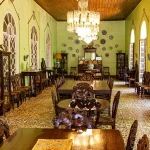
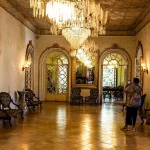
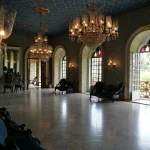
The interiors of Menezes Braganza House are among its most celebrated features.
Interior Design Characteristics:
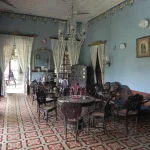
- Grand halls with high ceilings
- Ornate wooden staircases
- Large arched windows with shutters
- Chandeliers imported from Europe
Materials Used:
- Locally sourced laterite stone
- Teakwood and rosewood for furniture and doors
- Lime plaster for walls
- Handcrafted tiles and polished wooden flooring
The interiors reflect a seamless blend of European luxury and Indian craftsmanship, making the house a reference point for heritage interior design.

Sustainability & Technology
Although built centuries ago, the house incorporates several passive sustainable design strategies.
Sustainable Features:
- High ceilings for heat dissipation
- Cross-ventilation through aligned openings
- Thick walls for thermal insulation
- Shaded verandahs and courtyards
No modern HVAC systems were originally required, proving that climate-responsive design was deeply understood and effectively implemented using traditional knowledge.
Construction Cost & Timeline
Timeline:
- Construction period: Estimated 17th century
- Built incrementally over generations
Construction Cost:
There is no documented construction cost due to its age. However, the materials and craftsmanship suggest it was built by a wealthy aristocratic family with access to global trade networks.
In today’s context, recreating a structure of similar scale and detail would require significant investment, especially due to handcrafted elements and heritage materials.
Interesting Architectural Facts
- The house is believed to have over 20 rooms, including multiple grand halls
- One of the largest private mansions in Goa
- Features rare European antiques not commonly found in Indian heritage homes
- Still occupied by descendants of the original family
- No two halls are identical in layout or detailing
These factors make Menezes Braganza House a unique case study for architecture and conservation students.

Where is Menezes Braganza House located?
Menezes Braganza House is located in Chandor village, South Goa, India.
How old is Menezes Braganza House?
The house is over 350 years old, dating back to the Portuguese colonial era.
Is Menezes Braganza House open to the public?
Yes, guided tours are available, usually conducted by family members, offering deep historical and architectural insights.
Can architecture students visit the house?
Yes, the house is highly recommended for architecture and heritage conservation students.
What architectural style does Menezes Braganza House follow?
It follows Indo-Portuguese architecture, blending European spatial planning with local materials and climate-responsive design.
Is photography allowed inside?
Photography is generally restricted indoors to protect antiques and preserve the interiors.
Why is Menezes Braganza House important?
It is one of the best-preserved examples of Goan colonial residential architecture still in private use.
What materials were used in construction?
Laterite stone, lime plaster, teakwood, rosewood, and clay roof tiles.

Related Article:
Elon Musk’s Houses: Tour the Stunning Homes Owned by the Tesla Billionaire
Mark Zuckerberg’s Houses: An Inside Look at the Luxurious Homes of Facebook’s Founder
Gautam Adani House: Inside the luxurious residence of India’s business tycoon in Ahmedabad
Mukesh Ambani House: Antilia, the world’s most expensive private residence in Mumbai
Jeff Bezos House: Inside the Mansions and Estates of the Amazon Founder
Bill Gates’s House: An inside look at all the homes owned by the Microsoft co-founder
Michael Jordan’s homes: A design-led journey through his signature residences
Abode: Inside Anil Ambani’s iconic Pali hill residence that redefines luxury living in Mumbai