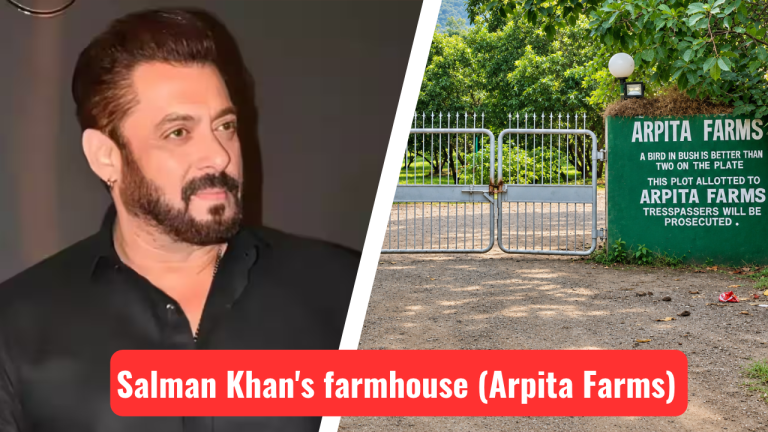
An architectural exploration of Salman Khan’s sprawling farmhouse in Panvel, Maharashtra, where expansive green landscapes, warm interiors, equestrian spaces and a relaxed countryside lifestyle create a retreat away from Mumbai’s fast-paced glamour.There is something fascinating about celebrity homes. While some reflect grandeur through towering facades, elaborate interiors and extravagant materials, others make an impression through their relationship with nature. Salman Khan’s farmhouse in Panvel, popularly known as Arpita Farms, belongs to the latter category.Spread across a reported 150 acres in the Wajapur area of Panvel, Maharashtra, this expansive private estate offers a glimpse into a lifestyle that is quite different from the actor’s larger-than-life screen persona. Surrounded by greenery, open agricultural land and natural terrain, the farmhouse is not simply a luxury weekend residence. It is a personal retreat shaped around family gatherings, fitness, farming, horses and outdoor living.Named after Salman Khan’s sister, Arpita Khan Sharma, the estate has become one of the most talked-about celebrity farmhouses in India. Its appeal lies not just in its reported scale or estimated property value, but in the relatively understated character of its residential spaces.From wooden interiors and expansive windows to swimming pools, private gym facilities and agricultural spaces, Arpita Farms offers an interesting perspective on how contemporary luxury can coexist with a countryside setting.Key Facts:Project Name: Arpita Farms (Salman Khan’s Panvel Farmhouse)Owner: Salman Khan and the Khan familyNamed After: Arpita Khan Sharma (Salman Khan’s sister)Location: Wajapur, Panvel, Raigad, Maharashtra, IndiaReported Land Area: Approximately 150 acresProperty Type: Luxury farmhouse and private countryside estateArchitectural Style: Rustic contemporaryDesign Concept: Countryside living with modern luxuryResidential Structures: Multiple bungalows (reported to be three)Interiors: Wooden flooring, earthy tones, large windows and comfortable furnishingsLandscape: Gardens, agricultural fields, orchards and open green spacesAmenities: Swimming pool, private gym, horse stables and recreational areasSpecial Features: Farming, organic cultivation and equestrian facilitiesLand Purchase: 1993 (reported)Bungalow Construction: 1995 (reported)Estimated Property Value: Approximately ₹80 crore (media-reported estimate)Salman Khan’s farmhouse (Arpita Farms)A Countryside Retreat Away from MumbaiLocated in the Panvel region of Maharashtra, Arpita Farms offers a setting that is very different from the compact, high-density residential environments of Mumbai.The surrounding landscape and considerable open space are central to the property’s identity. Instead of relying entirely on architectural extravagance, the estate appears to derive much of its character from its natural surroundings.The property is associated with agricultural land, gardens, open recreational areas and residential structures. This combination gives it the character of a private countryside estate rather than a conventional celebrity bungalow.According to a Times of India report published in April 2017, the land was purchased by Salim Khan in July 1993, and a bungalow had been constructed by 1995. This historical detail makes the farmhouse particularly interesting: it is not simply a recently acquired luxury property, but a family estate with a history spanning several decades.Architecture and Design: The Appeal of Rustic LuxuryOne of the most interesting aspects of the farmhouse is its reported interior character.Unlike celebrity residences that frequently showcase polished marble, elaborate metallic finishes and dramatic decorative statements, the interiors of Arpita Farms are often described through warmer and more natural elements.Wooden flooring, earthy shades, leather seating and generous windows contribute to a relaxed residential atmosphere.Large windows and French-window-style openings, as described in lifestyle coverage, create a visual connection between the indoor spaces and the surrounding greenery. Natural light becomes an important part of the interior experience, while views of the landscape help establish a sense of openness.From an architectural perspective, this approach reflects an important principle of countryside residential design: the experience of a home is influenced as much by its surroundings as by the building itself.The reported use of timber tones and understated furnishings also creates a comfortable environment that feels more like a family home than a formal luxury property.It is worth noting that the farmhouse’s architectural drawings, material specifications and original design documentation are not publicly available. Therefore, these observations describe its reported visual character rather than a verified account of the architect’s design intent.Salman Khan’s farmhouse (Arpita Farms)Multiple Bungalows for Family LivingArpita Farms is frequently described in media reports as having multiple residential bungalows, with some accounts mentioning three separate structures.This arrangement makes practical sense for a large extended family. Separate residential buildings can provide privacy while allowing family members and guests to share the larger estate.Rather than concentrating all residential functions in one enormous building, multiple structures can create a more flexible living environment.The arrangement also offers opportunities to establish different zones for family activities, recreation, guest accommodation and private residential use.For a large private estate, this kind of spatial organisation can be particularly effective. It allows the landscape to remain a significant part of the experience instead of treating the entire property as one continuous built environment.The Swimming Pool and Outdoor RecreationThe swimming pool is among the most recognisable features associated with Salman Khan’s farmhouse.Reported images and media coverage show a leisure-oriented outdoor setting, with palm trees, poolside seating and landscaped surroundings.The pool area introduces a resort-like quality to the estate without taking away from its countryside identity.Outdoor recreation appears to be an important part of the property’s overall lifestyle offering. The extensive open land provides opportunities for outdoor activities, family gatherings and informal recreation.For architects and landscape designers, this offers an interesting example of how recreational facilities can become part of a larger residential landscape rather than functioning as isolated amenities.Salman Khan’s farmhouse (Arpita Farms)A Farmhouse That Actually Functions as a FarmPerhaps the most distinctive feature of Arpita Farms is its association with agricultural activity.During the COVID-19 lockdown, Salman Khan shared glimpses of himself working in the fields, planting crops and driving a tractor. These moments brought attention to a side of the farmhouse that is often overlooked in conventional celebrity-home coverage.The property has been associated with growing vegetables, maintaining orchards and cultivating agricultural land.This makes the estate different from many luxury farmhouses where the agricultural identity is largely decorative.Here, farming appears to be part of the property’s everyday lifestyle.From an architectural and planning perspective, this raises an interesting question: what happens when a private residence is planned around more than just accommodation?A working agricultural landscape requires space for cultivation, circulation, storage, water management and maintenance. It also creates a different relationship between the residents and their surroundings.In this sense, Arpita Farms represents an interesting interpretation of modern rural living, where leisure and agricultural activities can coexist within one estate.Horse Stables and Spaces for Animal CareSalman Khan’s affection for animals is well known, and the farmhouse is frequently associated with horses and dedicated stable facilities.The presence of stables adds another layer to the estate’s planning requirements.Equestrian spaces require more than simply providing shelter for horses. They involve appropriate circulation, open areas, animal-care facilities and access to outdoor exercise spaces.The farmhouse’s reported animal facilities reinforce its character as a lifestyle estate where animals and outdoor activities form part of everyday life.For residential architects, this is an interesting reminder that luxury living can involve specialised spaces designed around the interests and routines of the occupants.Salman Khan’s farmhouse (Arpita Farms)Fitness and Wellness Within the EstateFitness is another important part of Salman Khan’s lifestyle, and reports about Arpita Farms frequently mention a private gym.Having a dedicated fitness facility within a large private residence provides convenience and privacy.The combination of indoor fitness facilities, swimming and expansive outdoor areas creates multiple opportunities for physical activity.From a residential planning perspective, integrating wellness facilities into the home environment is becoming increasingly relevant. Homeowners are looking beyond conventional living rooms and bedrooms to include dedicated spaces for exercise, relaxation and recreation.Arpita Farms offers a celebrity-home example of this broader lifestyle approach.The Landscape as the Real LuxuryPerhaps the strongest architectural takeaway from Salman Khan’s farmhouse is the importance of open space.In an increasingly urbanised environment, large stretches of greenery and agricultural land offer a different kind of luxury. They provide privacy, breathing room and opportunities to experience nature without leaving home.The landscape is not merely an attractive background to the residential structures. It is a major part of the property’s identity.Gardens, trees, agricultural areas and reported natural water features create a setting that feels connected to the surrounding countryside.This relationship between architecture and nature is particularly relevant to contemporary residential design.A successful countryside residence does not necessarily need to dominate its surroundings. It can instead allow the landscape to become an essential part of the living experience.Salman Khan’s farmhouse (Arpita Farms)The Legal and Land-Use ContextAn important part of the property’s history is its location within an environmentally sensitive region.In July 2018, India Today reported that the Maharashtra Forest Department had issued a show-cause notice concerning constructions on land associated with the Khan family at Panvel.The matter attracted attention because the area falls within a region subject to environmental and forest-related regulations.An earlier Times of India report, dated April 3, 2017, documented the state’s clearance concerning the diversion of 1.28 hectares (approximately 3.2 acres) of private forest land for specified existing structures and associated infrastructure.These reports should be understood in their historical and regulatory context. They do not, by themselves, establish the current legal status of every structure or the entire estate.For an architecture audience, the episode highlights an important consideration in large-scale residential development: land ownership, environmental permissions, forest regulations and development approvals are as important as architectural design.Salman Khan’s farmhouse (Arpita Farms)What Architects Can Learn from Arpita FarmsAlthough the farmhouse’s original project team has not been publicly identified, its reported features offer several interesting observations for residential architecture and landscape design.1. Design around lifestyle, not just appearanceA home becomes more meaningful when its planning reflects the everyday activities of its occupants. Farming, animal care, fitness and family gatherings are central to the identity associated with Arpita Farms.2. Make the landscape an integral part of the residenceLarge gardens, agricultural areas and open spaces can create a strong connection between the built environment and nature.3. Balance privacy with shared family spacesMultiple residential structures can provide privacy while maintaining opportunities for shared activities and family interaction.4. Bring natural materials into contemporary livingWooden finishes, earthy colours and comfortable furniture demonstrate how a residential interior can feel sophisticated without becoming excessively formal.5. Treat outdoor amenities as part of the architectural experienceSwimming pools, stables, gardens and recreational spaces should be considered within the overall site-planning strategy.6. Consider environmental and regulatory responsibilities from the beginningLarge private estates require careful attention to land-use permissions, environmental conditions, infrastructure and long-term landscape management.More Than a Celebrity FarmhouseSalman Khan’s Arpita Farms is an interesting subject for architectural discussion because its appeal goes beyond conventional ideas of celebrity luxury.Its reported scale, multiple residential structures, agricultural landscape, recreational amenities and rustic interiors create a distinctive picture of countryside living.What makes the property particularly fascinating is the relationship between the built environment and the lifestyle it supports.The farmhouse is associated with a slower rhythm of life, where open land, family gatherings, farming and time spent outdoors become as important as the residential structures themselves.For the architecture and design community, the larger takeaway is simple: luxury is not always about building more. Sometimes, it is about having the space to live differently.And that is perhaps what makes Arpita Farms so intriguing. Salman Khan’s farmhouse (Arpita Farms) Salman Khan’s farmhouse (Arpita Farms) Salman Khan’s farmhouse (Arpita Farms) Salman Khan’s farmhouse (Arpita Farms) Salman Khan’s farmhouse (Arpita Farms) Salman Khan’s farmhouse (Arpita Farms) Related Article:Inside Kumar Vishwas’ Luxurious Noida House: A Blend of Poetry, Art, and Palace-Style LivingGautam Adani House: Inside the luxurious residence of India’s business tycoon in AhmedabadMukesh Ambani House: Antilia, the world’s most expensive private residence in MumbaiJeff Bezos House: Inside the Mansions and Estates of the Amazon FounderBill Gates’s House: An inside look at all the homes owned by the Microsoft co-founderMichael Jordan’s homes: A design-led journey through his signature residencesJK House: Inside Gautam Singhania’s ₹6,000-crore skyscraper residence and is the second most expensive home after Mukesh Ambani’s AntiliaAbode: Inside Anil Ambani’s iconic Pali hill residence that redefines luxury living in MumbaiInside Jalsa: An architectural perspective on Amitabh Bachchan’s iconic Mumbai residenceAbode: Inside Anil Ambani’s iconic Pali hill residence that redefines luxury living in MumbaiJatia House: Kumar Mangalam Birla’s iconic home of luxury and heritage in MumbaiGulita: The diamond-inspired seafront mansion of Isha Ambani and Anand PiramalInside Sea Wind: The 17-Storey family home Mukesh Ambani shared with Anil Ambani before AntiliaInside ZOHO founder Sridhar Vembu’s house: A billionaire’s rural home built on vernacular architecture and sustainabilityGoolestan (Om Arc): Inside Anand Mahindra’s heritage home on Nepean sea road, MumbaiDeepinder Goyal House: Inside the Zomato Founder’s luxury home at DLF CamelliasBhavish Aggarwal house: Inside the Ola Co-founder’s Private Residence in BengaluruInside Sundar Pichai and Anjali Pichai’s House: A blend of modern luxury and thoughtful designSatya Nadella House: A Peek Inside the Microsoft CEO’s ResidenceAdar & Natasha Poonawalla’s Farmhouse: Inside a retreat of elegance and equestrian charmShiv Nadar’s Residence: Where art and vision shape the HCL founder’s homeNikhil Kamath House: Inside Zerodha co-founder’s luxury Bengaluru homeInside Anil Agarwal’s House: A look at the Vedanta billionaire’s London mansionRohini Nilekani and Nandan Nilekani House: A glimpse into the Bengaluru home of India’s tech visionaryUday Kotak House: Inside the iconic sea-Facing “Champagne House” in MumbaiSunil Bharti Mittal’s Mansion in Delhi: Inside a legacy home in India’s most exclusive addressInside Lakshmi Niwas Mittal’s global real estate empire: Steel, Success & Super HomesNithin Kamath House: A look inside the Zerodha CEO and founder’s lifestyle & design philosophyInside Savitri Jindal House: A Look at the Elegant Residences of India’s Richest WomanMamata Banerjee House: A look inside the modest home of Bengal’s CM residenceInside Pawan Kalyan’s Rs 130 Crore Jubilee Hills Mansion: A perfect blend of luxury and traditionPawan Kalyan’s new House at Pithapuram: Where architecture meets political identityInside CarryMinati’s House: Modern interiors, gaming studio & creator lifestyleSidhu Moose Wala House: Inside the Iconic Punjab mansion that became a landmark for fansInside Navjot Singh Sidhu’s Amritsar House: A ₹25 Crore mansion blending royal architecture and spiritual LivingAamir Khan House: A look inside the Bollywood Star’s elegant and minimalist homeTim Cook House: Inside Apple’s CEO’s private home and the philosophy behind itYohan & Michelle Poonawalla’s 7.5-Acre Koregaon Park Mansion: A grand blend of heritage, art, and luxuryDavid Warner House: Inside the Five-Level Oceanfront Sydney Home of Australia’s Cricket StarCristiano Ronaldo House: Inside the football legend’s stunning luxury homes around the worldShakira House: A look inside her luxury homes around the worldConor McGregor House: Inside the Irish home and tts ambitious architectural transformationMickey Rourke House: Inside his historic Los Angeles Spanish bungalowCharlie Kirk House: Inside the Scottsdale Spanish-Style EstateRavi Ruia House: Inside the historic Hanover Lodge in LondonVinod Khosla House: Arthur Erickson’s Concrete Retreat in Portola ValleyJohn D. Rockefeller House: Inside Kykuit, an american gilded age landmark