
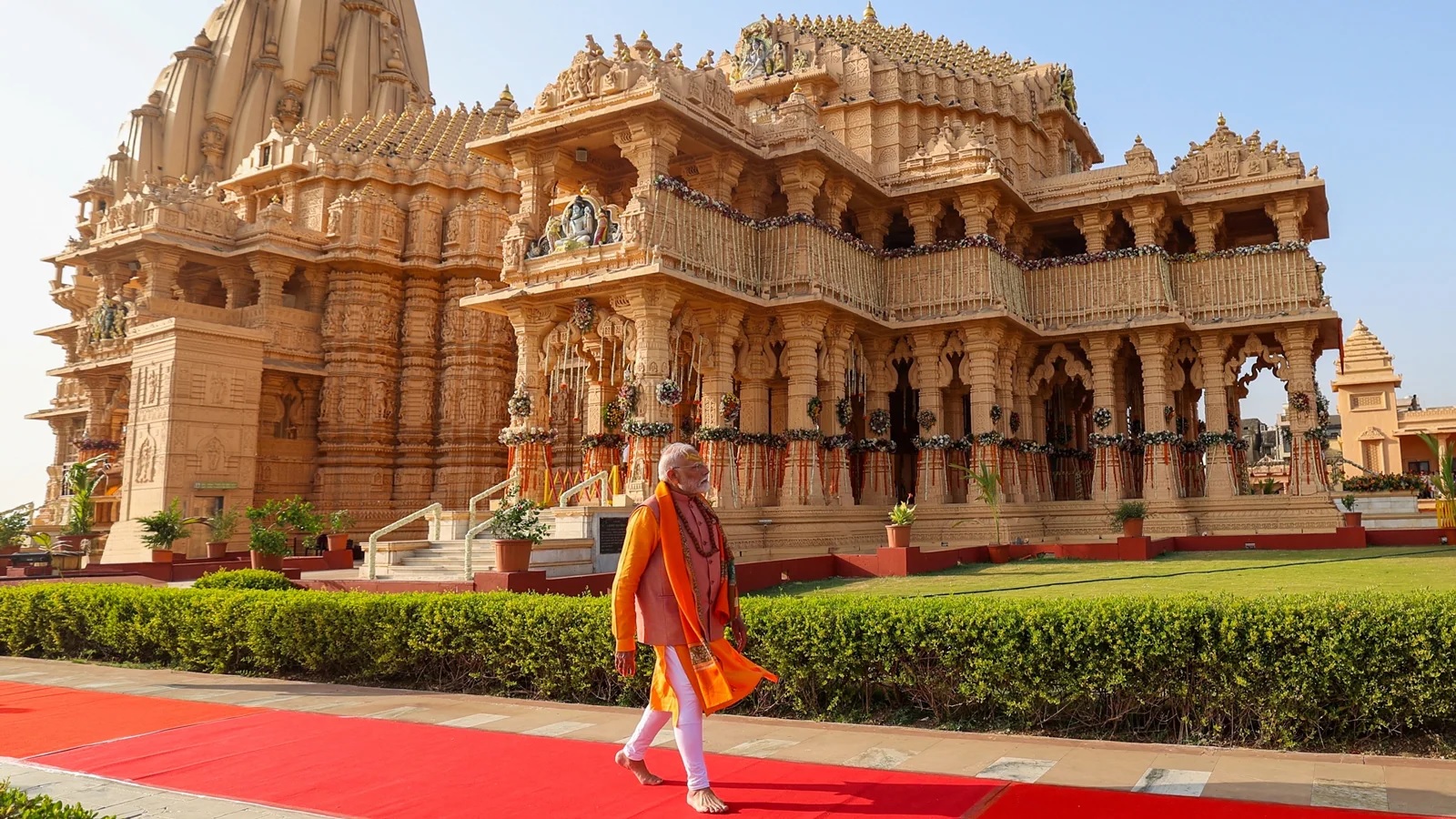
Somnath Temple
Perched dramatically on the western coast of Gujarat where the Arabian Sea meets the sacred land of Prabhas Patan, the majestic Somnath Temple stands as one of India’s most iconic examples of sacred temple architecture. Revered spiritually as the first Jyotirlinga of Lord Shiva, Somnath is equally significant from an architectural and cultural heritage perspective.
The temple embodies centuries of reconstruction, evolving craftsmanship, symbolic spatial planning, and resilient architectural identity. More than a religious monument, Somnath represents the continuity of Indian temple architecture through destruction, restoration, and reinterpretation across generations.
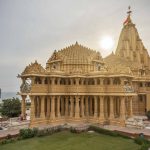
Its commanding shikhara rising above the Arabian Sea, intricately sculpted stone surfaces, axial planning, and symbolic orientation make it a remarkable study for architects, conservationists, historians, and design enthusiasts.
Key Facts:
- Location: Prabhas Patan, Veraval, Gujarat, India
- Architectural Style: Chalukyan / Kailash Mahameru Prasad Style
- Current Structure Completed: 1951
- Architect: Based on traditional Sompura temple architecture principles
- Primary Material: Sandstone and traditional carved stone
- Temple Height: Approx. 155 feet
- Shikhara Kalash Weight: Approximately 10 tons
- Flag Staff Height: Around 37 feet
- Orientation: West-facing toward the Arabian Sea
- Structural Typology: Hindu Nagara-style temple
- Main Components: Garbhagriha, Sabha Mandap, Nritya Mandap, Shikhara
- Special Landmark: Baan-Stambh (Arrow Pillar) aligned toward the southern oceanic horizon
- Reconstruction Patron: Sardar Vallabhbhai Patel
- Temple Trust: Shree Somnath Trust
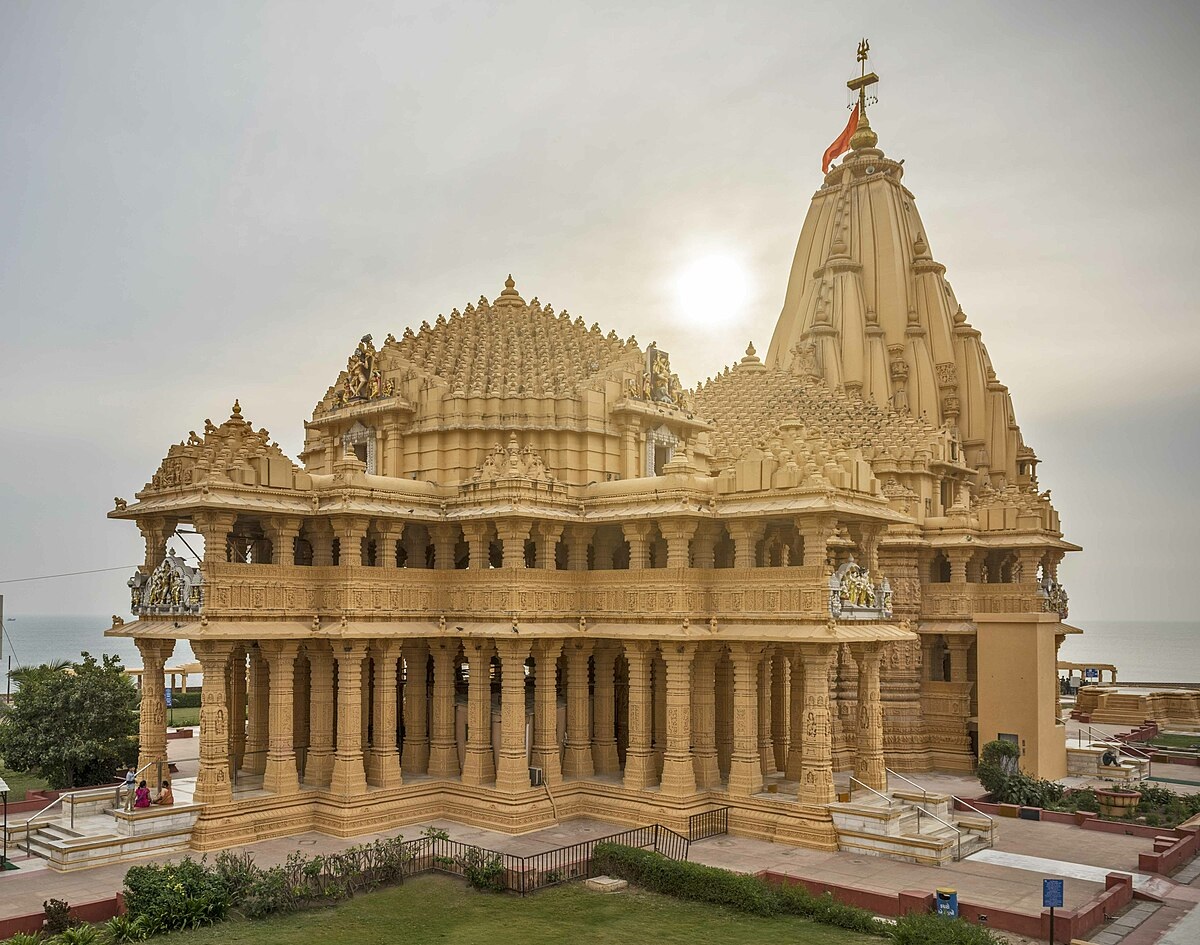
A Monument Rebuilt Across Centuries
The architectural identity of Somnath Temple is deeply connected to its history of destruction and reconstruction. Few monuments in the world have experienced such repeated cycles of rebuilding while preserving their sacred and cultural significance.
Historical accounts suggest that the temple was rebuilt several times after invasions and structural destruction. Instead of allowing the monument to disappear, each generation reconstructed it with renewed devotion and architectural continuity.
The present-day temple was reconstructed after India’s independence under the guidance of Sardar Vallabhbhai Patel and cultural leader K. M. Munshi. The project was envisioned not merely as a religious reconstruction, but as a revival of India’s civilizational and architectural heritage.
Unlike modern reinterpretations, the rebuilt Somnath Temple intentionally follows traditional temple-building principles, preserving the essence of ancient Indian sacred architecture.
The Chalukyan Architectural Style
The current Somnath Temple is designed in the Chalukyan architectural style, also known as the Kailash Mahameru Prasad style. This style is known for its monumental verticality, sculptural detailing, and highly ornamented surfaces.
The architecture emphasizes balance, symmetry, and rhythmic progression. Every component of the structure — from the towering shikhara to the carved pillars — follows traditional proportional systems derived from ancient Indian architectural texts known as the Shilpa Shastras.
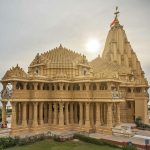
The temple’s overall composition creates a powerful visual identity against the open coastal landscape. Its rising silhouette appears both monumental and spiritual, reinforcing the symbolic connection between earth and sky.
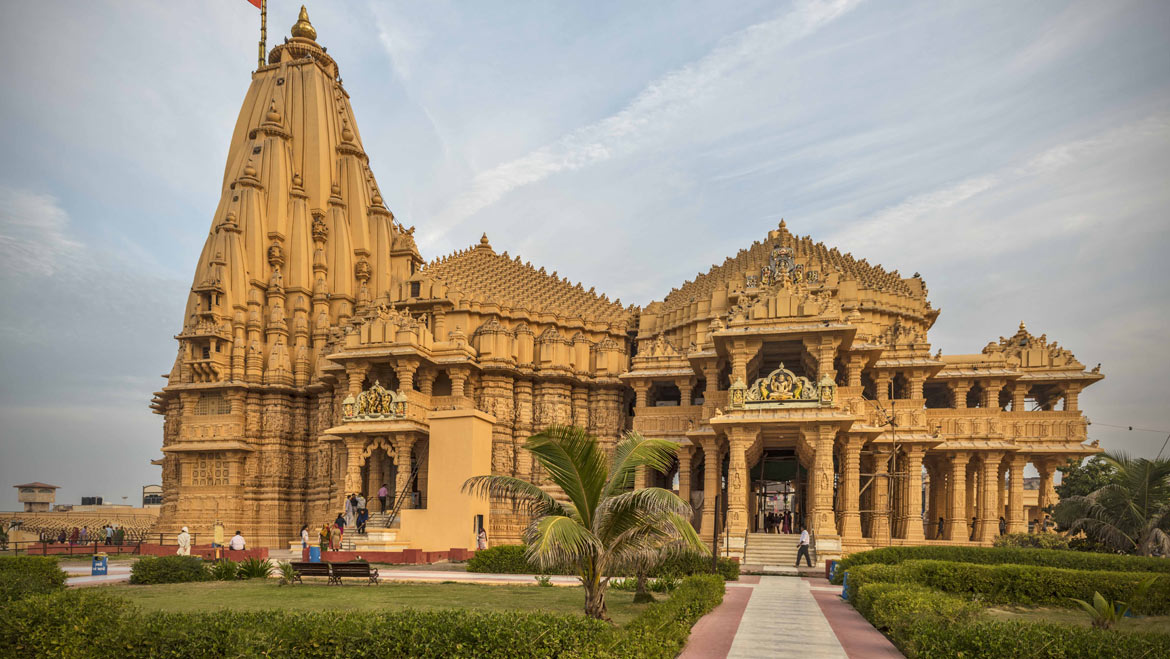
Dramatic Coastal Setting and Site Context
One of the most extraordinary architectural features of Somnath Temple is its location beside the Arabian Sea. The temple stands on an elevated platform overlooking the vast ocean horizon, creating a dramatic interaction between built form and nature.
Unlike many historic temples located within dense urban settlements, Somnath enjoys an open visual relationship with its surroundings. The uninterrupted sea view enhances the monumentality of the structure and creates an atmosphere of serenity and timelessness.
The coastal setting also transforms the sensory experience of the temple. The sound of crashing waves, the changing natural light, and the sea breeze become integral parts of the architectural experience.
For architects, the temple demonstrates how site selection and landscape integration can amplify the emotional and spiritual impact of architecture.
Spatial Planning and Sacred Journey
Like most classical Hindu temples, Somnath follows a hierarchical spatial layout where movement toward the sanctum becomes increasingly intimate and spiritual.
The planning sequence begins with open transitional spaces and gradually leads visitors toward the sacred core of the temple. This progression creates a carefully choreographed journey that combines movement, scale, light, and symbolism.
The temple’s main architectural elements include the Sabha Mandap, Nritya Mandap, and the Garbhagriha, each serving both functional and symbolic purposes.
The spatial organization reflects one of the fundamental principles of Hindu temple architecture — the transformation from the external world to the inner spiritual realm.
The Garbhagriha and Spiritual Intimacy
At the center of the temple lies the Garbhagriha or sanctum sanctorum, where the sacred Shiva Jyotirlinga is installed.
Architecturally, the Garbhagriha is intentionally enclosed, compact, and dimly lit. This creates a strong sense of spiritual concentration and separation from the outer world.
The transition from the bright exterior spaces into the darker sanctum intensifies the sensory and emotional experience. Such controlled spatial compression is a defining characteristic of classical Indian temple architecture.
The sanctum represents the spiritual heart of the temple and symbolizes the cosmic womb from which divine energy emerges.

Sabha Mandap and Structural Grandeur
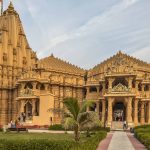
The Sabha Mandap, or assembly hall, functions as the primary congregational space within the temple complex. This hall showcases the richness of traditional stone craftsmanship through carved columns, ornamental ceilings, and symmetrical structural layouts.
The pillars are designed not only as structural supports but also as artistic elements carrying symbolic and decorative value. Floral motifs, geometric patterns, and sculptural detailing enrich the spatial character of the hall.
The mandap demonstrates the seamless integration of architecture, engineering, and craftsmanship that defines traditional Indian temple construction.
The Monumental Shikhara
The towering shikhara is undoubtedly the most visually dominant element of Somnath Temple. Rising approximately 155 feet above the ground, the shikhara creates a strong vertical emphasis that can be seen from a great distance.
In Hindu temple architecture, the shikhara symbolizes Mount Meru — the mythical cosmic mountain believed to connect heaven and earth.
Its curvilinear form and layered geometry create a dynamic upward movement, visually guiding the eye toward the sky. The towering structure reinforces the spiritual aspiration embedded within the architecture.
Crowning the shikhara is a massive kalash and a sacred flag that is changed multiple times daily according to temple traditions.
Stone Craftsmanship and Material Expression
The temple is constructed primarily using sandstone and traditional stone masonry techniques. The use of natural stone gives the structure a timeless quality while also ensuring climatic durability against coastal conditions.
One of the most remarkable aspects of Somnath is its craftsmanship. The carved surfaces, ornamental details, and sculptural precision reflect the expertise of Sompura artisans — hereditary temple architects and craftsmen known for preserving ancient Indian building traditions.
Unlike contemporary minimalist structures, Somnath celebrates texture, ornamentation, depth, and tactile richness. Every carved detail contributes to the visual identity and symbolic language of the monument.
The materiality of the temple also responds beautifully to natural light, with changing shadows and textures creating a dynamic architectural experience throughout the day.
The Baan-Stambh and Symbolic Alignment
Near the sea-facing side of the temple stands the famous Baan-Stambh or Arrow Pillar. The pillar carries an inscription stating that there is no landmass between Somnath and Antarctica in a straight line across the sea.
Architecturally and symbolically, the pillar emphasizes directionality, cosmic alignment, and the temple’s relationship with geography and the natural world.
The placement of the pillar further strengthens the dramatic visual axis between the temple and the endless ocean horizon.
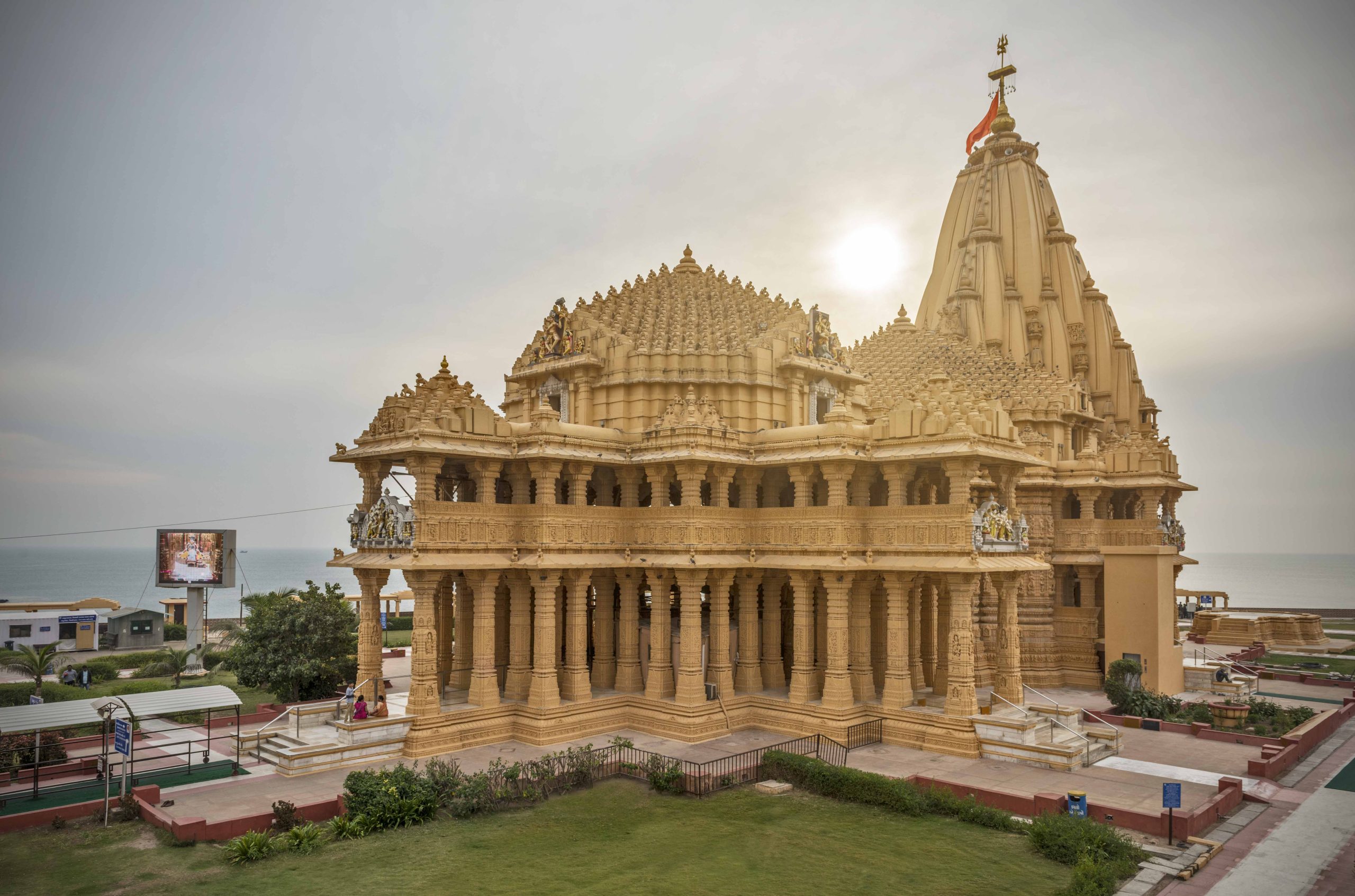
Light, Shadow and Sensory Experience
Natural light plays a significant role in shaping the architectural atmosphere of Somnath Temple.
The deep carvings and sculpted surfaces create constantly changing patterns of light and shadow throughout the day. During sunrise and sunset, the sandstone surfaces glow with warm golden tones, enhancing the monument’s sculptural character.
Inside the temple, light gradually diminishes as visitors move toward the sanctum, creating a spiritual transition through illumination.
This sensitive use of light demonstrates how traditional Indian architecture engaged deeply with natural environmental conditions long before modern lighting technologies emerged.
Somnath as a Lesson in Sacred Architecture
Somnath Temple continues to inspire architects and conservationists because of its ability to combine monumentality, symbolism, craftsmanship, and environmental context into a unified architectural experience.
The temple teaches important lessons about:
- Context-sensitive design
- Sacred geometry
- Material authenticity
- Symbolic spatial planning
- Climatic responsiveness
- Integration of architecture and landscape
Even in contemporary architectural discourse, Somnath remains highly relevant as an example of how cultural identity and spirituality can shape timeless built environments.
The Somnath Temple is far more than a sacred monument. It is a powerful architectural statement that reflects India’s enduring cultural memory, craftsmanship, and spiritual philosophy.
From its soaring shikhara and intricately carved mandapas to its dramatic coastal setting and symbolic planning, every aspect of the temple contributes to a deeply immersive architectural experience.
For the world of architecture and design, Somnath stands as a timeless reminder that great monuments are not only built with stone — they are built with history, symbolism, emotion, and collective identity.

Most Read Articles:
Shri Ram Janmabhoomi Mandir: A timeless confluence of devotion, architecture & cultural heritage
Grand Janki Mandir to Be Built at Punaura Dham Sitamarhi: ₹882.87 Crore Mega Project Announced
Meenakshi Temple: A Living Masterpiece of Indian Architecture
Varanasi International Cricket Stadium: Where Spirituality Meets Sports
Statue of Unity: The World’s Tallest Statue at 182 Metres | A Complete Guide
Shri Kashi Vishwanath Temple: A Timeless Journey into the Spiritual Heart of India
Galteshwar Mahadev Temple: An architectural dialogue between stone, water, and sacred geometry
Leaning Tower of Pisa & Ratneshwar Mahadev Temple: Two timeless leaning wonders of the world
Murudeshwar Temple: A place where the sea, stone, and shiva come together
Tirumala Venkateswara Temple: An Architectural and Spiritual Marvel of South India