

Cyrus Poonawalla's Lincoln House
In a city where real estate prices defy gravity and history whispers from every corner, one residence stands out — not just for its value, but for its layered story. Lincoln House, the iconic mansion in South Mumbai’s Breach Candy, isn’t your typical luxury dwelling. It is a stunning blend of colonial heritage, architectural richness and modern billionaire aspirations. In 2015, industrialist Cyrus Poonawalla — chairman of the Serum Institute of India — made headlines by acquiring this monumental piece of real estate for a staggering ₹750 crore, marking one of the most talked-about property deals in Mumbai’s recent history.
The Legacy of a Heritage Gem
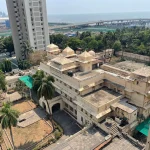
Long before it became a symbol of luxury spending, Lincoln House had a royal and diplomatic lineage. Originally built in the early 20th century for the Maharaja of Wankaner, the residence was known as Wankaner House — a palatial estate created to reflect power, prestige and refined taste. It was designed with a nod to Indo-Saracenic architectural influences, seamlessly blending classical Indian motifs with European sensibilities — a style that was fashionable among elite Indian princely states during the British era.
In 1957, the property entered a new chapter when it was leased to the United States Government, becoming Lincoln House, the official residence of the U.S. Consulate in Bombay. For more than half a century, it served as a diplomatic home away from home, weaving international threads into its tapestry of history.

Architectural Details That Speak Volumes
While most luxury homes are defined by modern amenities and glass-clad façades, Lincoln House’s charm lies in its timeless architecture. With a sprawling footprint of around 50,000 square feet set on approximately 2 acres of prime sea-facing land, it stands as a testament to classical design philosophies that prioritize scale, proportion and elegance.
The house’s Indo-Saracenic roots, interwoven with hints of Art Deco interiors, reflect a period when Indian and Western design currents cross-pollinated with poetic ease. Tall columns, grand verandas, high ceilings, and expansive rooms would have once welcomed royalty, dignitaries and guests with equal measure of grace and grandeur.
Today, behind its two towering black gates, the mansion tells a tale of beauty and neglect — sections of the property show signs of wear, partly due to its long tenure as an office rather than a home, and partly due to limited maintenance over the years. Yet, this only adds to its mystique — a grand relic waiting to be lovingly restored.

The ₹750 Crore Deal That Shook Mumbai’s Property Market
In September 2015, Cyrus Poonawalla closed one of the largest residential property transactions in Mumbai’s history when he secured Lincoln House for ₹750 crore. What made the deal especially noteworthy wasn’t just the price tag — which was already something most people could barely imagine — but the fact that it was actually below the reserve price previously set by the U.S. Government.
At a time when luxury property prices were already astronomical, this purchase vaulted Lincoln House into an elite league of high-value homes that included some of the city’s most famous addresses. Yet unlike hardened developers who eyed the land for its redevelopment potential, Poonawalla’s intention was clear: this was to be a private residence — a place where his family could live and host in true old-world style.

What Makes Lincoln House Unique
So why does Lincoln House still command attention in architectural and luxury lifestyle conversations? Here are a few reasons:
- Historical Depth: Unlike many modern luxury residences that are products of the last decade, Lincoln House carries layers of history — royal origins, diplomatic use, and now private ownership that bridges the past and present.
- Architectural Grandeur: Its design offers a rare snapshot of pre-Independence aesthetics in a city that has rapidly transformed around it, making it as much a cultural artifact as a home.
- Unmatched Location: Situated in Breach Candy, one of Mumbai’s most coveted neighborhoods, it overlooks the Arabian Sea and is part of the city’s most elite real estate corridor.
- Scale and Space: In a city renowned for its space crunch, having tens of thousands of square feet under one roof — in a low-density historical property no less — is a rarity that money alone rarely buys.
A Home for the Future or a Relic of the Past?
There’s something poetic about Lincoln House — a mansion that once echoed with regal footsteps, then with diplomatic footsteps, and now stands ready to echo with the steps of a modern Indian family. While its current state reflects some neglect, the very ambition of owning such a space speaks to a desire not merely for luxury, but for legacy.
For architects, designers and luxury real estate enthusiasts, Lincoln House isn’t just a property — it’s a narrative. It challenges us to think about how heritage and modern life can intersect, how old structures can be tuned into contemporary living spaces without erasing their soul, and how luxury in India isn’t always about new glass towers — sometimes it’s about preserving stories in stone and space.




Related Articles: Most Expensive Homes Owned by Billionaires
Elon Musk’s Houses: Tour the Stunning Homes Owned by the Tesla Billionaire
Mark Zuckerberg’s Houses: An Inside Look at the Luxurious Homes of Facebook’s Founder
Gautam Adani House: Inside the luxurious residence of India’s business tycoon in Ahmedabad
Mukesh Ambani House: Antilia, the world’s most expensive private residence in Mumbai
Jatia House: Kumar Mangalam Birla’s iconic home of luxury and heritage in Mumbai
Gulita: The diamond-inspired seafront mansion of Isha Ambani and Anand Piramal
Abode: Inside Anil Ambani’s iconic Pali hill residence that redefines luxury living in Mumbai